


Excavator Parts Factory in China: Can Kst-Motorfactory Adjust MOQ for New Clients
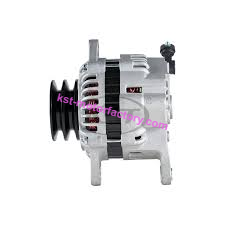
The first question from a procurement officer often concerns price, yet the minimum order quantity (MOQ) quickly emerges as an equally decisive factor. This threshold dictates inventory investment, warehousing requirements, and cash flow allocation. For an Excavator Parts Factory in China, MOQ reflects production efficiency, material sourcing economics, and operational capacity. Kst-Motorfactory, specializing in starters and alternators for heavy equipment, structures its MOQ around these manufacturing realities. The company's 10,000-square-meter facility houses over 100 employees, with dedicated production lines for various excavator models. Does your procurement volume match the factory's established minimum thresholds?
Understanding the components behind MOQ calculation helps buyers anticipate factory requirements. Starter motors and alternators consist of wound copper coils, precision bearings, cast housings, and electronic regulators. Each component undergoes separate sourcing or fabrication, with suppliers offering tiered pricing based on purchase quantity. The factory must commit to raw material orders, allocate machine setup time, and schedule workforce assignments for each production run. These fixed costs distribute across the number of units produced, creating an economic baseline below which manufacturing becomes commercially impractical. For an Excavator Parts Factory in China, this baseline typically translates to an MOQ ranging from several dozen to over a hundred pieces, depending on the specific part and its production complexity.
Product type significantly influences the MOQ figure. Standard, high-volume items like 24V starters for Cummins engines may carry a lower minimum due to frequent production cycles and readily available component inventory. Conversely, specialized alternators for older Hitachi or Komatsu models, with unique mounting brackets or voltage outputs, often require higher MOQs. These niche products demand dedicated tooling changes and specialized winding configurations, increasing setup time. The factory's R&D team also provides customization services, developing products according to customer drawings or samples, which extends engineering preparation and elevates the practical order threshold. Buyers seeking bespoke solutions should anticipate higher MOQs to justify these technical investments.
The customer profile also affects MOQ negotiations. Established importers with regular reorder schedules typically receive more favorable terms than one-time buyers. Consistent ordering patterns enable the factory to plan material purchases and machine utilization efficiently. Long-term partnerships reduce administrative overhead and allow for streamlined logistics, benefits that frequently translate into reduced minimums or phased ordering options. Kst-Motorfactory's ISO/TS16949 quality system, designed for automotive industry standards, further supports consistent production runs, making repeated orders inherently more efficient than irregular, small-batch requests.
The order composition matters. A mixed shipment containing several different starter and alternator models may allow the factory to aggregate production run setups, potentially lowering the per-model MOQ. This approach distributes the fixed costs across a broader product range, benefiting both parties. Conversely, concentrating an order on a single, high-complexity part like a 28V/100A alternator for a Mercedes excavator engine will likely trigger the highest per-unit MOQ. Procurement teams can optimize their strategy by evaluating their annual demand across multiple products and consolidating these requirements into consolidated purchase orders.
Global buyers also consider incoterms and shipping methods when evaluating MOQ economics. Larger order volumes reduce per-unit freight costs, often offsetting the higher inventory carrying costs. Air freight, while faster, substantially increases logistics expense per piece. Sea freight offers a more economical solution for consolidated shipments, aligning with the batch production economics of the Excavator Parts Factory in China. Understanding this relationship enables purchasers to calculate the true landed cost at different order volumes, identifying the optimal quantity that balances factory MOQ requirements with their own working capital constraints.
Navigating MOQ discussions requires clear communication of your requirements and genuine understanding of the factory's production constraints. Requesting the factory's standard MOQ schedule for your target product list provides a transparent starting point. Inquire about incremental pricing tiers above the minimum to assess the marginal benefit of larger orders. Discussing payment terms alongside MOQ can also open alternatives; for instance, a higher deposit might encourage a factory to accept a lower MOQ on a trial order. The detailed product specifications and model compatibility information available at https://www.kst-motorfactory.com allow you to select parts that align with your demand profile. How does your order structure accommodate the practical MOQ of your chosen Excavator Parts Factory in China?

 English
 Arabic
 French
 Portuguese
 Deutsch
 Turkish
 Dutch
Dutch
 Italiano
 Russian
 Romaian
 Portuguese (Brazil)
 Greek
Greek
