


How Case-Based Learning Improves Clinical Decision-Making in Skincare Certification Online Education
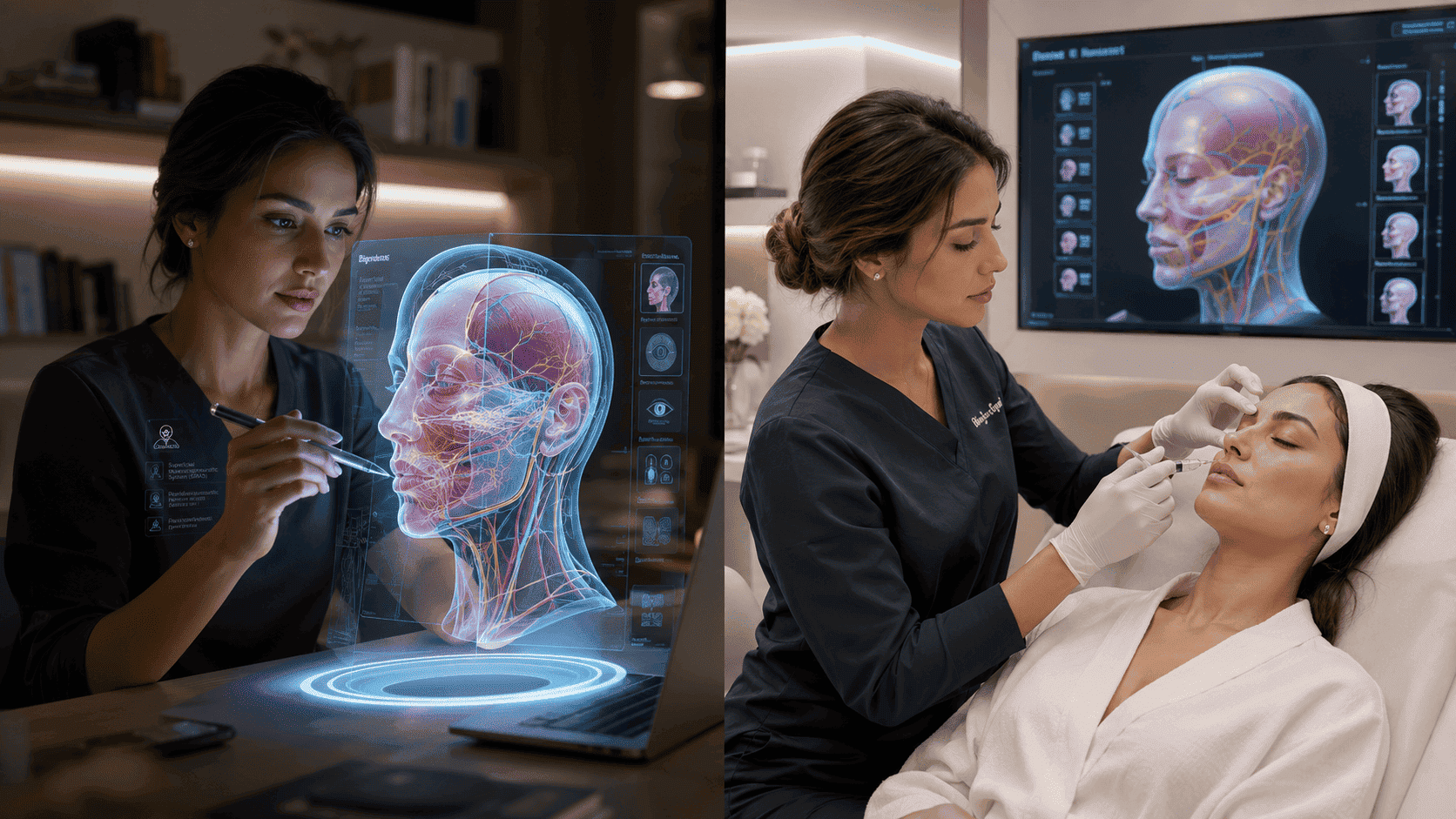
The field of aesthetic medicine continues to evolve as more healthcare professionals seek advanced knowledge in skin health, cosmetic procedures, and patient-centered skincare solutions. Physicians, registered nurses, nurse practitioners, physician assistants, dentists, and medical students entering aesthetic practice require more than theoretical knowledge. They need the ability to evaluate patients, analyze skin concerns, and make safe clinical decisions.
Traditional online education models often focus on delivering information through recorded lectures and reading materials. While foundational knowledge is important, effective skincare education must also help learners apply concepts to realistic situations.
A well-designed skincare certification online program incorporates case-based learning to help healthcare professionals develop clinical reasoning skills, improve decision-making abilities, and better understand how skincare principles translate into real patient scenarios.
Why Case-Based Learning Matters in Skincare Certification Online Programs
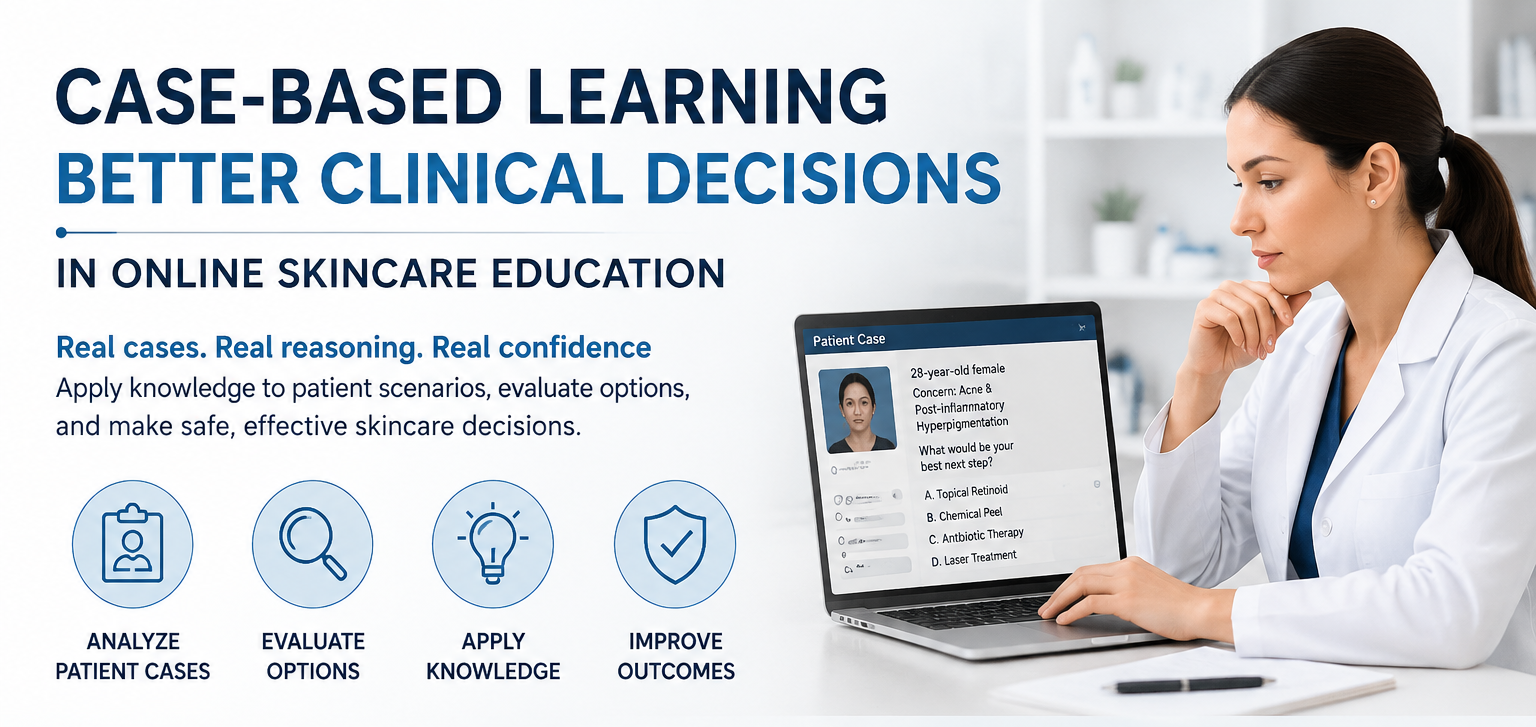
Case-based learning is an educational approach that uses realistic patient scenarios to help learners analyze problems, evaluate information, and develop appropriate solutions.
Unlike passive learning methods, case-based education requires professionals to think critically. Instead of simply memorizing facts about skin conditions, ingredients, or procedures, learners must determine how that knowledge applies to individual patients.
In aesthetic skincare, every patient presents unique factors, including:
-
Skin type and condition
-
Medical history
-
Current skincare routine
-
Treatment goals
-
Previous procedures
-
Potential contraindications
Case-based learning prepares professionals to consider these factors before making recommendations.
How Clinical Cases Build Better Decision-Making Skills
Clinical decision-making is one of the most important abilities for healthcare professionals involved in aesthetic skincare. A practitioner must evaluate information, identify concerns, and select appropriate approaches based on evidence.
Case-based learning strengthens these skills by encouraging learners to:
Analyze Patient Presentations
A clinical case may describe a patient experiencing acne concerns, pigmentation issues, signs of aging, or sensitivity problems. Learners must assess the available information and determine possible causes.
This process helps professionals understand that effective skincare recommendations require more than recognizing a condition. They must consider underlying factors and individual patient needs.
Evaluate Treatment Options
Many aesthetic concerns can involve multiple treatment approaches. A case-based format allows learners to compare different options and understand why one approach may be more suitable than another.
For example, a patient with uneven pigmentation may require consideration of:
-
Skin type
-
Pigmentation history
-
Previous treatments
-
Active ingredients being used
-
Risk of post-inflammatory changes
This type of analysis improves clinical judgment.
Identify Safety Considerations
Patient safety is a critical component of aesthetic practice. Case studies help learners recognize situations where additional caution is required.
Professionals can practice identifying:
-
Treatment contraindications
-
Possible adverse reactions
-
Product sensitivities
-
Appropriate referral situations
-
Recovery considerations
This creates stronger decision-making habits before working with real patients.
The Role of Skin Care Courses Online in Practical Learning
The demand for skin care courses online has increased among healthcare professionals looking for flexible ways to expand their knowledge. However, the quality of online education depends on whether it supports practical application.
Effective online learning should combine:
-
Scientific concepts
-
Patient scenarios
-
Clinical reasoning exercises
-
Treatment planning activities
-
Safety assessments
Simply watching educational videos may provide information, but applying knowledge through realistic cases helps develop professional competence.
Connecting Theory With Real-World Patient Care
One of the biggest challenges in healthcare education is transferring theoretical knowledge into practical decision-making. Case-based learning bridges this gap.
For example, a professional may understand the purpose of chemical exfoliation in theory. However, clinical application requires understanding:
-
Which patients are suitable candidates
-
How skin characteristics influence outcomes
-
When treatment should be avoided
-
What aftercare recommendations are appropriate
Case-based exercises allow learners to practice these decisions in a controlled educational environment.
How Advanced Skincare Training Uses Clinical Scenarios
Modern advanced skincare training focuses on developing deeper knowledge of skin biology, treatment planning, and patient management.
Clinical scenarios help professionals explore complex topics such as:
Skin Type Considerations
Different skin types may respond differently to aesthetic procedures. Case-based learning helps practitioners understand how factors such as pigmentation risk, sensitivity, and barrier function influence treatment decisions.
Ingredient Selection
Patients often use multiple skincare products, and professionals must understand ingredient interactions.
Case studies can help learners evaluate:
-
Active ingredients
-
Potential irritation risks
-
Product compatibility
-
Appropriate skincare routines
Treatment Sequencing
Many patients combine multiple treatments or skincare approaches. Professionals need to understand how to sequence procedures safely.
Case-based learning allows learners to practice creating structured treatment plans based on patient goals and clinical considerations.
Improving Patient Communication Through Case-Based Education
Clinical decision-making is not only about selecting treatments. It also involves explaining recommendations clearly to patients.
Case-based learning can help professionals improve communication skills by practicing how to:
-
Discuss realistic outcomes
-
Explain treatment benefits and limitations
-
Address patient concerns
-
Set appropriate expectations
-
Recommend personalized skincare routines
Strong communication builds patient trust and supports better treatment experiences.
Why Healthcare Professionals Benefit From Scenario-Based Learning
Physicians, nurses, nurse practitioners, physician assistants, dentists, and medical students often have strong medical foundations. However, aesthetic skincare requires additional knowledge related to cosmetic science, skin assessment, and treatment planning.
Case-based learning allows healthcare professionals to develop specialized skills in areas such as:
-
Cosmetic dermatology concepts
-
Skin analysis
-
Patient consultation
-
Procedure preparation
-
Post-treatment care
This approach makes education more relevant to real clinical environments.
Choosing an Online Skincare Program With Practical Assessment
When selecting an online skincare education program, healthcare professionals should evaluate whether the curriculum includes opportunities for practical learning.
Important features include:
-
Evidence-based curriculum
-
Clinical case discussions
-
Assessment activities
-
Skin science education
-
Patient-focused learning
Programs that include applied learning help professionals build confidence and prepare for real-world aesthetic practice.
The Future of Case-Based Learning in Aesthetic Education
As aesthetic medicine becomes more advanced, education methods must continue evolving. Professionals need training that develops both knowledge and practical judgment.
Organizations such as ABACT focus on structured aesthetic education designed to support healthcare professionals seeking deeper understanding of skincare practices.
The future of skincare education will increasingly emphasize competency, clinical reasoning, and patient-centered decision-making rather than information memorization alone.
Conclusion
Case-based learning plays an important role in improving clinical decision-making within skincare certification online education. By analyzing realistic patient situations, healthcare professionals can develop stronger assessment skills, treatment planning abilities, and safety awareness.
For professionals pursuing aesthetic skincare knowledge, education that combines scientific concepts with practical scenarios provides a stronger foundation for responsible patient care. Through case-based learning and advanced training approaches, practitioners can become better prepared to address the evolving needs of modern skincare patients.
FAQs
1. What is case-based learning in skincare education?
Case-based learning uses realistic patient scenarios to help learners apply skincare knowledge, evaluate situations, and develop clinical decision-making skills.
2. Why is clinical decision-making important for skincare professionals?
Clinical decision-making helps professionals select appropriate treatments, identify risks, and provide personalized recommendations based on patient needs.
3. Are online skincare courses effective without practical learning?
Online courses can be effective when they include case studies, assessments, and application-based activities rather than only video lessons.
4. Who can benefit from advanced skincare training?
Healthcare professionals including physicians, registered nurses, nurse practitioners, physician assistants, dentists, and medical students can benefit from advanced skincare education.
5. How does case-based learning improve patient care?
Case-based learning helps professionals develop stronger reasoning skills, understand patient differences, and make safer evidence-based skincare decisions.

 English
 Arabic
 French
 Spanish
 Portuguese
 Deutsch
 Turkish
 Dutch
Dutch
 Italiano
 Russian
 Romaian
 Greek
Greek
