


How to Evaluate AI Search Data Before Trusting a Dashboard
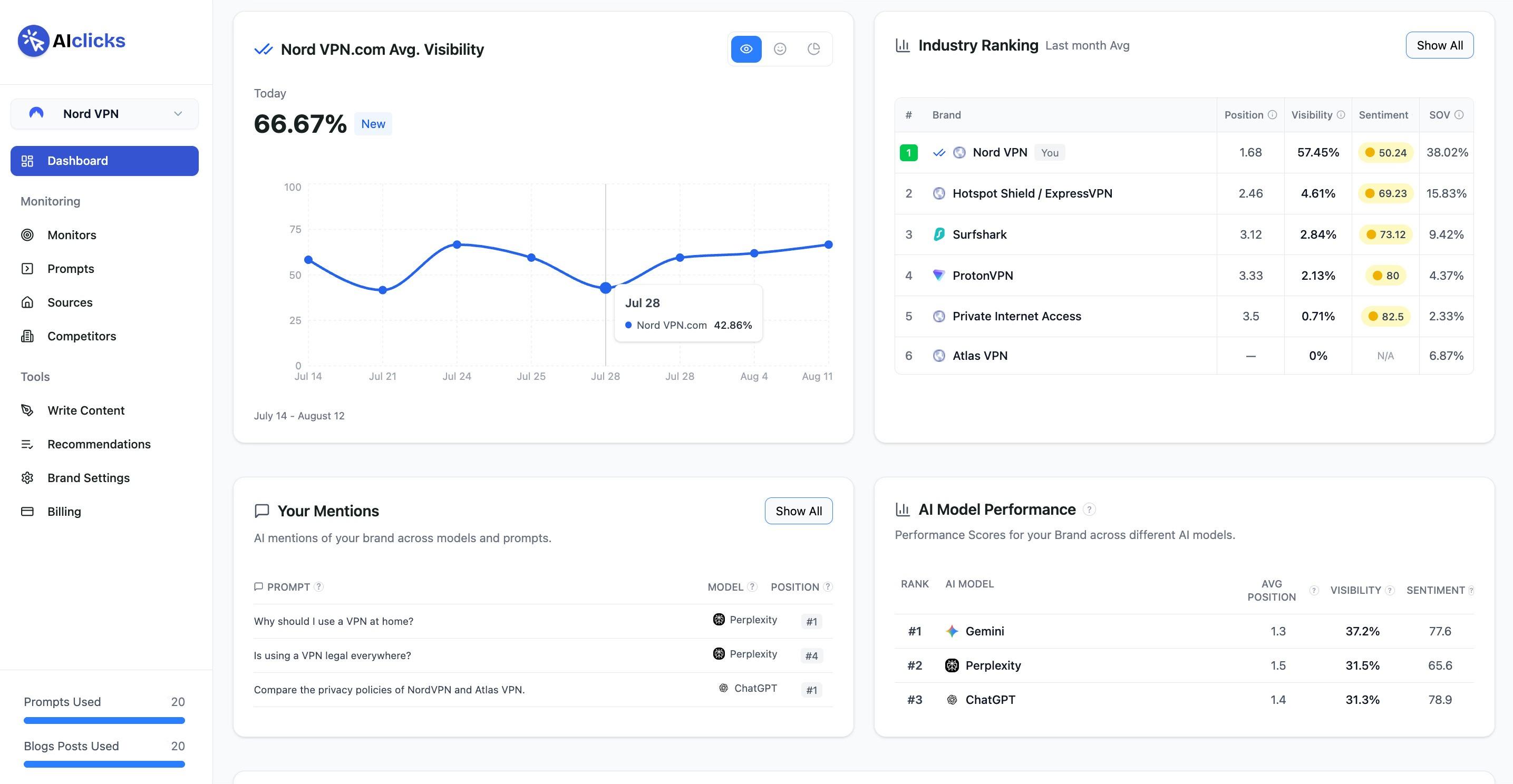
A polished AI-search dashboard can make uncertain data look settled. Percentages arrive with decimal points, trend lines rise or fall, and competitive charts rank brands with reassuring precision. The danger is not that the data is useless. The danger is forgetting that every metric depends on how the observations were collected.
Before a team changes content because a score moved, it should understand what sits underneath that score.
Ask What the System Is Actually Sampling
Start with the prompt set. Who created it? Does it reflect real customer questions, a vendor-generated keyword list, or a mixture of both? A visibility score built from broad informational prompts will tell a different story from one built around commercial comparisons.
Then look at frequency. A daily check may capture more variation than a weekly snapshot. Platform, model, country, language, and device context can also affect the answer. If those settings change, a historical chart may compare unlike observations.
The practical test is traceability. You should be able to open a score and inspect representative prompts and responses. If the platform only provides an aggregate index, treat it as directional rather than exact.
Separate Brand Mentions From Source Citations
A generated answer may name a company without using that company’s website as a source. It might rely on a review, marketplace, forum, news story, or competitor comparison. This distinction matters because the action differs.
If your site earns direct citations, examine the pages that succeed. If the brand is mentioned but external sites dominate the sources, reputation and third-party coverage may deserve attention. If neither appears, the issue could be relevance, content quality, authority, or simply the sampled prompt set.
Combining all three outcomes into one “presence” metric can hide the route through which the brand becomes visible.
Test Reproducibility Before Calling Something a Trend
One answer is an observation, not a trend. Generative systems can produce different wording and source choices across repeated runs. That means a single gained or lost citation should not trigger a rewrite.
Look for repeated movement across a topic cluster or across multiple checks. If several related prompts begin citing the same new competitor source, that pattern deserves investigation. If one prompt changes once and returns to normal later, the best action may be no action.
This is where historical records add value. They help a team distinguish persistent movement from ordinary output variation.
Audit Vendor Metrics Like You Would Any Other KPI
When comparing search visibility optimization tools, write down the formula or practical meaning of each headline metric. “Share of voice,” “AI visibility,” “citation rate,” and “average position” may sound familiar across products while being calculated differently. Never assume two platforms use the same denominator.
A useful metric should answer four questions: what is counted, what is excluded, what population it represents, and what decision it supports. If you cannot answer those questions, avoid using the number as a performance target.
This matters especially in executive reporting. A metric can become a goal simply because it looks measurable, even when its connection to revenue, qualified discovery, or audience value remains weak.
Look for Page-Level Evidence
The most actionable AI-search data usually points back to specific pages. Which URLs receive citations repeatedly? What kinds of questions lead to those citations? Which pages never appear despite strong traditional search performance?
Page-level analysis moves the conversation from “our visibility fell” to “our implementation guide stopped appearing on setup questions after competitors published newer documentation.” The second statement can be investigated. The first only creates anxiety.
Keep a list of high-performing source pages and study what makes them useful. Strong pages often have a clear answer, credible evidence, specific examples, and enough surrounding context to stand on their own. Do not copy a successful format mechanically; identify the information advantage behind it.
Connect the Dashboard to Independent Data
No vendor should be the sole source of truth about its own success metric. Cross-check AI-search observations with Search Console, web analytics, server logs where appropriate, customer research, and conversion data. You may also manually test a small set of important prompts to confirm that the dashboard examples resemble what users can encounter.
The numbers will not match perfectly because the systems measure different things. That is expected. You are looking for a coherent story. If a platform reports large gains while every other indicator remains flat, investigate before celebrating.
Decide What Would Change Your Mind
Good analysis includes a stopping rule. Before editing a page, decide what evidence would justify the change. Perhaps you need repeated citation loss across three checks, a competitor pattern across several prompts, and a clear content gap. Once that threshold is met, make one meaningful improvement and document it.
This discipline prevents teams from chasing every fluctuation. It also makes later evaluation possible because you know why the change happened.
AI-search data is useful when it sharpens judgment, not when it replaces judgment. Inspect the sampling, understand the metric, verify repeated patterns, connect observations to pages, and cross-check against independent outcomes. A dashboard should make uncertainty easier to manage. It should never make you forget that the uncertainty exists.

 English
 Arabic
 French
 Spanish
 Portuguese
 Deutsch
 Dutch
Dutch
 Italiano
 Russian
 Romaian
 Portuguese (Brazil)
 Greek
Greek
