


Paper Bag Packaging for Food: Types, Benefits & Important Considerations
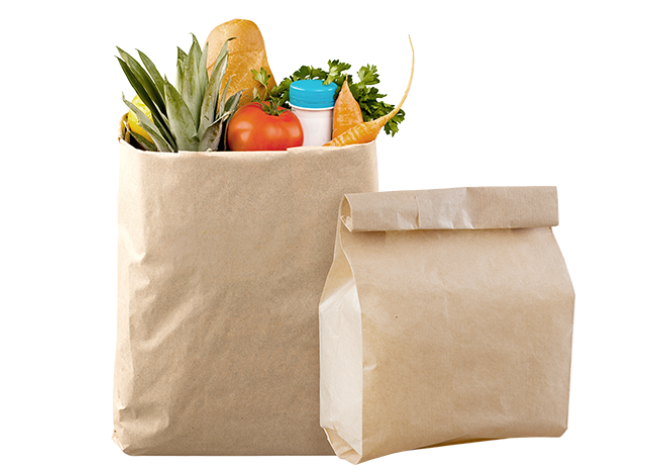
Paper bag packaging has become an increasingly popular option for restaurants, cafés, bakeries, grocery stores, takeout businesses, and food delivery companies. As businesses look for practical alternatives to conventional plastic packaging, paper bags offer a combination of functionality, branding opportunities, and fiber-based packaging characteristics.
From kraft paper takeaway bags to grease-resistant bakery bags and self-opening square-bottom bags, there are many formats designed for different food applications. However, choosing the right paper bag requires more than simply selecting a size. Food type, moisture, grease, strength, printing, food-contact suitability, and end-of-life considerations all need to be evaluated.
This guide explores the major types of paper bag packaging for food, their benefits, and the important factors businesses should consider when selecting a packaging solution.
What Is Paper Bag Packaging for Food?
Paper bag packaging refers to bags manufactured primarily from paper and designed to carry, wrap, or package food products. Kraft paper is one of the most common materials because of its strength and versatility. Paper bags are used for applications ranging from bakery products and groceries to takeaway meals and food delivery.
Research on paper-based food packaging identifies kraft paper, greaseproof paper, tissue paper, and different bag formats—including flat, satchel, SOS, and window bags—as common food-packaging applications.
Depending on the application, paper bags may be uncoated or incorporate coatings, liners, or other treatments that provide additional resistance to grease, moisture, or other packaging challenges.
Why Is Paper Bag Packaging Popular in the Food Industry?
Food businesses need packaging that protects products while being convenient for employees and customers. Paper bags can provide several practical advantages.
They are commonly used for:
- Takeaway meals
- Bakery products
- Sandwiches
- Fast food
- Grocery items
- Fruits and vegetables
- Coffee and café orders
- Snacks
- Dry food products
- Food delivery orders
Paper bags can also provide a large printable surface, allowing businesses to incorporate logos, colors, product information, QR codes, and promotional messages.
Types of Paper Bag Packaging for Food
Different foods require different packaging characteristics. Here are some of the most common paper bag formats.
1. Kraft Paper Bags
Kraft paper bags are among the most widely used options for food businesses. Kraft paper is known for its strength and can be produced in different grades and weights.
These bags can be used for:
- Takeaway orders
- Grocery shopping
- Bakery products
- Restaurants
- Cafés
- Food delivery
- Dry food products
Kraft paper can be supplied in natural brown or white formats and can also be customized with printing.
2. SOS Paper Bags
SOS stands for Self-Opening Square bags. These bags have a square bottom that allows them to stand upright.
Their upright structure makes them particularly useful for:
- Bakeries
- Grocery stores
- Quick-service restaurants
- Takeaway food
- Food delivery
- Snack products
The flat bottom can also make filling and handling more convenient for employees.
3. Flat Paper Bags
Flat paper bags are simple, lightweight formats commonly used for smaller food products.
Typical applications include:
- Sandwiches
- Bakery products
- Snacks
- Small takeaway items
- Dry foods
Their straightforward construction makes them suitable when a business needs simple and economical packaging.
4. Grease-Resistant Paper Bags
Greasy foods can create problems for conventional paper because oil may penetrate the material. Grease-resistant papers and suitable food-contact treatments can help address this issue.
They are commonly considered for:
- Fried foods
- Bakery products
- Pastries
- Sandwiches
- Fast food
- Snacks
Businesses should verify that any grease-resistant treatment is appropriate for the intended food-contact application. The FDA notes that substances used in food packaging can serve functions such as preventing grease from passing through paper or cardboard, and applicable food-contact substances must meet relevant authorization requirements.
5. Bakery Paper Bags
Bakeries frequently use paper bags for bread, pastries, cookies, muffins, and other baked goods.
Depending on the product, bags may include:
- Paper windows
- Grease-resistant layers
- Printed branding
- Fold-over closures
- Different paper weights
For products that release moisture or contain significant amounts of fat, the packaging should be selected based on the specific product characteristics.
6. Paper Bags With Windows
Window bags combine paper construction with a transparent section that allows customers to see the product.
They can be useful for:
- Cookies
- Pastries
- Bread
- Cakes
- Confectionery
- Specialty food products
A visible product can improve presentation while allowing customers to identify the contents without opening the package.
7. Paper Carry Bags
Paper carry bags are commonly used by restaurants, cafés, grocery stores, and retail food businesses to transport packaged orders.
They can be manufactured with different handle designs, paper weights, dimensions, and printing options.
Benefits of Paper Bag Packaging for Food
1. Strong and Practical
Kraft paper can provide good strength for carrying food products and packaged orders. The appropriate paper grade and bag construction should be selected according to the expected load.
For heavier orders, businesses may need stronger paper, reinforced handles, a suitable bottom construction, or a multi-ply format.
2. Suitable for Many Food Applications
Paper bags are versatile and can be used across multiple food categories.
A single business may use different formats for different products—for example, a bakery might use window bags for pastries, flat bags for sandwiches, and larger kraft bags for customer orders.
3. Branding Opportunities
Paper bags offer valuable space for branding.
Businesses can print:
- Logos
- Brand colors
- Slogans
- Contact information
- Website details
- Social media information
- QR codes
- Promotional messages
- Recycling instructions
For restaurants and cafés, branded bags can effectively extend the customer experience beyond the store.
4. Paper-Based Packaging Can Support Sustainability Goals
Paper is a fiber-based packaging material, and paper packaging can be recyclable depending on its composition, contamination, coatings, and local recycling infrastructure.
However, businesses should avoid treating every paper bag as automatically sustainable. Coatings, liners, inks, adhesives, food contamination, and local waste-management systems can affect end-of-life outcomes.
A 2026 life-cycle assessment comparing a kraft paper bag and cardboard bag for an e-commerce application found that the kraft paper option had a lower environmental impact in that specific case, while also highlighting the importance of material production and manufacturing waste.
5. Customization Options
Paper bags can be customized in many ways.
Businesses can choose:
- Different sizes
- Paper colors
- Paper weights
- Handle styles
- Printing methods
- Window formats
- Bottom constructions
- Special finishes
This flexibility makes paper bags suitable for both small independent businesses and larger food brands.
6. Convenient for Takeaway and Delivery
Takeaway businesses need packaging that can move efficiently from the kitchen to the customer.
A well-designed paper bag can help organize multiple food containers while making the order easier for customers to carry.
The right construction is especially important for delivery orders where bags may experience handling, stacking, and transportation.
Important Considerations When Choosing Food Paper Bags
Choosing the right packaging requires consideration of the food itself and how the packaging will be used.
1. Food Type
Start by identifying the food that will be placed inside the bag.
Dry products have different packaging requirements from hot, oily, wet, or refrigerated foods.
Consider whether the food is:
- Dry
- Hot
- Cold
- Greasy
- Moist
- Liquid-containing
- Heavy
- Fragile
The packaging should be designed around these characteristics.
2. Moisture Resistance
Paper naturally interacts with moisture. Wet foods can weaken conventional paper and potentially cause leakage or structural failure.
If moisture resistance is required, businesses should evaluate an appropriate barrier or liner and verify its suitability for the intended application.
3. Grease Resistance
Oil and grease can penetrate paper and affect both appearance and strength.
For fried foods, pastries, and other oily products, grease-resistant paper or an appropriate food-contact barrier may be necessary.
The FDA specifically recognizes the role of food-contact substances in preventing grease from passing through paper and cardboard food packaging.
4. Food-Contact Safety
Food packaging must be suitable for its intended use.
Businesses should request appropriate food-contact documentation from suppliers and confirm that the materials, inks, adhesives, coatings, and other components are suitable for the intended conditions.
This is particularly important when food comes into direct contact with the bag.
5. Paper Weight and Strength
Paper weight affects the bag's strength, feel, and carrying capacity.
A lightweight bag may be suitable for a small bakery order, while a restaurant carrying several food containers may require a heavier or reinforced construction.
Choosing the right strength helps reduce the risk of:
- Torn handles
- Broken bottoms
- Bag failure
- Product damage
- Customer complaints
6. Bag Size
The bag should be large enough to accommodate the contents without unnecessary empty space.
An oversized bag may waste material and take up additional storage space, while an undersized bag may cause products to become compressed or difficult to pack.
Standardizing common order sizes can help businesses select a practical range of bag dimensions.
7. Handle Design
For carry bags, handle selection is an important consideration.
Common options include:
- Flat handles
- Twisted paper handles
- Die-cut handles
- Reinforced handles
- Handle-free designs
The handle should be selected according to the expected weight and customer carrying requirements.
8. Printing and Branding
Businesses should consider how much branding they want on the bag.
Simple one-color printing may be suitable for cost-conscious applications, while premium brands may prefer more detailed graphics.
Digital printing and other modern printing technologies can provide additional customization options, especially for businesses that require shorter production runs or frequently changing designs.
9. Coatings and Liners
Coatings can improve resistance to grease or moisture, but they may also affect recycling or composting options depending on the coating material and local infrastructure.
Therefore, businesses should consider both performance and end-of-life requirements when selecting coated paper bags.
For example, the environmental advantages of a paper bag should not be evaluated solely by its paper content; the entire construction and disposal pathway matter.
10. Sustainability Claims
Businesses should be careful when using terms such as:
- Eco-friendly
- Sustainable
- Biodegradable
- Compostable
- Recyclable
These terms can mean different things depending on the material and applicable standards.
A bag with a plastic-based lining, for example, may have different end-of-life characteristics from an uncoated paper bag.
Paper Bag Packaging vs. Plastic Bags
Paper and plastic bags each have different performance characteristics.
| Factor | Paper Bags | Plastic Bags |
|---|---|---|
| Material | Primarily fiber-based | Polymer-based |
| Branding | Excellent print surface | Good customization options |
| Strength | Depends on grade and construction | Often high tear and moisture resistance |
| Moisture resistance | Requires suitable treatment for many wet applications | Generally strong |
| Sustainability | Can support recycling depending on construction and local systems | Depends strongly on polymer type and reuse/recycling |
| Appearance | Natural and premium options available | Wide range of finishes |
| Food applications | Bakery, takeaway, grocery, dry foods and more | Broad range of food applications |
The right choice depends on the food product, performance requirements, cost, regulations, and end-of-life system rather than simply the material name.
How to Choose the Right Paper Bag for Your Food Business
A practical selection process can include the following steps:
Step 1: Identify the food product
Determine whether the food is dry, greasy, hot, cold, wet, or heavy.
Step 2: Determine the required size
Measure typical products and order dimensions to select appropriate bag sizes.
Step 3: Choose the paper grade
Select a paper weight and construction that can safely carry the expected load.
Step 4: Evaluate barrier requirements
Determine whether grease or moisture resistance is required.
Step 5: Confirm food-contact suitability
Ask the supplier for appropriate documentation for the intended application.
Step 6: Select the bag format
Choose between flat bags, SOS bags, carry bags, window bags, and other formats.
Step 7: Consider branding
Determine your preferred printing, logo placement, and design requirements.
Step 8: Evaluate end-of-life considerations
Review the bag's coatings, liners, recycling options, and local waste-management infrastructure.
Step 9: Test before ordering in bulk
Use packaging samples with actual food products to evaluate strength, grease resistance, moisture performance, handling, and appearance.
The Importance of Testing Food Paper Bags
Packaging that looks suitable on paper may perform differently in real-world conditions.
Before placing a large order, businesses should test the bags with their actual products.
Testing can evaluate:
- Load capacity
- Handle strength
- Bottom strength
- Moisture resistance
- Grease resistance
- Heat exposure
- Product fit
- Stacking
- Transportation
- Customer handling
This can help identify potential packaging failures before they affect customers.
Food Safety and Regulatory Considerations
Food packaging is subject to food-contact requirements that vary by market and intended application. Packaging components may include paper, coatings, adhesives, inks, and other substances, all of which can be relevant to food-contact safety.
In the United States, the FDA regulates food-contact substances and evaluates relevant safety information, including migration and exposure considerations.
Businesses operating in other countries should follow the applicable national and regional food-contact regulations.
It is also important to keep documentation from packaging suppliers and ensure that the supplied material matches the intended use.
PFAS and Grease-Resistant Paper
Businesses should pay particular attention to grease-resistant treatments.
The FDA states that PFAS-containing grease-proofing substances for paper and paperboard food packaging are no longer being sold by manufacturers for food-contact use in the U.S., and related authorizations were subsequently determined to be no longer effective.
For this reason, businesses should ask suppliers what grease-resistant treatment is being used and obtain appropriate compliance documentation rather than assuming that any greaseproof paper has the same composition or regulatory status.
Future of Paper Bag Packaging for Food
The food packaging industry is moving toward packaging solutions that balance functionality, branding, cost, and environmental considerations.
Paper bags are likely to remain an important option because they can be adapted to many food applications and offer substantial opportunities for customization.
Future developments are likely to focus on:
- Improved barrier technologies
- Better recyclable coatings
- Fiber-based alternatives
- Lightweight construction
- Digital printing
- Custom packaging
- Improved food-contact performance
- More efficient manufacturing
- Better end-of-life solutions
The goal is not simply to replace one material with another. Instead, successful food packaging needs to provide the right combination of product protection, food safety, convenience, branding, cost efficiency, and environmental performance.
Conclusion
Paper bag packaging for food offers a versatile solution for restaurants, cafés, bakeries, grocery stores, food manufacturers, and takeaway businesses. From kraft paper and SOS bags to grease-resistant and window formats, businesses can choose from a wide range of designs based on their products and operational requirements.
The most important step is selecting packaging according to the food being packaged. Factors such as moisture, grease, temperature, weight, bag size, paper strength, food-contact suitability, coatings, printing, and end-of-life considerations should all be evaluated before making a purchasing decision.
When properly designed and selected, paper bag packaging can provide reliable food handling, strong branding opportunities, and a fiber-based packaging option that aligns with many businesses' sustainability objectives.

 Arabic
 French
 Spanish
 Portuguese
 Deutsch
 Turkish
 Dutch
Dutch
 Italiano
 Russian
 Romaian
 Portuguese (Brazil)
 Greek
Greek
