


Brand Integration Platform: Connecting Brands With Modern Entertainment
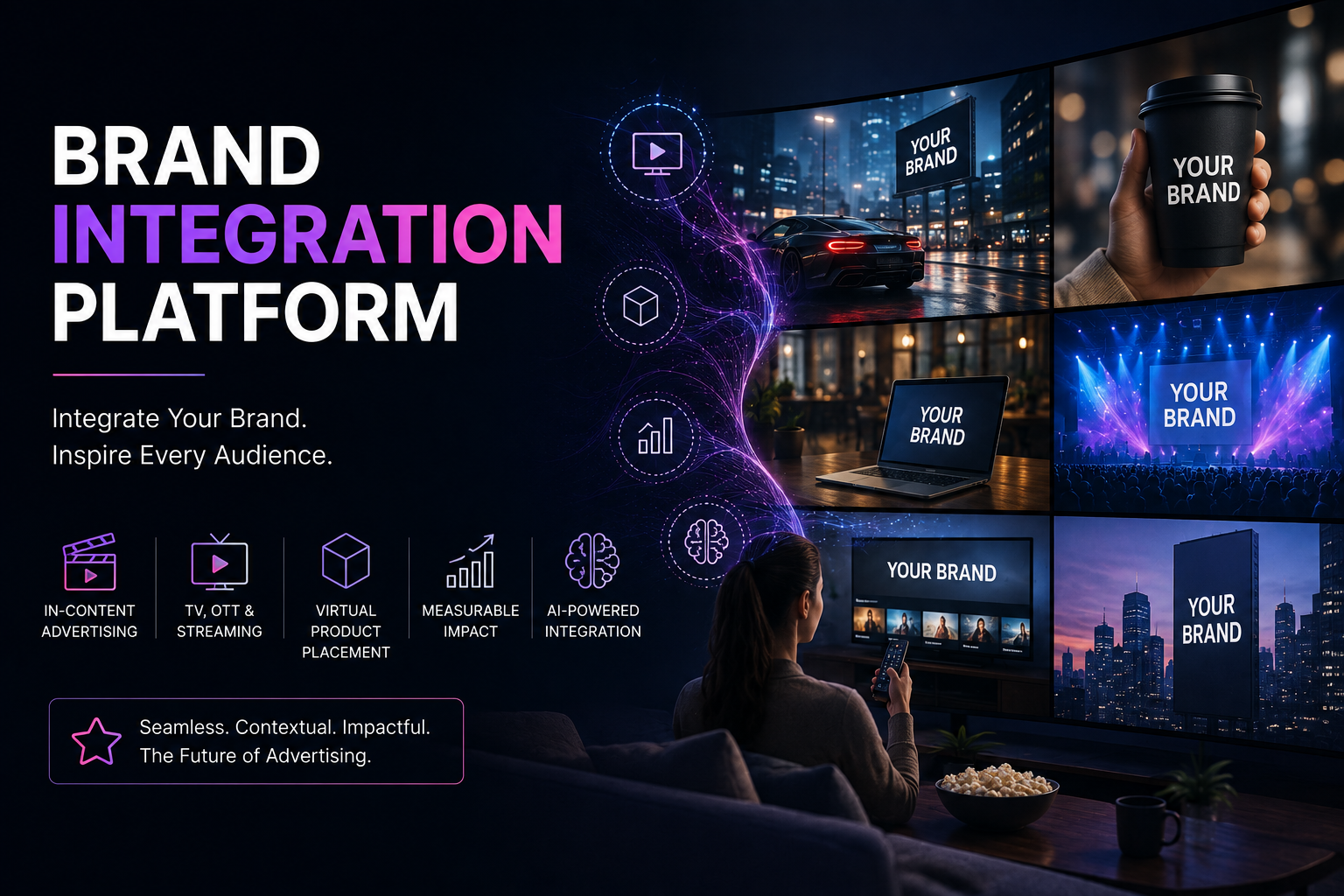
Traditional advertising often interrupts the content people want to watch. A brand integration platform offers a different approach by helping businesses place their products, services, or brand messages naturally within entertainment content. This can include films, television, streaming platforms, music videos, and other premium media environments.
As audiences move across multiple digital channels, brands are looking for advertising formats that feel more relevant and connected to the viewing experience. Brand integration combines advertising, content, technology, and creative storytelling to create more natural brand visibility.
What Is a Brand Integration Platform?
A brand integration platform is a technology-driven system that helps brands manage and deliver in-content advertising, contextual brand integrations, virtual product placement, and other forms of branded entertainment.
Instead of creating a separate advertisement that appears before or during a program, brands can become part of the content itself. For example, a product could appear naturally within a film scene, television program, music video, or streaming production.
This approach can help brands reach audiences while they are already engaged with premium content.
Why Brand Integration Is Growing
The digital advertising market is becoming increasingly focused on relevance, performance, and better audience experiences. IAB's 2026 Outlook forecasts 9.5% growth in U.S. advertising spend, while five of the six leading areas of increased buyer focus are connected to AI.
This shift is creating opportunities for more intelligent advertising formats. Rather than relying only on traditional display advertising, brands can explore contextual advertising, native experiences, creator partnerships, streaming campaigns, and in-content brand placements.
A modern brand integration platform can bring these activities into a more structured workflow.
AI and Contextual Brand Integration
Artificial intelligence is playing a growing role in advertising production and campaign execution. AI can help analyze visual environments, understand scenes, support creative production, and improve the way advertising content is integrated into media.
IAB's 2026 research reports that 78% of buyers expect to increase their focus on generative AI use in media campaigns, while 66% are increasing focus on agentic AI for ad buying and campaign execution.
For brands, this means AI is becoming more than a creative experiment. It is increasingly becoming part of the advertising infrastructure.
A platform such as Artcube's brand integration solution focuses on contextual in-content advertising, virtual product placement, TV, OTT and film campaigns, music video integrations, and campaign measurement.
Benefits of a Brand Integration Platform
A well-designed platform can help brands manage several important aspects of modern advertising:
- Contextual relevance: Place brands within suitable content environments.
- Natural visibility: Integrate products without relying only on traditional ad breaks.
- Creative flexibility: Adapt brand assets for different media environments.
- Scalability: Support campaigns across multiple content formats and channels.
- Measurement: Track campaign activity and evaluate performance.
- Workflow efficiency: Connect creative, technology, and campaign operations.
The objective is not simply to make a brand visible. The integration should make sense within the surrounding content and support the overall audience experience.
The Technology Behind Brand Integration
Creating realistic in-content advertising requires more than simply adding an image to a video. Scene movement, lighting, camera angles, geometry, reflections, depth, and temporal consistency can all affect whether an integration looks natural.
Modern AI systems can combine computer vision, generative media, video processing, workflow intelligence, and quality evaluation to support these complex requirements. Artcube describes its technology as combining these capabilities into a production system designed for cinematic advertising integrations.
This type of technology can help brands and media businesses explore advertising opportunities that were previously difficult to execute at scale.
The Future of Brand Integration
As streaming, digital video, creator content, and AI-powered advertising continue to expand, brand integration is likely to become a more important part of the advertising mix. IAB's 2026 data also shows continued growth in digital video advertising, with U.S. digital video ad spend projected to exceed $80 billion in 2026.
Conclusion
A brand integration platform connects brands with entertainment through contextual, technology-enabled advertising experiences. By combining AI, creative production, virtual product placement, and measurement, businesses can build advertising campaigns that are more relevant, scalable, and connected to the content audiences already enjoy.

 English
 Arabic
 French
 Spanish
 Portuguese
 Deutsch
 Turkish
 Dutch
Dutch
 Italiano
 Romaian
 Portuguese (Brazil)
 Greek
Greek
