


Child Ear Cleaning: The Signs Parents in London Often Miss
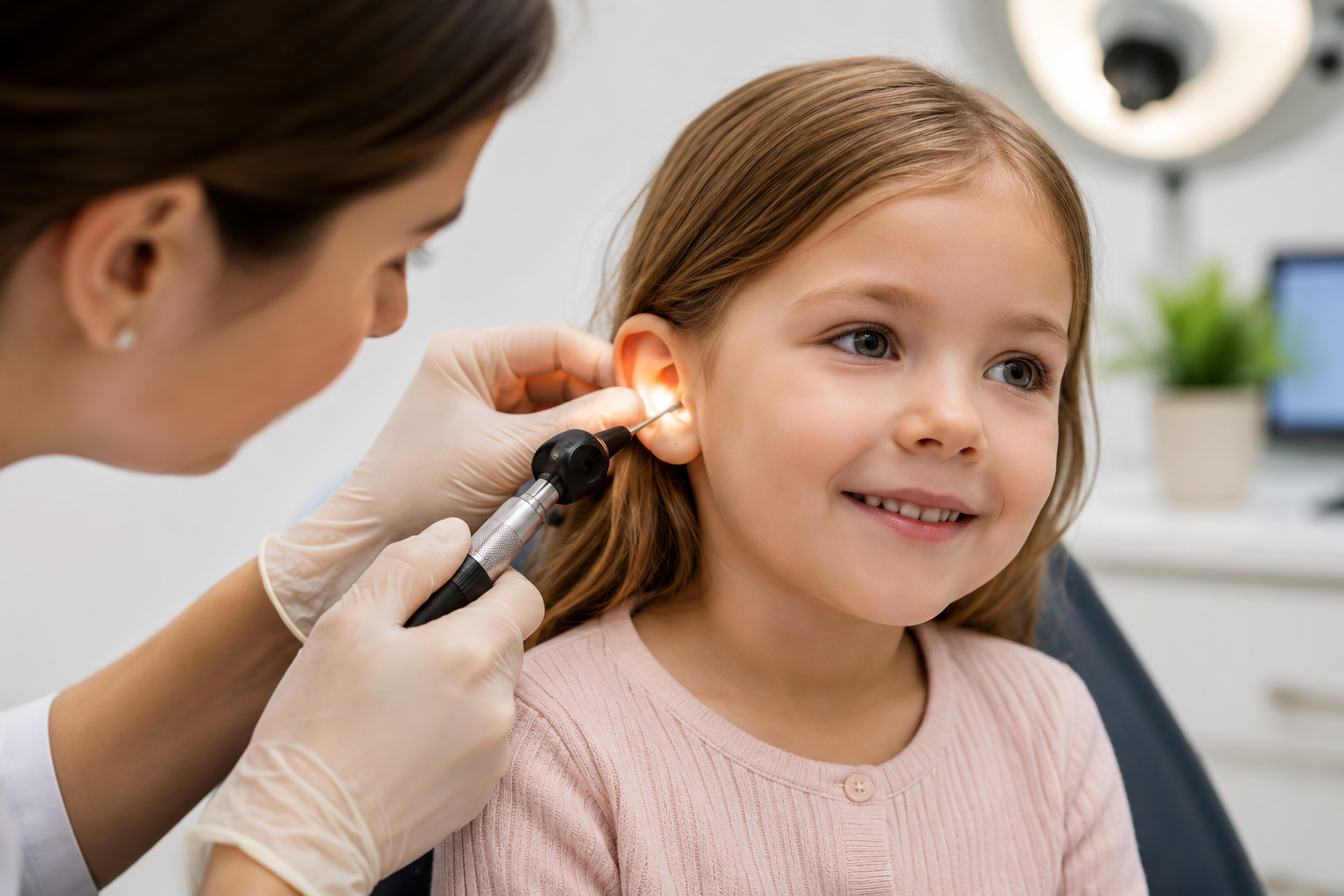
If a child is turning the television up, sitting close to speakers, or mishearing instructions repeatedly, wax build-up is worth ruling out before assuming it's a behavioural issue. Children rarely announce that their ears feel blocked — they're more likely to seem oddly withdrawn in noisy environments, which is the kind of quiet sign that a dedicated paediatric ear cleaning service, like the one run by Hearology® London Bridge, is specifically designed to catch early.
The signs worth paying attention to
Beyond the obvious — a child physically tugging or rubbing at their ear — the quieter signs are the ones that go unnoticed longest. A child who seems to mishear instructions repeatedly, who sits unusually close to the television, who struggles to follow conversation in a busy room, or who has started speaking more loudly than usual, may simply have a blocked ear canal rather than any developmental or attentional issue.
Because children can't always articulate the sensation clearly, parents often only discover the cause after a hearing check flags reduced hearing in one or both ears, which then leads back to wax as the underlying cause. Teachers sometimes notice this before parents do, particularly if a child seems distracted or slow to respond in class, since a classroom is exactly the kind of noisy, unpredictable environment where a blocked ear becomes most noticeable. Some parents only make the connection after a teacher mentions it at a parents' evening, having previously put the behaviour down to daydreaming.
Why this needs a different approach than adult ear cleaning
Cleaning a child's ears isn't simply a smaller version of an adult appointment. Children need more time to settle before anything begins, a clinician experienced in working with nervous or wriggly young patients, and a genuinely unhurried pace — rushing a frightened seven-year-old through a procedure creates a difficult appointment and can put them off ear care altogether for years to come.
A proper paediatric ear cleaning service typically runs longer appointments than the adult equivalent — often thirty minutes rather than fifteen — specifically to allow for this. The clinician should also be someone with genuine experience working with children, not simply an adult-focused audiologist adapting on the day. Some clinics will let a parent stay in the room throughout, which can make a meaningful difference to how settled a young child feels. A calm, unrushed introduction — letting the child look at the equipment first, explaining what the microscope does in simple terms, sometimes even letting them hold the suction wand before it's used — tends to make the actual procedure far less daunting than the anticipation of it.
How common is this, really?
Parents are often surprised to learn how common wax build-up is in children. It isn't a sign of poor hygiene, and it isn't something that only affects children with pre-existing ear problems. Children who swim frequently, who use in-ear headphones regularly, or who simply have narrower ear canals than average are all more prone to it. In many cases there's no obvious explanation at all — some children's ears simply produce more wax than others, in the same way that adults vary considerably in how much wax they naturally produce.
What London parents should ask before booking
Not every ear clinic offers a dedicated children's service, and fewer still publicise it clearly. It's worth asking directly: what age range is seen, how long is the appointment, and does the clinician have specific paediatric experience rather than general audiology experience alone. It's also worth asking whether a surgical microscope is used — the same precision that matters for the microsuction procedure used with adults matters just as much, if not more, for a child's narrower ear canal.
It's also worth asking what happens if a child becomes distressed partway through. A good paediatric service will have a clear approach — pausing, reassuring, and resuming when the child is ready, rather than pushing through regardless. This is a meaningful difference between a service that genuinely specialises in children and one that simply accepts younger patients without adapting its approach.
What to expect on the day
Most clinics running a proper children's pathway will ask a parent to bring the child in a little early, to allow time to settle before the appointment starts. The clinician will typically talk the child through what's about to happen in age-appropriate language, rather than launching straight into the procedure. For particularly anxious children, some clinics offer a short introductory visit beforehand, purely to see the room and meet the clinician without any procedure taking place — removing the unknown before the actual appointment.
When to actually book
If a child has shown any of the signs above for more than a couple of weeks, or if a school or GP has raised a hearing concern, it's worth getting the ears checked before assuming anything more serious is going on. In many cases, the fix is a straightforward, gentle appointment rather than anything more involved.
For child ear cleaning London, Hearology® London Bridge runs a dedicated paediatric service for children aged three to seventeen, with thirty-minute appointments led by ENT nurses and audiologists experienced specifically in working with young patients.
Hearology® London Bridge, 57 Southwark Street, London, SE1 1RU. Tel: 020 3747 4615.

 English
 Arabic
 French
 Spanish
 Portuguese
 Deutsch
 Turkish
 Dutch
Dutch
 Italiano
 Russian
 Portuguese (Brazil)
 Greek
Greek
