


MCA Master Data: A Practical Guide for Business and Financial Risk Assessment
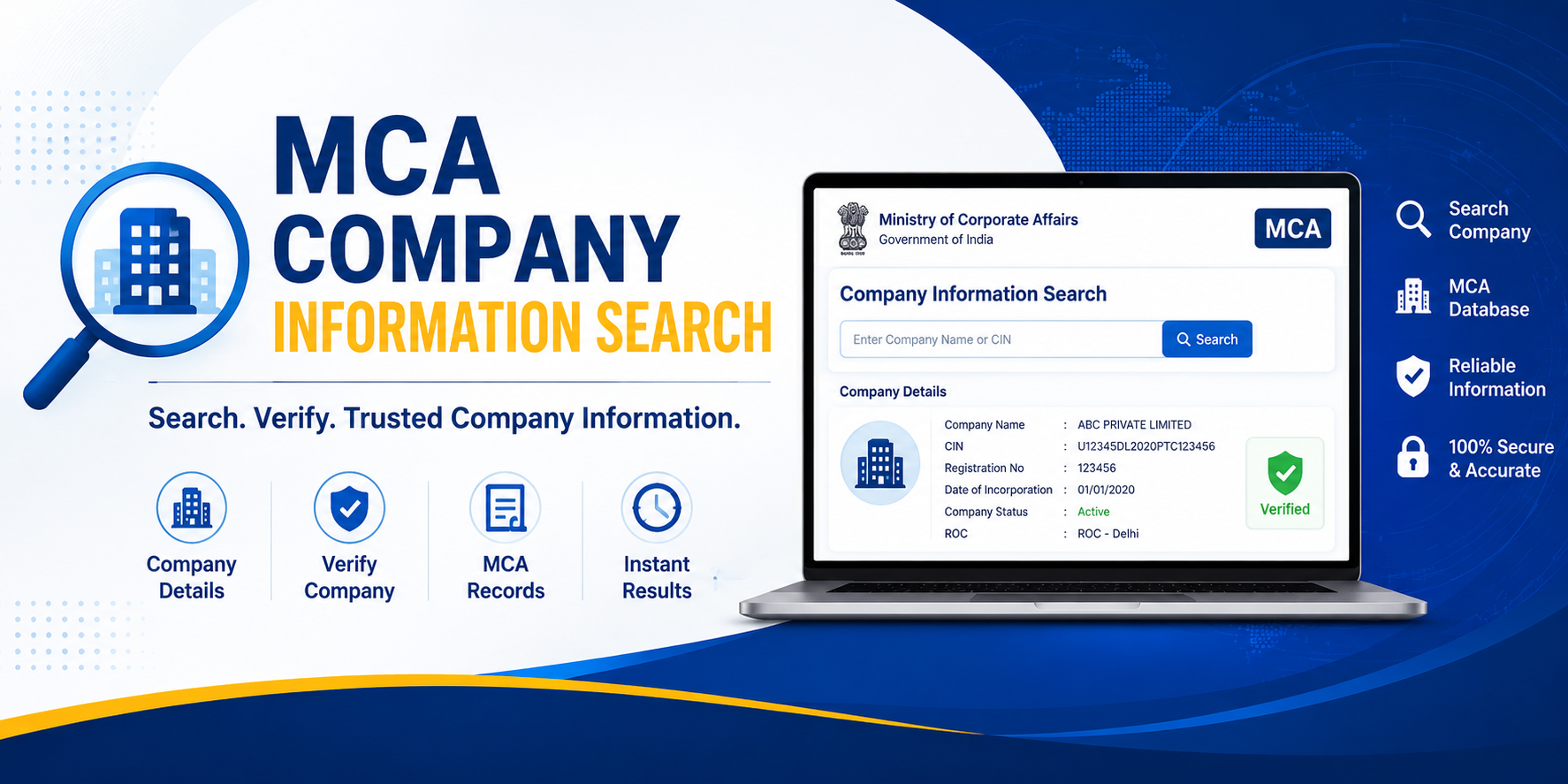
In today's business environment, verifying a company's identity and legal status is an important part of financial decision-making. Banks, NBFCs, fintech companies, lenders, insurers, enterprises, and professional service providers often need reliable corporate information before onboarding a customer, approving credit, selecting a supplier, or entering into a commercial relationship. This is where MCA Master Data becomes valuable.
MCA Master Data provides key registered information about companies and Limited Liability Partnerships (LLPs) through the Ministry of Corporate Affairs (MCA) ecosystem. When used alongside financial, credit, legal, and commercial information, it can help organizations make better-informed decisions and reduce avoidable business risks.
What Is MCA Master Data?
MCA Master Data refers to the core registered information associated with a company or LLP maintained within the MCA's corporate records.
Depending on the entity and information available, company master data may include:
- Company name
- Corporate Identification Number (CIN)
- Date of incorporation
- Company status
- Registered office address
- Company category and classification
- Authorized and paid-up capital
- Registrar of Companies (ROC) information
- Director and management details
For LLPs, relevant information can include the LLP name, LLP Identification Number (LLPIN), incorporation details, registered office, status, and designated partner information.
This information provides a useful foundation for identifying and verifying a legal business entity.
Why Is MCA Master Data Important?
Corporate information is often the first layer of business verification. Before making a financial or commercial decision, organizations need to know whether they are dealing with the correct legal entity.
Supporting Business Verification
Suppose a company is onboarding a new supplier. The supplier may provide its legal name, registration documents, and address. The procurement team can compare these details with available MCA records to identify inconsistencies.
This basic verification can help prevent errors and improve the quality of vendor onboarding.
Supporting Credit Decisions
Lenders can use MCA information as one component of a broader credit assessment.
For example, before approving a business loan, a lender may verify the company's legal identity, incorporation details, registered address, directors, and available capital information. These details can then be considered alongside financial statements, banking information, credit history, and repayment capacity.
Improving Compliance
Accurate entity identification is relevant to KYC, customer onboarding, supplier verification, fraud prevention, and internal compliance procedures.
MCA data can therefore serve as an important reference point when establishing the identity and corporate status of a business.
Key Information Available in MCA Master Data
Company Name and CIN
The registered company name and Corporate Identification Number (CIN) help distinguish one legal entity from another.
This is particularly useful where businesses have similar names or operate under different legal structures.
Incorporation Details
The incorporation date and registration information provide insight into the legal history of the entity.
However, a company's age should not automatically be interpreted as a measure of financial strength. A newly incorporated business may be financially strong, while an older company may still face significant financial risks.
Registered Office Address
The registered office provides an important identity and contact reference.
Differences between the registered address in MCA records and information supplied during onboarding may warrant additional verification.
Company Status
Company status is an important consideration when assessing whether an entity is currently suitable for a proposed transaction or relationship.
Financial institutions and enterprises should review the available corporate status information as part of their verification process.
Directors and Management
Director information can help organizations understand the registered management structure of a company.
For risk assessment, this information can be combined with director-level research, ownership analysis, litigation checks, and other due diligence information where appropriate.
How to Check MCA Master Data
Organizations can use MCA's available online services to search and verify company information.
Step 1: Identify the Company
Search using the company's registered name or CIN, depending on the available search facility.
Step 2: Review Basic Details
Check the legal name, incorporation information, registered office, company status, and other available master data.
Step 3: Verify Management Information
Review available director and management information where relevant.
Step 4: Compare With Business Documents
Compare the MCA information with documents such as incorporation certificates, contracts, invoices, GST records, financial statements, and information provided during onboarding.
Step 5: Conduct Further Due Diligence
For high-value decisions, MCA Master Data should be combined with financial, legal, ownership, credit, and commercial information.
MCA Master Data for Banks and NBFCs
Banks and NBFCs can use corporate master data during borrower onboarding, credit underwriting, and periodic customer reviews.
For example, consider a manufacturing company applying for working-capital finance. The lender can verify the company's CIN, legal name, registered office, incorporation details, status, and director information.
The lender can then combine these findings with revenue, profitability, debt obligations, cash flow, banking behavior, credit history, and repayment capacity.
This layered approach provides a stronger basis for assessing credit risk than relying on corporate registration data alone.
MCA Master Data for Fintech Companies
Fintech companies often need to verify businesses at scale. Structured corporate information can make digital onboarding and business verification more efficient.
MCA data can be incorporated into broader risk workflows that include:
- Business verification
- KYC processes
- Fraud screening
- Credit assessment
- Counterparty risk analysis
- Customer onboarding
Automating routine checks can reduce manual work while allowing higher-risk cases to receive enhanced review.
MCA Master Data for Supplier and Counterparty Risk
Enterprises can also use MCA information to support supplier and counterparty due diligence.
For example, before signing a long-term contract with a new supplier, a company may verify its legal existence, registered address, directors, incorporation details, and status.
Further assessment can then examine financial stability, payment behavior, litigation, credit exposure, ownership, and operational capacity.
This is particularly important when the supplier provides critical goods or services where disruption could affect business continuity.
Limitations of MCA Master Data
While useful, MCA Master Data should not be treated as a complete company risk report.
It may not provide a complete picture of:
- Current financial health
- Payment behavior
- Creditworthiness
- Operational performance
- Commercial reputation
- Future business performance
- All aspects of beneficial ownership
Therefore, organizations should combine MCA information with financial analysis, credit reports, due diligence, legal checks, and ongoing monitoring when making important decisions.
How MNS Credit Management Group Can Help
MNS Credit Management Group provides business intelligence and credit management solutions that can help organizations evaluate customers, borrowers, suppliers, and other counterparties.
Its services include MCA Master Data, MCA Company Search, Business Information Reports, Due Diligence Reports, Credit Opinion Reports, Supplier Verification, Debt Collection, and Accounts Receivable Management.
By combining corporate information with financial and commercial intelligence, MNS helps organizations build a more comprehensive view of counterparty risk and make informed business decisions.
Conclusion
MCA Master Data is an important source of corporate information for organizations involved in lending, procurement, compliance, financial services, and business risk management. It helps verify a company's legal identity, registered details, status, and management information.
However, master data should be viewed as the starting point rather than the complete picture. Combining MCA information with financial analysis, credit assessment, legal checks, ownership research, and ongoing monitoring can help organizations make stronger decisions.
For banks, NBFCs, fintech companies, lenders, insurers, and enterprises, this structured approach can improve verification, reduce operational risk, support compliance, and create more informed and sustainable business relationships.
FAQs About MCA Master Data
What is MCA Master Data?
MCA Master Data is the core registered information associated with a company or LLP available through the Ministry of Corporate Affairs ecosystem, including details such as legal name, registration information, status, and other corporate records.
What information can be checked using MCA Master Data?
Depending on the entity and available records, users may find the company name, CIN, incorporation date, registered office, company status, capital information, ROC details, and director information.
How does MCA Master Data help lenders?
It provides a corporate verification layer that lenders can use alongside financial statements, credit history, banking information, liabilities, and repayment capacity when evaluating a borrower.
Is MCA Master Data enough for company due diligence?
No. MCA Master Data provides important corporate information but does not by itself establish financial strength or creditworthiness. A comprehensive assessment should also consider financial, legal, credit, ownership, and commercial information.
Can businesses use MCA Master Data for supplier verification?
Yes. Enterprises can compare MCA records with supplier-provided documents to verify the legal entity, registered details, status, and management structure before entering into significant commercial relationships.

 English
 Arabic
 French
 Spanish
 Portuguese
 Deutsch
 Turkish
 Dutch
Dutch
 Italiano
 Russian
 Portuguese (Brazil)
 Greek
Greek
