


How Naval, Marine and Vehicle Antennas Survive Harsh Field Conditions
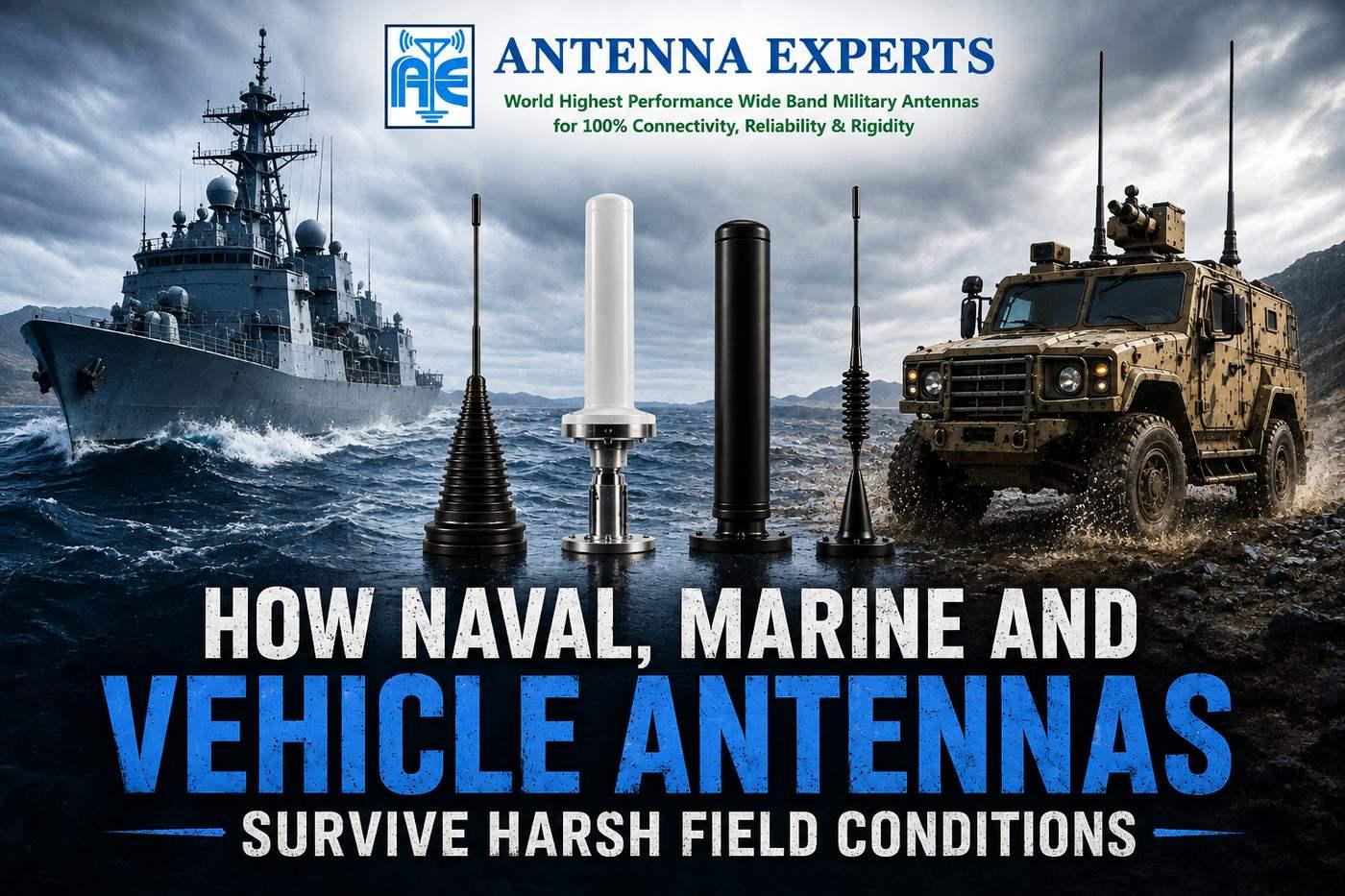
Field equipment does not receive the luxury of controlled conditions. A radio mounted on a ship deals with salt spray and constant motion. A military vehicle faces dust, vibration, and rough terrain. A soldier carrying a manpack radio needs equipment that keeps working no matter how rough the day gets. This indicates the requirement for something robust for these situations. Naval, Marine and Vehicle antennas built for naval, marine and vehicles use. These are all designed around one shared requirement. This guide breaks down what actually makes these antennas rugged enough for the harsh field.
What Makes a Naval Shipboard Antenna Rugged Enough For The Field
Ruggedness is not a marketing word. It comes down to specific engineering choices made during design and manufacturing. It is a very important property of the antenna. The materials used, how the antenna is sealed, how it is mounted, and how it has been tested. These all contribute to whether it survives real-world field conditions or fails after a few months of use. It is important to choose a reliable Naval Shipboard antenna that can survive in harsh environmental conditions on land and oceans.
A rugged antenna built properly accounts for every stress of the operating environment that will be thrown at it. This is exactly why generic commercial antennas often underperform once they are deployed in military or maritime settings even if they technically cover the right frequency range on paper.
Materials, Coatings And Corrosion Resistance
Metal parts exposed to salt air, moisture, or constant weather conditions need more than a basic paint job to survive long-term. A properly built corrosion-resistant antenna uses materials like marine-grade aluminum or stainless steel combined with protective coatings. It creates a barrier against rust and degradation.
Without this protection, exposed metal components can corrode within months, especially in coastal or marine environments where salt exposure happens daily rather than occasionally. That is why it is important to consider that a Military Vehicle Mount antenna is purchased from a trusted antenna manufacturer in India to ensure its quality materials are used.
Naval And Marine Antennas: Salt, Vibration And Wind
Ships face a combination of stresses that few other environments match. Constant salt exposure, engine vibration, and unpredictable wind conditions all act on antenna equipment at the same time. A high-gain marine antenna needs strong mechanical construction alongside corrosion resistance. A weak physical structure can fail from vibration alone even if the materials themselves resist rust well. These antennas must also maintain reliable performance during rough sea conditions. In the sea, the repeated movement can place extra stress on mounting points and connectors. Only a reliable antenna can survive and provide quality signals in those situations.
Proper sealing helps prevent water from entering sensitive parts, while durable materials help the antenna continue working in harsh marine environments for long periods. Wind resistance matters just as much, particularly for antennas mounted higher up on a vessel where wind speeds are stronger and more constant. An antenna that bends or shifts under wind pressure risks both physical damage and inconsistent signal performance. That defeats the purpose of installing high-gain equipment in the first place.
Vehicle-Mount And Vehicle Tactical Antennas
Military vehicles operate across rough terrain, dusty environments, and constant mechanical vibration from engines and uneven roads. Using any random antenna can provide a poor communication experience. To avoid that, use only a specialized antenna that is designed for such harsh situations. A military vehicle mounted antenna is perfectly suitable on vehicles. However it needs a mounting system strong enough to handle uneven movement without loosening over time or losing alignment during operation.
-
Shock, Vibration And MIL-STD Testing
Reliable field antennas go through MIL-STD testing. This step simulates shock vibration and environmental stress before the product ever reaches deployment. The testing checks how the antenna performs under drops. A team of experts examines the antenna under sudden impacts and prolonged vibration. The testing is very similar to what a vehicle experiences on rough terrain over extended missions. A Military Tactical Antenna that has passed this kind of testing gives integrators confidence it will hold up beyond just looking sturdy on paper.
-
Mounting And Deployment Options
Different platforms need different mounting approaches. Some vehicle installations require permanent fixed mounts. While manpack systems need lightweight quick deploy options. This helps soldiers to set up and take down easily in the field. Understanding which deployment style fits your specific platform early in the selection process avoids choosing an antenna that is technically rugged. It is impractical for how your team actually needs to use it.
Tactical Radio Relay For Extended Range
Communication range becomes a real challenge in rugged terrain, hilly regions or large operational areas where a single radio transmission cannot reach every unit directly. A Tactical Radio Relay Antenna extends this range by relaying signals between units that would otherwise be out of direct communication range with each other.
This becomes especially important during extended field operations where teams are spread across a wide area. A relay setup keeps communication reliable without requiring every unit to carry excessively powerful transmission equipment. That would add unnecessary weight and power demands to already heavy field gear.
Why Choose Antenna Experts for Naval, Marine and Vehicle Antennas
Antenna Experts is an accredited antenna manufacturer and supplier in India. We design and manufacture rugged antennas built specifically for naval vehicle and tactical field use. Every product goes through rigorous testing against MIL-STD, shock vibration and environmental standards to confirm it performs reliably long after installation. Using marine grade materials and protective coatings, the team builds antennas that resist corrosion in demanding coastal and maritime environments. Antenna Experts work directly with integrators and defence teams to match the right antenna to the platform and mission it needs to support.
Frequently Asked Questions
What makes a naval antenna corrosion resistant?
It is made from materials suitable for marine use, making it rust-resistant. It is made from stainless steel or specially coated aluminum. This combination, along with protective coatings, protects exposed metal parts from salt and moisture damage over time.
How are vehicle-mount antennas tested for durability?
Vehicle-mount antennas typically go through MIL-STD testing which simulates shock vibration and environmental stress to confirm the antenna holds up under real world driving and terrain conditions before deployment.
What is a tactical radio relay antenna used for?
A tactical radio relay antenna extends communication range by relaying signals between units that would otherwise be too far apart for direct radio contact especially useful across hilly or spread out operational areas.
Which antennas suit manpack radios?
Manpack radios typically use lightweight rugged antennas designed for quick deployment and takedown balancing durability with a manageable weight since soldiers carry this equipment directly in the field.

 English
 French
 Spanish
 Portuguese
 Deutsch
 Turkish
 Dutch
Dutch
 Italiano
 Russian
 Romaian
 Portuguese (Brazil)
 Greek
Greek
