


AI Chatbots for Customer Engagement: Best Practices for Marketers
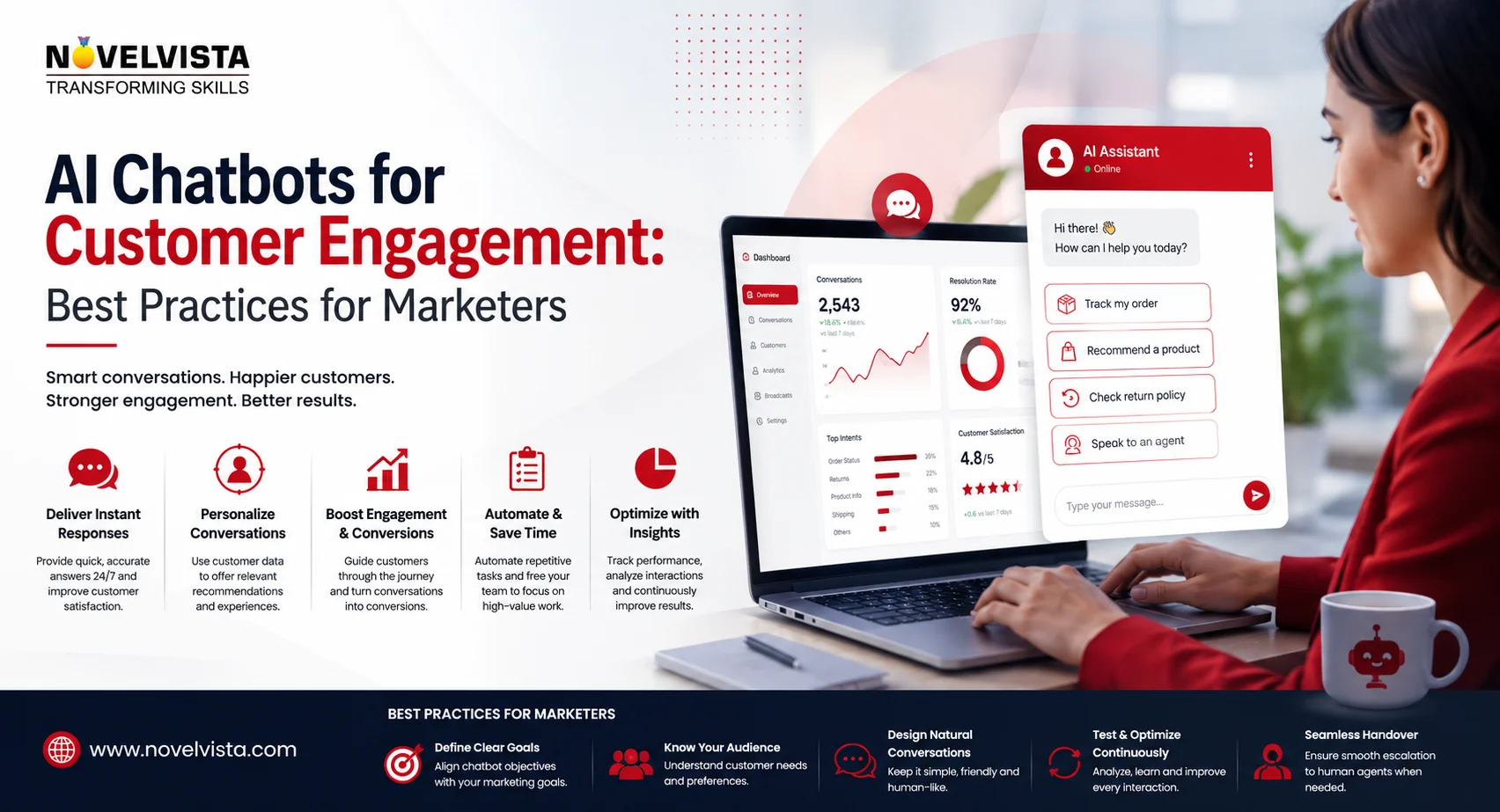
AI chatbots have quickly moved from being simple website support tools to becoming an important part of modern marketing strategies. Ai for Leaders businesses use chatbots to answer customer questions, recommend products, capture leads, guide visitors through websites, and even support customers after a purchase.
For marketers, the opportunity is significant. Customers expect faster responses, personalized experiences, and convenient communication across multiple channels. AI chatbots can help deliver that experience while reducing the workload on sales and support teams.
However, simply adding a chatbot to a website does not automatically improve customer engagement. The real value comes from how the chatbot is designed, trained, positioned, and integrated into the overall customer journey.
Understand the Purpose of Your Chatbot
Before implementing an AI chatbot, marketers should clearly define what they want it to achieve.
Some chatbots are designed primarily for lead generation. Others focus on answering frequently asked questions, recommending products, scheduling demos, providing order information, or assisting customers with technical issues.
Trying to make one chatbot handle everything can create a confusing experience.
Instead, start with a clear business objective. For example, an education company may use a chatbot to help visitors find the right training program, while a software company may use one to qualify prospects before connecting them with the sales team.
A focused chatbot is usually easier to manage and more useful for customers.
Keep Conversations Natural and Simple
Customers should feel like they are having a helpful conversation rather than navigating another complicated digital form.
Avoid making chatbot responses unnecessarily long or robotic. The conversation should be clear, friendly, and easy to follow.
For example, instead of asking users to select from ten different options immediately, the chatbot can begin with a simple question such as:
“What are you looking for today?”
Based on the response, it can then guide the conversation step by step.
AI makes it possible for chatbots to understand natural language better than traditional rule-based bots, but marketers should still design conversations carefully. Clear prompts, simple choices, and helpful responses create a better experience.
Personalize the Customer Experience
Personalization is one of the biggest advantages of AI-powered chatbots.
When connected with CRM systems, customer databases, or marketing automation platforms, chatbots can provide responses based on customer behavior and preferences.
For example, a returning customer may receive information about an existing order, while a new visitor may see product recommendations or introductory offers.
Similarly, a chatbot on a training website could recommend different courses depending on a visitor's role, experience level, or learning goals.
The goal is not to make customers feel monitored. Personalization should make the interaction more relevant and convenient.
Do Not Hide the Fact That It Is AI
Transparency builds trust.
Customers should understand when they are interacting with an AI chatbot. Pretending that the chatbot is a human representative can create frustration, especially when the system is unable to understand a complex request.
A simple introduction such as “Hi, I’m the virtual assistant” sets the right expectation.
The chatbot should also explain what it can help with. This reduces confusion and makes conversations more productive.
Provide an Easy Human Handoff
No chatbot can handle every customer situation.
Some questions involve complaints, complex technical problems, sensitive account issues, negotiations, or unusual requests that require human judgment.
Marketers should therefore design a clear escalation path.
If the chatbot cannot confidently answer a question, customers should be able to reach a human representative without starting the entire conversation again.
Ideally, the chatbot should transfer relevant conversation history to the support or sales representative. This creates a smoother experience and prevents customers from repeating information.
Use Chatbots for Lead Qualification
AI chatbots can be particularly valuable for lead generation.
Instead of asking every website visitor to complete a long form, the chatbot can collect information through a conversation.
It may ask about company size, business requirements, budget, preferred services, or implementation timeline.
Based on the responses, the chatbot can identify high-intent prospects and route them directly to the appropriate sales representative.
This approach can make lead qualification faster while keeping the interaction conversational.
However, marketers should avoid asking too many questions. Customers are more likely to abandon a chatbot if it feels like an interrogation.
Integrate Chatbots with Existing Marketing Systems
A chatbot becomes much more powerful when it is connected to other business tools.
For example, integrating a chatbot with CRM, email marketing, analytics, customer support, and scheduling platforms can create a connected customer journey.
A visitor could speak with the chatbot, request a demo, select a suitable meeting time, and automatically receive a confirmation email.
The sales team could then receive the conversation details inside the CRM.
This reduces manual work and helps marketing and sales teams maintain better context around customer interactions.
Continuously Review Chatbot Conversations
Launching a chatbot is only the beginning.
Marketers should regularly review conversation data to understand where customers are getting stuck, which questions are asked most frequently, and where the chatbot provides weak or inaccurate answers.
Useful metrics may include conversation completion rate, lead conversion rate, response accuracy, escalation rate, customer satisfaction, and engagement rate.
Conversation analysis can also reveal valuable marketing insights.
If hundreds of customers repeatedly ask the same question, it may indicate that the website, product messaging, or customer communication needs improvement.
Protect Customer Data
Chatbots may process customer names, email addresses, business information, account details, and conversation history.
Marketers must work closely with security, legal, and IT teams to make sure customer information is handled responsibly.
Businesses should define what information the chatbot is allowed to collect, where conversations are stored, how long the data is retained, and which systems can access it.
Sensitive information should never be collected unnecessarily.
Final Thoughts
AI chatbots can significantly improve customer engagement when they are designed around real customer needs rather than technology alone.
The most effective chatbot strategies combine automation with personalization, transparency, strong integrations, and easy access to human support.
For marketers, the goal should not be to automate every conversation. It should be to make customer interactions faster, more relevant, and more convenient.
When implemented thoughtfully, AI chatbots can become more than customer support tools. They can become valuable digital touchpoints that support lead generation, customer experience, sales, and long-term engagement throughout the customer journey.

 English
 Arabic
 Spanish
 Portuguese
 Deutsch
 Turkish
 Dutch
Dutch
 Italiano
 Russian
 Romaian
 Portuguese (Brazil)
 Greek
Greek
