


Can a Pepper Grinder Factory Develop Ergonomic Grinder Solutions
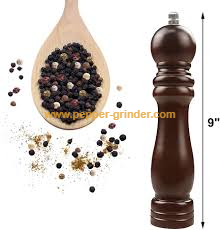
Kitchen tools are often judged by how naturally they fit into everyday routines. A Pepper Grinder Factory needs to consider grip, operation, grinding adjustment, refilling, cleaning, and storage when developing a practical product. The pepper-grinder range associated with Funansheng reflects the importance of combining mechanical function with convenient handling, particularly for consumers who use seasoning tools during regular meal preparation. A carefully planned structure can reduce awkward movements and make routine seasoning feel natural, but what design elements should manufacturers examine first?
The outer shape is one of the first details that influences handling. A well-proportioned body should sit securely within the hand without requiring excessive pressure from the fingers. Cylindrical forms are familiar in this product category, while curved profiles can provide contact areas that follow the shape of the palm. Designers can compare different contours through physical samples and user trials before settling on a production structure.
Surface treatment also affects the sense of control. Cooking environments may involve moisture, oil, flour, or other substances that can transfer onto the hands. A completely polished surface may become difficult to grip under such conditions. Fine texture, matte finishing, grooves, or dedicated grip zones can provide useful friction while preserving a clean appearance.
Weight distribution deserves careful planning. Internal components, seasoning capacity, and grinding mechanisms all contribute to the final balance. If the upper section carries excessive weight, the wrist may need to compensate during operation. A balanced internal arrangement can create a steadier feeling when the grinder is held and rotated.
The grinding mechanism itself has a direct connection with user comfort. A mechanism that requires excessive force can make repeated seasoning tiring, while an overly loose structure may provide insufficient control. Ceramic and metal grinding systems have different characteristics, so manufacturers need to select components according to the intended product structure, seasoning type, and operating method.
Particle adjustment is another feature that can influence usability. Different recipes may call for fine, medium, or coarse seasoning. An adjustment ring, knob, or other control should communicate its function clearly. Users should be able to understand how to change the setting without studying complicated instructions.
Control positioning matters as well. If the adjustment component is placed close to the natural hand position, users can change the grinding setting without completely changing their grip. Clear markings can also help users remember a preferred setting for particular dishes.
Refilling is a routine activity that deserves practical attention. A container should provide sufficient access for adding peppercorns without creating unnecessary difficulty. A secure lid can help prevent accidental opening, while an accessible opening can simplify the filling process. Transparent sections can also allow users to observe the remaining contents.
Capacity should correspond with the intended application. A compact unit can fit comfortably on a dining table or inside a kitchen cabinet, while a larger reservoir may suit frequent cooking. Manufacturers can develop several structural formats so that buyers can select a capacity suited to household habits, hospitality use, or promotional projects.
Electric operation introduces another design direction. Motorized grinding can reduce the physical movement needed during seasoning. In such products, button placement, activation pressure, motor response, battery access, and charging arrangements become important aspects of the user experience. A control should be easy to locate and operate while the cook is focused on preparing food.
One-handed operation can be useful in busy kitchens. A cook may hold a pan, spoon, plate, or ingredient with one hand while seasoning with the other. A suitable activation method can allow the grinder to operate without requiring an awkward wrist movement. This design approach can be especially relevant for electric models.
Tilt activation provides another possible interaction method. A sensor or mechanical structure can initiate grinding when the unit is positioned at a certain angle. Such a design removes the need for repeated twisting and can create a distinctive operating experience.
Button feedback should also receive attention. A control that requires excessive pressure can feel inconvenient during repeated use, while an uncertain response can make it difficult to control the amount of seasoning. Clear tactile feedback can help users understand when the mechanism has been activated.
Mechanical noise is another factor worth considering. Grinding naturally creates sound, yet excessive vibration can make a product feel uncomfortable. Correct component alignment, stable internal mounting, suitable housing construction, and careful mechanism selection can help manage unwanted movement during operation.
Cleaning requirements should be considered during the design stage rather than after production. Pepper particles can gather around openings, grinding components, adjustment areas, and internal surfaces. Accessible structures and suitable materials can simplify routine maintenance. If certain components can be removed safely, users may find the cleaning process easier to manage.
Material selection influences both handling and visual presentation. Stainless steel can create a contemporary appearance and provide a firm surface, while wood can introduce a traditional character. Acrylic and other polymers can support lightweight construction and allow visible contents. Each material should be considered in relation to product purpose, manufacturing method, durability expectations, and target market.
Ergonomic testing can reveal practical details that are difficult to identify from drawings alone. Test users can hold the product, rotate it, adjust the grind, refill the container, and clean accessible areas. Their movements can show whether a particular contour, button location, or opening requires unnecessary effort.
Prototype development allows these findings to be translated into physical improvements. A sample can reveal whether the body feels balanced, whether the grip area is sufficiently comfortable, and whether the adjustment mechanism is easy to reach. Designers can then modify dimensions, surface treatment, or internal placement before the production version is finalized.
Manufacturing consistency is essential once the design has been established. A product that feels comfortable in the prototype stage should retain its intended dimensions and assembly quality during production. Component alignment, surface treatment, closure fitting, and grinding mechanism installation can all influence the final result.
Customization provides another avenue for manufacturers serving private labels. Buyers may request specific colors, materials, dimensions, finishes, logos, packaging concepts, or control arrangements. A flexible production process can adapt a basic structure to different brand identities while retaining the intended operating principles.
Packaging can also contribute to the overall experience. A well-organized package can protect the grinder during transportation and present the product clearly at retail locations. Internal supports should prevent unnecessary movement, while external graphics can communicate product characteristics without creating confusion.
Restaurants and hospitality businesses may require a slightly different approach. Staff members can operate seasoning tools repeatedly throughout a service period, so convenient handling, reliable mechanisms, suitable capacity, and simple cleaning can all become relevant considerations. Table presentation may also influence material and finish selection.
Household users may focus on compact storage, appearance, easy adjustment, and straightforward refilling. A grinder designed for home cooking can therefore emphasize intuitive operation and visual compatibility with kitchen surroundings. Understanding these usage habits can help manufacturers develop suitable product configurations.
Outdoor applications introduce additional considerations. A portable grinder may encounter movement, changing temperatures, moisture, and limited storage space. Lightweight construction and secure closure become useful characteristics when the product is carried between locations.
Quality inspection should cover functional details as well as appearance. Manufacturers can evaluate grinding consistency, adjustment movement, closure security, component alignment, surface condition, and repeated operation. Such checks can help identify assembly issues before products reach buyers.
Product development can also benefit from communication between engineering teams, production staff, and customers. Feedback from distributors and end users may reveal practical preferences that are not obvious during initial design work. Manufacturers that collect this information can incorporate relevant findings into future product development.
A useful grinder does not necessarily require an elaborate structure. In many situations, simple operation, comfortable handling, clear adjustment, secure closure, and convenient maintenance are sufficient to create a satisfying daily experience. The challenge lies in arranging these elements so that they work together without making the product unnecessarily complicated.
For buyers researching seasoning equipment, the official https://www.pepper-grinder.com presents different grinder categories and configurations. A Pepper Grinder Factory can support product development through material selection, structural design, customization, and quality inspection, while pepper-grinder solutions from Funansheng can serve household, dining, hospitality, and private-label applications. The combination of practical engineering and user-focused details provides a useful foundation for developing kitchen grinders designed around everyday handling.

 English
 Arabic
 French
 Spanish
 Portuguese
 Deutsch
 Turkish
 Dutch
Dutch
 Italiano
 Russian
 Portuguese (Brazil)
 Greek
Greek
