


A2 Desi Cow Ghee: What Is It and Why Is It Different?
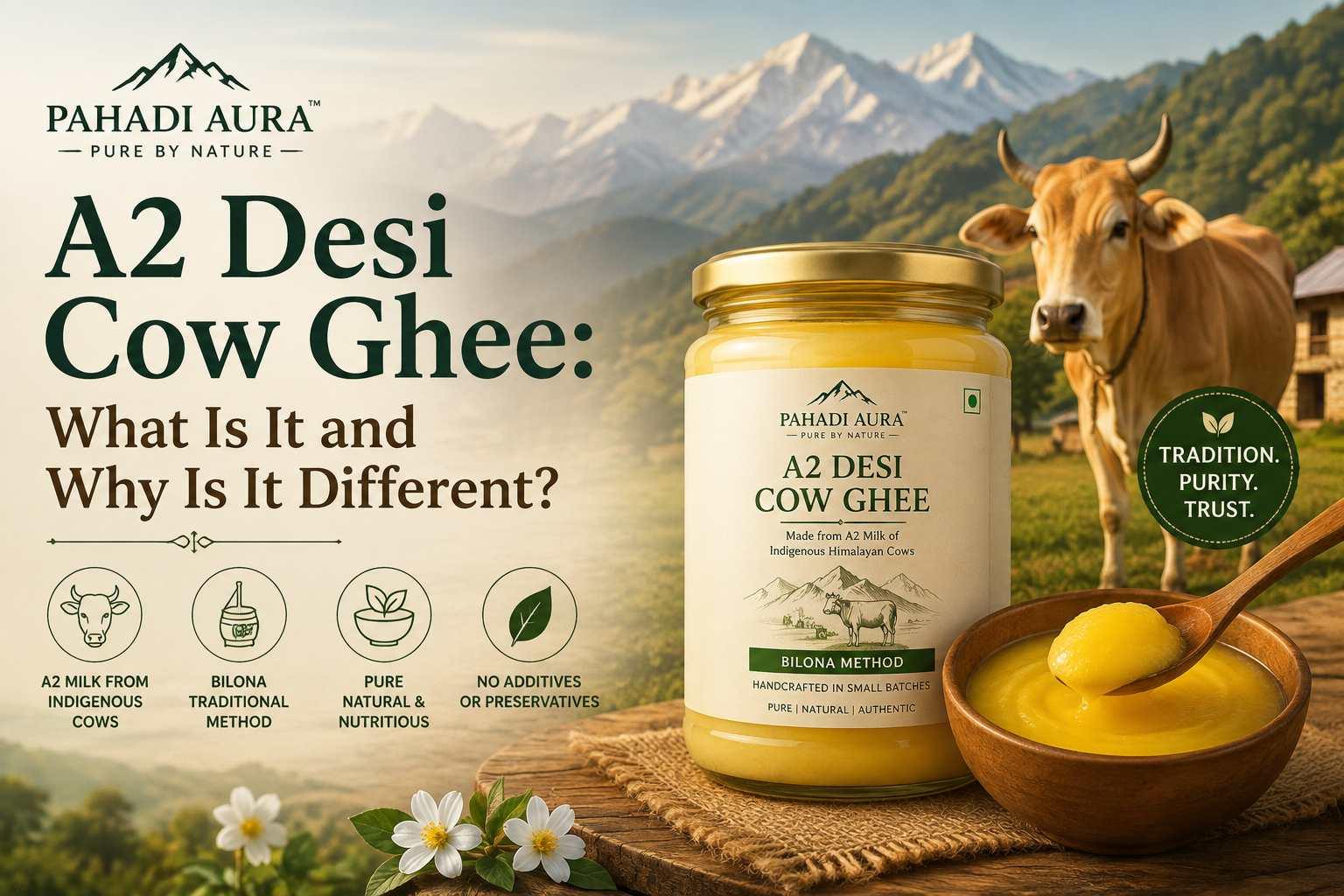
Ghee has been a part of Indian kitchens for centuries. From adding a spoonful to dal and rice to using it in traditional recipes and festive sweets, ghee is valued for its rich aroma, smooth texture, and familiar taste. Today, however, shoppers have more choices than ever, including traditional Bilona ghee, A2 cow ghee, and different varieties of commercially produced ghee.
Among these options, a2 desi cow ghee has gained attention among people looking for ghee made from the milk of indigenous Indian cow breeds and prepared using traditional methods. But what exactly does A2 mean, and what makes this type of ghee different?
Let's explore everything you need to know.
What Is A2 Desi Cow Ghee?
A2 desi cow ghee is traditionally made from the milk of indigenous cow breeds that produce milk containing the A2 type of beta-casein protein. The term "desi cow" generally refers to native Indian cattle breeds, while "A2" relates specifically to the type of beta-casein protein found in their milk.
However, A2 is only one part of the story. The way the ghee is produced can also have a significant impact on its character.
Traditional producers may use the Bilona method, an age-old Indian process in which milk is first converted into curd. The curd is then churned to separate butter, and that butter is slowly heated to produce ghee. This traditional approach requires more time and effort than many modern industrial processes.
The result is a ghee known for its distinctive aroma, rich flavor, and traditional character.
What Does "Desi Cow" Mean?
"Desi cow" generally refers to indigenous cattle breeds native to the Indian subcontinent. These breeds have been traditionally raised in different parts of India and are closely associated with local farming and dairy practices.
When buying ghee, it is therefore useful to look beyond the word "A2" and understand the source of the milk. Information about the cattle breed, sourcing practices, production method, and quality standards can help consumers make a more informed choice.
For Pahadi Aura, the focus is on traditionally crafted ghee made using milk from indigenous Himalayan cows, bringing together traditional dairy practices and the distinctive character associated with Himalayan sourcing.
How Is Traditional A2 Ghee Made?
The preparation method is one of the key differences between traditionally made ghee and many commercially produced varieties.
The traditional Bilona process generally follows these steps:
1. Fresh milk is collected
Milk sourced from indigenous cows forms the starting point.
2. Milk is converted into curd
Rather than directly separating cream from milk, the traditional process involves setting the milk into curd.
3. The curd is churned
The curd is traditionally churned to separate butter from the buttermilk.
4. Butter is slowly heated
The collected butter is gently heated until its water content evaporates and the milk solids separate.
5. Ghee is filtered and stored
The clarified ghee is filtered and carefully stored, resulting in a golden, aromatic product.
This process is more labor-intensive than many modern production methods, but it is valued for preserving traditional techniques and creating a distinctive taste and texture.
A2 Ghee vs Regular Ghee: What's the Difference?
The primary difference lies in milk source and production approach.
Regular ghee available in the market can be produced from different types of milk and may be manufactured using modern processing techniques. A traditionally made A2 cow ghee, on the other hand, is associated with milk from indigenous cows and, in many cases, traditional preparation methods such as Bilona.
It is important to remember that not every A2 ghee is necessarily Bilona ghee. Similarly, the word "Bilona" describes the preparation method rather than the type of beta-casein protein in the milk.
Therefore, when choosing ghee, consumers should consider both factors: where the milk comes from and how the ghee is made.
Why Do People Prefer Traditionally Made Ghee?
One of the biggest attractions of traditional ghee is its sensory experience.
It often has a rich, buttery aroma and a distinctive flavor that works beautifully with everyday Indian foods. A small amount can add depth to dal, khichdi, rice, roti, vegetables, and many traditional dishes.
Traditional preparation also connects modern consumers with an older way of producing dairy foods. Instead of treating ghee simply as another cooking fat, the process highlights craftsmanship, sourcing, and culinary tradition.
For families who value minimally processed and traditionally prepared foods, these qualities can be an important part of their purchasing decision.
How Can You Use A2 Desi Cow Ghee?
Ghee is remarkably versatile and can easily become part of everyday cooking.
You can use it to:
-
Add a small spoonful to dal or khichdi.
-
Spread it over warm roti or paratha.
-
Use it for tempering spices.
-
Add it to rice for extra aroma and flavor.
-
Use it while preparing traditional Indian sweets.
-
Include it in recipes that call for a flavorful cooking fat.
The amount you use depends on your individual dietary needs and overall eating pattern. Like other cooking fats, ghee is calorie-dense, so moderation is important.
How to Choose Good Quality A2 Ghee
With many products available today, choosing the right ghee requires looking at more than attractive packaging.
Check the product label for information about:
-
The source of the milk.
-
The cattle breed or sourcing information.
-
The production method.
-
Ingredients and additives.
-
Manufacturing and quality details.
-
Packaging and storage instructions.
If you specifically want traditionally prepared ghee, look for clear information about the Bilona process rather than assuming that every product marketed as A2 is made using the same method.
Pahadi Aura: Traditional Ghee Inspired by the Himalayas
Pahadi Aura focuses on bringing traditional Himalayan dairy practices to modern kitchens. Its ghee is crafted from the milk of indigenous Himalayan cows and prepared using the traditional Bilona method in small batches.
The emphasis is on authenticity, careful preparation, rich aroma, and traditional taste. For consumers who appreciate the heritage behind their food, this approach offers more than just another jar of cooking fat—it connects everyday meals with traditional Indian food culture.
Final Thoughts
A2 cow ghee represents the meeting point of indigenous dairy traditions, careful sourcing, and traditional preparation. The "A2" designation relates to the type of beta-casein protein associated with the milk, while methods such as Bilona describe how the ghee is produced.
If you are exploring traditionally made ghee, understanding these differences can help you choose a product that matches your preferences. Whether you use it with dal, rice, roti, or traditional recipes, quality sourcing and careful preparation remain important factors.
For those who appreciate the taste and heritage of traditionally crafted ghee, Pahadi Aura offers a Himalayan-inspired option made with indigenous cow milk and the time-honored Bilona method.

 English
 Arabic
 French
 Spanish
 Portuguese
 Deutsch
 Turkish
 Italiano
 Russian
 Romaian
 Portuguese (Brazil)
 Greek
Greek
