


What Is the Best Technology Stack for Education App Development in 2026?
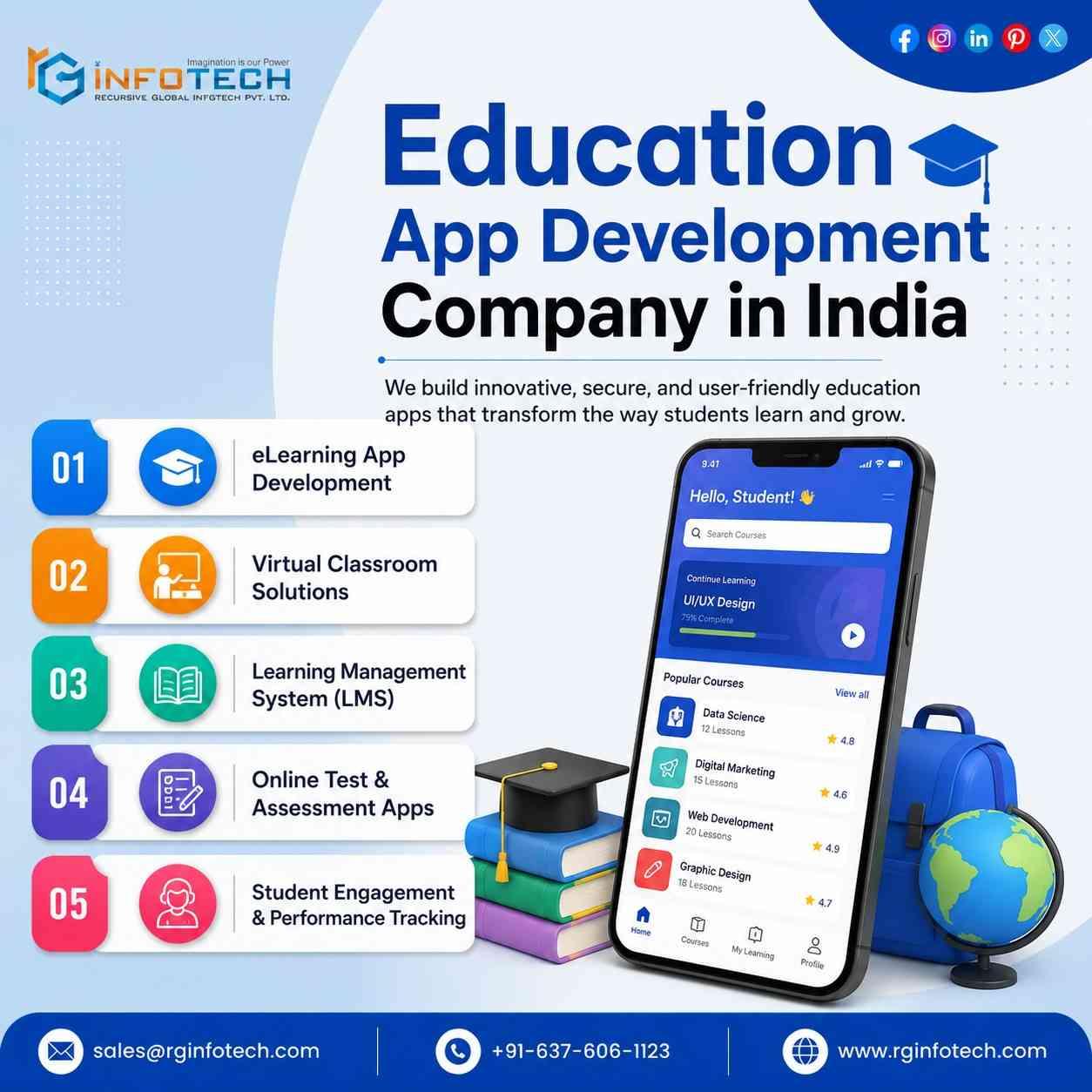
Education apps have evolved from simple platforms for watching video lessons into intelligent digital learning ecosystems. Students now expect personalized recommendations, interactive content, live classes, instant feedback, and seamless access across devices. At the same time, teachers and educational institutions need powerful dashboards, analytics, content management, and secure communication tools.
For businesses planning an education app in 2026, selecting the right technology stack is one of the most important decisions. The technology you choose affects performance, scalability, security, development costs, maintenance, and the ability to introduce future features.
The best Education App Development Services approach is not about using every new technology available. Instead, it is about selecting technologies that match the application's features, target audience, budget, and long-term objectives.
What Is a Technology Stack?
A technology stack is a combination of programming languages, frameworks, databases, cloud platforms, APIs, and development tools used to build and operate an application.
A modern education app technology stack generally includes:
-
Frontend technologies
-
Backend technologies
-
Databases
-
Cloud infrastructure
-
APIs
-
AI and machine learning tools
-
Real-time communication technologies
-
Security solutions
-
Analytics and monitoring tools
Each component has a specific role, and the right combination creates a reliable foundation for the application.
1. Frontend Technology
The frontend is what students, teachers, parents, and administrators interact with. It includes course pages, dashboards, video screens, quizzes, profiles, and navigation.
Flutter
Flutter is a strong choice for education apps that need to support both Android and iOS. It allows developers to build applications using a shared codebase while maintaining attractive interfaces and smooth animations.
Flutter can be useful for:
-
Course platforms
-
Learning dashboards
-
Quiz applications
-
Student portals
-
Video-learning apps
-
Educational marketplaces
It can also help startups reduce development time when launching on multiple platforms.
React Native
React Native is another popular cross-platform framework. It enables developers to reuse code across Android and iOS while providing access to native device functionality.
Businesses may choose React Native when they have JavaScript expertise or require integration with an existing React-based ecosystem.
Native Development
For applications requiring highly specialized platform features, native development using Kotlin for Android and Swift for iOS remains a strong option.
Native development can provide maximum platform optimization, although developing separate applications generally requires additional resources.
2. Backend Technology
The backend manages users, courses, assessments, payments, notifications, content, and other application operations.
Node.js
Node.js is well suited to applications that require real-time interactions. It can handle features such as live classes, chat, notifications, and user activity efficiently when properly architected.
Its event-driven model makes it suitable for applications expected to support many simultaneous users.
Python
Python is particularly valuable when AI and machine learning are central to the education platform.
It can support:
-
Personalized learning
-
Recommendation engines
-
AI tutors
-
Automated assessments
-
Student analytics
-
Natural language processing
Frameworks such as Django and FastAPI can also be used to develop scalable backend services.
A combination of Node.js and Python can be effective when an application requires real-time functionality alongside AI-powered capabilities.
3. Database Technology
Education apps manage different types of information, including user profiles, courses, test results, learning progress, payments, and content.
PostgreSQL
PostgreSQL is an excellent choice for structured and transactional information. It can manage student accounts, enrollments, subscriptions, assessments, and other relational data.
MongoDB
MongoDB provides a flexible document-oriented structure. It can be useful for content-heavy applications where data structures may evolve frequently.
Redis
Redis can work alongside the primary database as a high-speed caching layer. It can improve response times for frequently accessed data and support temporary information such as sessions and real-time activity.
The choice between databases should depend on the application's data model rather than popularity alone.
4. Cloud Infrastructure
Cloud technology provides the infrastructure required to host, scale, and manage an education application.
Platforms such as AWS, Google Cloud, and Microsoft Azure can provide services for:
-
Application hosting
-
Cloud databases
-
File storage
-
Video content
-
Content delivery
-
Authentication
-
Monitoring
-
Automated scaling
-
Backups
Cloud infrastructure is particularly important for education platforms because usage can increase significantly during examinations, course launches, or live classes.
5. AI and Machine Learning
AI is one of the most important technologies shaping education apps in 2026.
Instead of presenting identical content to every learner, AI can analyze user behavior and provide personalized experiences.
Potential AI features include:
AI Tutors
AI-powered assistants can answer questions, explain concepts, and provide learning guidance around the clock.
Personalized Recommendations
Machine learning models can recommend courses, lessons, quizzes, and resources based on a student's interests and performance.
Automated Assessments
AI can assist with question generation, answer evaluation, and feedback.
Predictive Analytics
AI can identify learning patterns and help educators recognize students who may require additional support.
Technologies such as TensorFlow, PyTorch, OpenAI APIs, and other machine learning platforms can be integrated depending on the use case.
6. Video and Live Learning Technology
Video is central to many education platforms. Applications may need both recorded lessons and real-time classes.
Developers can integrate video streaming and conferencing solutions through specialized APIs or technologies such as WebRTC.
Important capabilities can include:
-
Live video classes
-
Screen sharing
-
Recording
-
Chat
-
Attendance tracking
-
Video playback
-
Adaptive streaming
A scalable video architecture is important because poor-quality streaming can negatively affect the learning experience.
7. Real-Time Communication
Students and teachers may need to communicate through chat, notifications, discussion forums, or live classrooms.
WebSockets and Socket.IO can support real-time communication, while Firebase services can simplify notifications and certain real-time application features.
The right technology depends on the expected number of users and the complexity of communication requirements.
8. Payment Integration
If the app offers paid courses, subscriptions, or certifications, secure payment integration is essential.
Payment systems should support relevant payment methods while providing secure transaction processing.
The backend should also handle:
-
Subscription management
-
Payment confirmation
-
Refunds
-
Failed payments
-
Invoices
-
Recurring billing
Security should be prioritized throughout the payment workflow.
9. Security Technology
Education platforms may collect personal information, academic records, payment details, and learning data. Security therefore needs to be considered from the beginning.
Important security measures include:
-
Data encryption
-
Secure authentication
-
Multi-factor authentication
-
Role-based access control
-
API security
-
Secure payment processing
-
Regular vulnerability testing
-
Automated backups
Applications targeting children may require additional privacy and parental control considerations depending on the target market and applicable regulations.
10. Analytics and Monitoring
Analytics can help education businesses understand how learners use the application.
Tools such as Firebase Analytics, Google Analytics, Mixpanel, and other monitoring solutions can provide insights into:
-
User engagement
-
Course completion
-
Student retention
-
Quiz performance
-
Subscription conversions
-
Feature usage
Application monitoring can also identify crashes, slow APIs, and performance issues before they affect a large number of users.
How to Choose the Right Technology Stack?
There is no universal technology stack for every education application. Your choice should depend on:
-
Target audience
-
Required features
-
Expected number of users
-
Development budget
-
Platform requirements
-
AI requirements
-
Security needs
-
Scalability expectations
-
Development timeline
-
Long-term product roadmap
For example, a startup building a basic learning application may choose Flutter, Node.js, PostgreSQL, cloud infrastructure, and third-party APIs.
An enterprise platform with AI tutoring, live classes, advanced analytics, and millions of users may require a more distributed architecture with dedicated services and specialized infrastructure.
A reliable Education App Development Services provider can evaluate these requirements and recommend a technology stack that balances performance, scalability, development speed, and cost.
Future-Proofing Your Education App
Technology continues to evolve rapidly. Businesses should therefore avoid building an architecture that depends too heavily on a single tool or outdated technology.
A modular architecture makes it easier to add AI features, new payment options, additional platforms, or advanced analytics later.
API-first development, automated testing, cloud-native infrastructure, continuous integration, and scalable databases can also make future expansion easier.
Final Thoughts
The best technology stack for education app development in 2026 depends on your application's goals rather than a single framework or programming language. Flutter and React Native can support efficient cross-platform development, while Kotlin and Swift are suitable for highly optimized native experiences.
Node.js and Python can provide a strong backend foundation, while PostgreSQL, MongoDB, and Redis can manage different data requirements. Cloud platforms offer scalability, while AI, video technologies, real-time communication, and analytics can create smarter learning experiences.
The right combination of these technologies can help businesses build secure, scalable, and engaging education applications that are prepared for future growth.

 Arabic
 French
 Spanish
 Portuguese
 Deutsch
 Turkish
 Dutch
Dutch
 Italiano
 Russian
 Romaian
 Portuguese (Brazil)
 Greek
Greek
