


AI Risk Management for Executives: What Keeps Leaders Up at Night
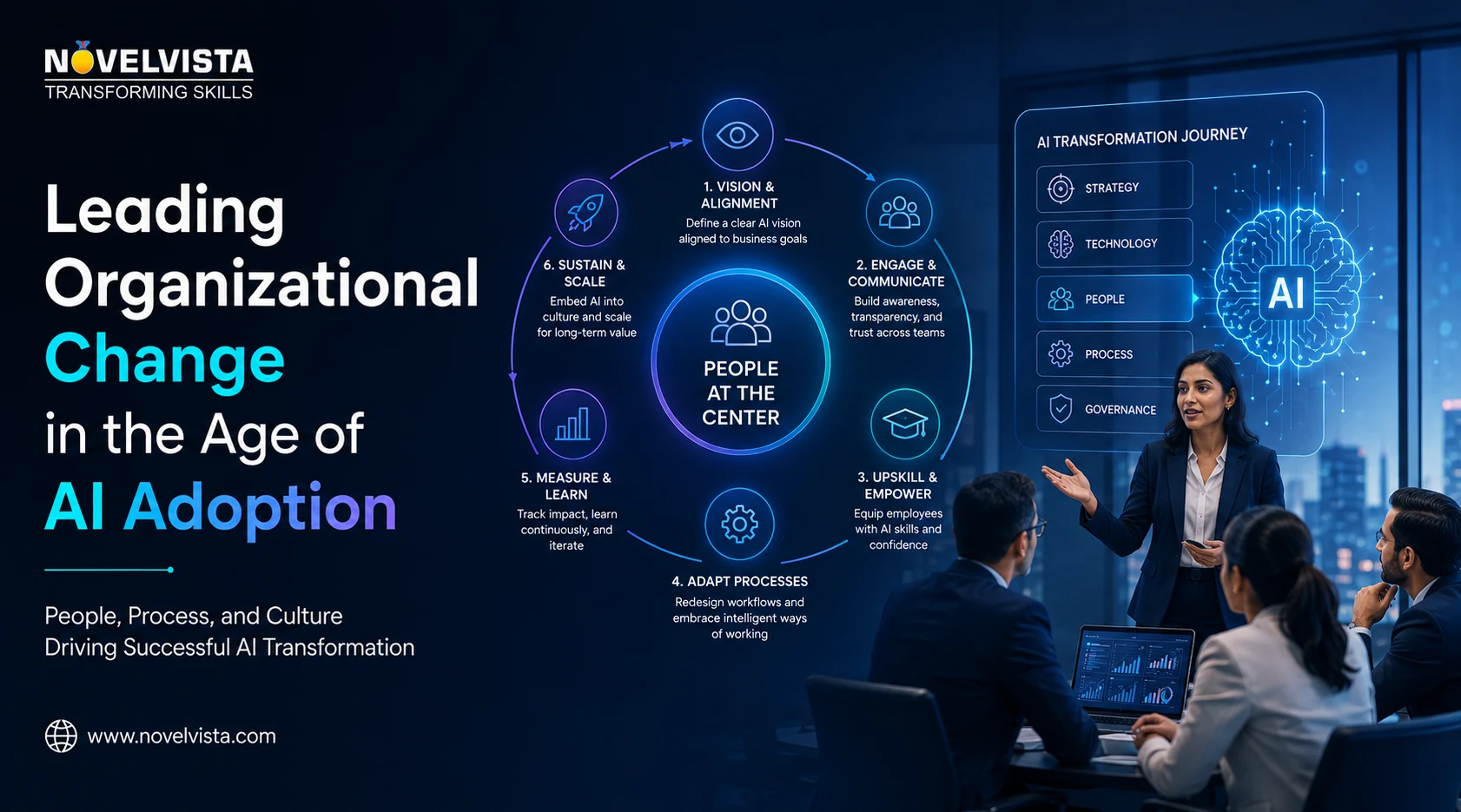
Artificial intelligence has moved quickly from innovation labs into everyday business operations. Companies are using AI for Leaders & Executives to automate customer service, analyze data, generate content, support decision-making, improve software development, and streamline internal workflows.
For executives, however, the excitement around AI comes with an uncomfortable reality: AI can create business risk just as quickly as it creates business value.
The question facing leadership teams today is no longer simply, “How do we adopt AI?” It is increasingly, “How do we adopt AI without creating risks we cannot control?”
AI risk management is therefore becoming a boardroom issue rather than just a technical responsibility.
The Fear of Losing Control
One of the biggest concerns for executives is visibility.
Employees across organizations are already using tools such as generative AI assistants, coding copilots, automation platforms, and AI-powered analytics tools. In many organizations, leadership may not even know exactly where AI is being used.
This creates the problem often described as shadow AI.
An employee might upload internal documents into a public AI tool to summarize them. A developer might paste proprietary source code into an AI assistant. A marketing employee may generate customer-facing content without verifying the information.
Individually, these actions can seem harmless. Collectively, they can create serious security, privacy, compliance, and reputational risks.
Executives therefore need clear visibility into which AI systems are being used, what information they can access, and which business processes depend on them.
Data Privacy and Confidential Information
Data remains one of the most important AI risks.
AI systems often require large amounts of information to generate useful results. But businesses handle sensitive information every day, including customer records, financial data, intellectual property, employee information, contracts, and strategic plans.
If sensitive information is accidentally shared with an external AI platform, the organization may face regulatory or contractual consequences.
Executives should ensure that AI governance policies clearly define what types of information employees can and cannot enter into AI systems.
Organizations should also evaluate how AI vendors store, process, retain, and protect submitted data.
The easiest AI tool to use is not necessarily the safest one to use.
When AI Gives the Wrong Answer
Generative AI systems can produce responses that sound extremely confident while still being incorrect.
This becomes dangerous when AI is used in areas such as finance, healthcare, legal operations, cybersecurity, hiring, customer support, or strategic decision-making.
Imagine an AI assistant generating an inaccurate financial recommendation that influences an investment decision. Or consider a customer service chatbot giving customers incorrect information about a company's policies.
The technology may have generated the answer, but customers, regulators, and shareholders will still hold the organization responsible.
Companies therefore need human oversight for high-impact AI decisions. AI can assist professionals, but accountability must remain with people.
Cybersecurity Risks Are Changing
AI is also changing the cybersecurity landscape.
Attackers can use AI to create convincing phishing emails, automate reconnaissance, generate malicious content, and improve social engineering attacks.
At the same time, organizations are connecting AI systems to internal databases, APIs, documents, cloud environments, and business applications.
Every new connection increases the potential attack surface.
An AI agent with access to email, customer systems, financial platforms, and internal documents can become extremely powerful. That power must be carefully controlled.
Organizations should apply traditional cybersecurity principles to AI, including least-privilege access, authentication, logging, encryption, monitoring, and regular security testing.
Regulation Is Becoming Harder to Ignore
Another major concern for leadership teams is the rapidly evolving regulatory environment.
Governments and regulators are introducing new requirements around AI transparency, privacy, accountability, discrimination, safety, and risk management.
For multinational companies, the situation becomes even more complicated because AI systems may operate across multiple jurisdictions.
Executives do not need to become AI regulation experts, but organizations need a structured process for identifying applicable requirements and demonstrating responsible AI practices.
Documenting AI systems, risk assessments, approval processes, model limitations, data usage, and monitoring activities can become an important part of compliance.
Reputation Can Change Overnight
Perhaps the risk executives fear most is reputational damage.
An AI system that generates offensive content, discriminates against users, leaks confidential information, or makes an unfair automated decision can quickly become a public relations crisis.
The business impact can extend far beyond the original AI failure.
Customers may lose trust. Partners may ask questions. Regulators may investigate. Employees may become concerned about how AI is being deployed.
That is why responsible AI cannot simply be a policy document sitting somewhere in the organization. It has to become part of how AI systems are designed, approved, deployed, and monitored.
AI Risk Management Is Really Business Risk Management
Organizations should not respond to these risks by avoiding AI altogether. That approach creates another risk: falling behind competitors that use AI effectively.
The better strategy is controlled adoption.
Executives should establish an AI governance framework that identifies approved technologies, defines acceptable use, assigns accountability, categorizes AI systems by risk, and requires additional review for high-impact applications.
Regular monitoring is equally important because AI risk does not stop when a system goes live.
Ultimately, AI risk management is not about slowing innovation. It is about creating the confidence required to scale innovation responsibly.
The organizations that succeed with AI will probably not be the ones that adopt every new tool first. They will be the organizations that understand where AI creates value, recognize where it introduces risk, and build the governance needed to balance both.
For executives, that balance may be the difference between AI becoming a competitive advantage and becoming the next crisis discussed in the boardroom.

 English
 Arabic
 French
 Spanish
 Portuguese
 Deutsch
 Dutch
Dutch
 Italiano
 Russian
 Romaian
 Portuguese (Brazil)
 Greek
Greek
