


How Much Does Clinic Management Software Cost?
Introduction
Investing in Clinic Management Software has become essential for healthcare providers who want to improve efficiency, reduce administrative work, and deliver better patient care. Whether you operate a solo practice, a specialty clinic, or a multi-location healthcare facility, the right software helps streamline daily operations while enhancing the patient experience. Modern solutions also include Patient Management Software, enabling healthcare professionals to manage appointments, medical records, billing, prescriptions, and follow-ups from a single platform.
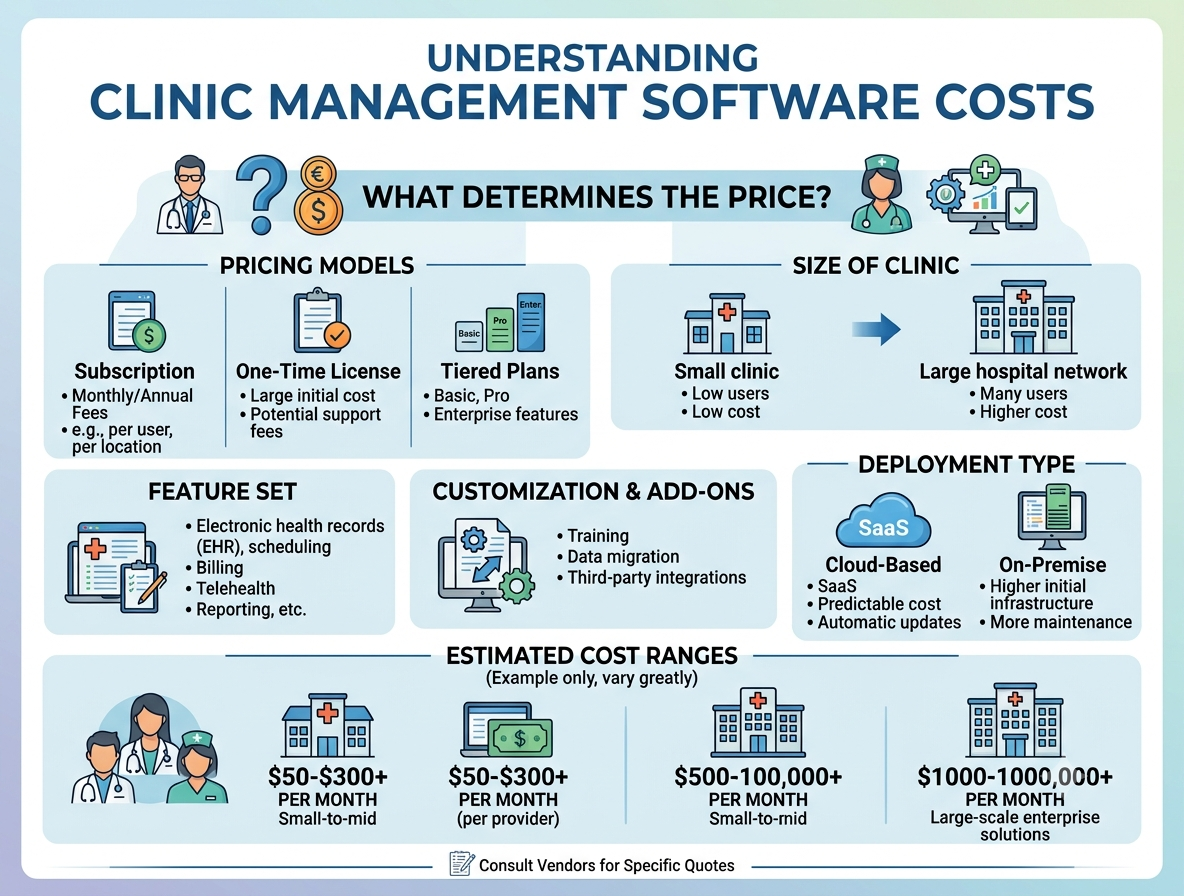
However, one of the most common questions clinic owners ask is, "How much does Clinic Management Software cost?" The answer depends on several factors, including the number of users, available features, deployment type, and customization requirements. Understanding these pricing factors helps clinics choose a solution that fits both their operational needs and budget.
Factors That Influence the Cost
The cost of Clinic Management Software varies because every healthcare organization has unique requirements. Several important factors determine the final price.
Clinic Size
A small clinic with one or two doctors generally requires fewer features than a hospital or multi-speciality medical centre. Larger organisations often need additional modules, advanced reporting, and multiple user accounts, increasing the overall investment.
Features Included
Basic software usually covers appointment scheduling, billing, and patient records. Premium plans may include:
- Electronic Medical Records (EMR)
- Online appointment booking
- Digital prescriptions
- Laboratory integration
- Pharmacy management
- Inventory tracking
- Financial reporting
- Analytics dashboards
- Telemedicine support
The more comprehensive the feature set, the higher the subscription cost.
Cloud-Based vs. On-Premise
Cloud-based Clinic Management Software typically operates on a monthly or yearly subscription. It requires minimal upfront investment and provides automatic updates, secure backups, and remote accessibility.
On-premise software requires a one-time license fee, dedicated servers, maintenance costs, and IT support, making the initial investment significantly higher.
Typical Pricing Range
Although pricing differs between software providers, most solutions fall into these categories:
Basic Plans
Entry-level packages are suitable for individual practitioners and small clinics. They usually include appointment scheduling, patient registration, billing, and digital records.
Standard Plans
Mid-tier packages are designed for growing clinics. They often include Patient Management Software, prescription management, laboratory integration, reminder systems, and advanced reporting.
Enterprise Plans
Large hospitals and healthcare groups typically require customized solutions with multiple departments, user roles, API integrations, data migration, and dedicated support. These plans are generally priced according to organizational requirements.
Many providers also offer free trials, allowing clinics to evaluate the software before making a financial commitment.
Hidden Costs to Consider
When comparing different solutions, clinics should evaluate more than the subscription price. Additional expenses may include:
- Data migration
- Staff training
- Custom feature development
- Third-party integrations
- SMS or WhatsApp notification charges
- Premium customer support
- Additional storage
- Hardware upgrades
Understanding these costs prevents unexpected expenses after implementation.
Benefits That Justify the Investment
Although software requires an ongoing investment, the long-term advantages often outweigh the costs. A reliable Clinic Management Software solution helps clinics:
- Reduce paperwork
- Improve appointment scheduling
- Minimize billing errors
- Access patient records instantly
- Enhance communication with patients
- Increase staff productivity
- Improve revenue management
- Strengthen data security
Likewise, integrated Patient Management Software enables healthcare professionals to maintain complete patient histories, monitor treatments, manage follow-ups, and deliver personalized care with greater efficiency.
These improvements save valuable time while creating a smoother experience for both staff and patients.
Choosing the Right Software
Selecting software should not depend solely on price. Instead, clinics should consider scalability, ease of use, customer support, security standards, and future growth. A flexible solution that adapts to expanding healthcare needs provides better long-term value than the lowest-priced option.
Healthcare providers should also look for software that complies with data privacy regulations, offers regular updates, and integrates seamlessly with existing workflows.
Conclusion
The cost of Clinic Management Software depends on the clinic's size, required features, deployment model, and customization needs. While pricing varies among providers, choosing the right solution should focus on overall value rather than the initial expense alone. An efficient platform with integrated Patient Management Software simplifies daily operations, improves patient satisfaction, increases productivity, and supports sustainable clinic growth. Investing in the right technology today helps healthcare providers deliver faster, smarter, and more organized care for years to come.

 English
 French
 Spanish
 Portuguese
 Deutsch
 Turkish
 Dutch
Dutch
 Italiano
 Russian
 Romaian
 Portuguese (Brazil)
 Greek
Greek
