


How to Launch an Airbnb Clone Rental Marketplace
Introduction
The online accommodation market creates opportunities for more than general vacation-rental businesses. Entrepreneurs can build specialised platforms for luxury villas, student accommodation, serviced apartments, medical travel, corporate housing, rural stays, pet-friendly properties, and destination-specific rentals.
The challenge is that a rental marketplace must serve two sides at the same time.
Hosts need convenient tools for publishing properties, controlling availability, setting prices, communicating with guests, and receiving payouts. Guests need trustworthy listings, accurate search results, transparent prices, secure payments, and reliable support.
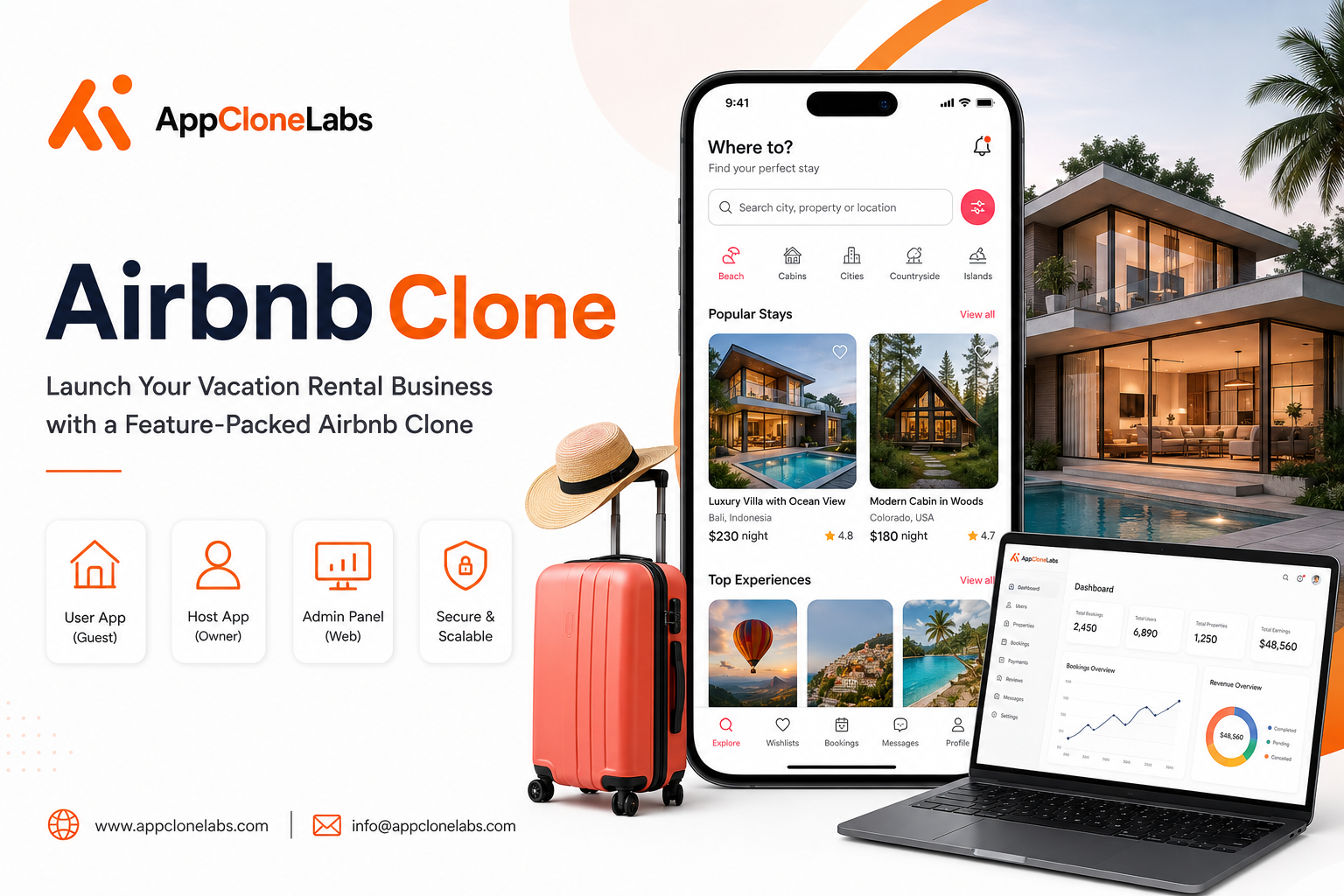
Airbnb clone app development provides a structured way to build these connected workflows. The platform can combine property listings, map search, reservation calendars, guest-host messaging, reviews, verification, commissions, payouts, and administrative operations in one marketplace.
What Is an Airbnb Clone App?
An Airbnb clone app is a custom rental marketplace inspired by the host-and-guest booking model used by established accommodation platforms.
It allows property owners and managers to publish available stays while travellers search for suitable accommodation based on location, dates, capacity, amenities, pricing, and property type.
A complete platform typically includes separate experiences for:
- Guests searching for accommodation
- Hosts managing individual properties
- Property managers operating multiple listings
- Administrators controlling marketplace operations
The term “clone” refers to the familiar marketplace structure. It should not mean copying another company’s trademark, visual design, copyrighted material, private data, or proprietary technology.
A professionally developed platform should use original branding, independent source code, customised policies, and workflows designed for its specific market.
Why Build a Focused Rental Marketplace?
A new startup may struggle to compete as a broad accommodation platform serving every country, property type, and traveller.
A focused rental marketplace can solve a more specific problem.
Possible niches include:
- Luxury vacation villas
- Student housing
- Corporate accommodation
- Rural and farm stays
- Medical travel rentals
- Pet-friendly properties
- Women-focused accommodation
- Accessible stays
- Religious tourism
- Long-term remote-work rentals
- Serviced apartments
- Destination-specific homestays
A defined niche can guide the platform’s features and operating policies.
For example, student accommodation may require monthly pricing, university-distance filters, longer reservation periods, and roommate information. A luxury villa platform may need property inspections, concierge services, large security deposits, and high-value cancellation rules.
The strongest marketplace is not necessarily the one with the most listings. It is the one that offers relevant, available, and trustworthy inventory for a clearly defined audience.
How Does an Airbnb Clone Marketplace Work?
A typical rental transaction follows this sequence:
- A host registers on the platform.
- The host completes identity or business verification.
- The host creates a property listing.
- Photos, amenities, rules, capacity, prices, and availability are added.
- The listing is submitted for approval.
- A guest searches by destination, dates, and number of travellers.
- The platform displays matching properties.
- The guest reviews a listing and its booking conditions.
- A booking request is submitted or confirmed instantly.
- Payment is authorised through the platform.
- The host and guest receive confirmation.
- Both parties communicate through built-in messaging.
- The stay is completed.
- The platform deducts its fees.
- The host payout is released.
- The guest and host submit reviews.
This listing-to-payout workflow forms the foundation of the platform’s screens, APIs, notifications, payment records, support procedures, and analytics.
Essential Guest Features
Account Registration and Profiles
Guests should be able to create accounts using an email address, mobile number, or supported authentication provider.
A guest profile may contain:
- Name and profile photograph
- Verified contact information
- Identity-verification status
- Preferred language and currency
- Saved payment methods
- Favourite properties
- Booking history
- Reviews
- Notification preferences
The account system should also support secure password recovery, active-session controls, and suspicious-login protection.
Destination and Date Search
The primary search experience should request:
- Destination
- Check-in date
- Check-out date
- Number of guests
The availability engine should remove unavailable properties from bookable results. Showing outdated availability can lead to failed bookings, host cancellations, refunds, and poor user trust.
Property Filters
Guests should be able to refine search results using criteria such as:
- Price range
- Property type
- Room type
- Number of bedrooms
- Number of bathrooms
- Amenities
- Guest capacity
- Accessibility
- Pet policy
- Instant booking
- Guest rating
- Cancellation policy
The App Clone Labs solution includes destination, date, guest, price, amenity, property-type, instant-booking, map-cluster, and ranking controls within the discovery system.
Map-Based Discovery
Map search helps guests understand neighbourhoods, nearby landmarks, and the approximate location of a property.
The platform may support:
- Property markers
- Price labels
- Result clusters
- Search-as-map-moves
- Neighbourhood boundaries
- Distance information
- Synchronised map and list views
For privacy and security, the precise property address can remain hidden until the booking reaches the required confirmation stage.
Property Details Page
The property page should contain enough information for the guest to make an informed decision.
Important information includes:
- Property title and description
- Image gallery
- Room and bed details
- Guest capacity
- Amenities
- Accessibility details
- House rules
- Check-in and check-out times
- Approximate location
- Cancellation policy
- Host profile
- Ratings and reviews
- Available dates
- Complete price breakdown
Important restrictions should be visible before checkout rather than hidden inside lengthy policy documents.
Wishlist and Saved Properties
Guests may save properties for future trips.
Wishlists can be grouped by:
- Destination
- Travel occasion
- Property category
- Budget
- Planned travel period
Saved-property reminders and availability updates can encourage users to return and complete reservations.
Essential Host Features
Host Registration and Verification
Hosts may need to provide:
- Identity documents
- Contact information
- Profile photograph
- Property ownership or management proof
- Bank details
- Tax information
- Business records
Administrators should be able to approve, reject, suspend, or request updated documents.
Property Listing Builder
A guided listing builder should help hosts provide complete and consistent information.
Hosts may add:
- Property category
- Room type
- Address and map location
- Guest capacity
- Bedrooms and bathrooms
- Amenities
- Accessibility options
- House rules
- Photos
- Pricing
- Availability
- Cancellation conditions
The official solution includes media galleries, amenities, rules, room types, capacity, location privacy, accessibility, pricing, and controlled publishing workflows.
Availability Calendar
The availability calendar helps hosts prevent overlapping reservations and manage property inventory.
Hosts should be able to:
- Open available dates
- Block unavailable dates
- Set minimum stays
- Set maximum stays
- Change prices for selected dates
- Add weekend rates
- Configure seasonal pricing
- Review upcoming reservations
- Prevent double bookings
Calendar updates should quickly appear across search results, property pages, and booking screens.
Reservation Management
The host dashboard should display:
- Guest profile
- Booking dates
- Number of travellers
- Reservation value
- Payment status
- Guest rating
- Special requests
- Cancellation conditions
Depending on the marketplace model, hosts may manually accept booking requests or allow instant booking for eligible properties.
Guest Communication
Built-in messaging can support:
- Pre-booking questions
- Reservation confirmations
- Check-in instructions
- Automated templates
- Attachments
- Push notifications
- Message reporting
- Safety controls
Keeping communication connected to the booking helps support teams investigate disputes and reduces the risk of off-platform transactions.
Host Earnings and Payouts
Hosts should be able to review:
- Gross booking revenue
- Platform commission
- Cleaning fees
- Taxes
- Refund deductions
- Deposit adjustments
- Pending earnings
- Scheduled payouts
- Completed settlements
Transparent payout reporting helps hosts understand exactly how each payment was calculated.
Property Manager Features
Professional property operators may manage multiple apartments, villas, or serviced accommodations.
A dedicated property manager dashboard can include:
- Multi-property listing controls
- Bulk availability updates
- Consolidated reservation views
- Staff accounts
- Team permissions
- Cleaning-status tracking
- Guest issue management
- Property-level reports
- Combined revenue analytics
App Clone Labs separates property-manager workflows from individual host tools, supporting bulk availability, staff access, cleaning status, guest issues, and multi-property revenue visibility.
Booking, Cancellation, and Refund Workflows
The booking engine should manage every possible reservation state.
Common states include:
- Pending
- Confirmed
- Declined
- Cancelled
- Checked in
- Completed
- Refunded
- Disputed
Cancellation policies may be:
- Flexible
- Moderate
- Strict
- Non-refundable
- Custom
The refund calculation may depend on the cancellation time, nightly rate, service fees, cleaning charges, taxes, deposits, and administrative decisions.
Support agents should be able to review the booking timeline, payment history, messages, cancellation reason, submitted evidence, and previous disputes before taking action.
Payments, Commissions, and Host Payouts
A rental marketplace must accurately track how money moves between the guest, host, and platform.
The payment workflow may include:
- Guest checkout
- Payment authorisation
- Guest service fee
- Host commission
- Cleaning charge
- Security deposit
- Coupon discount
- Tax calculation
- Partial refund
- Full refund
- Host payout
- Settlement reporting
The solution’s finance layer covers host payouts, platform fees, refunds, coupons, taxes, deposits, failed-payment states, and exportable settlement reports.
Each financial event should remain connected to the correct user, property, booking, refund, commission, and payout record.
Reviews, Verification, and Marketplace Trust
Trust is essential because guests are paying to stay in properties managed by people they may never have met.
Important trust features include:
- Guest identity verification
- Host identity verification
- Property review and approval
- Two-way ratings
- Listing moderation
- Message reporting
- Blocked-user controls
- Damage reports
- Dispute management
- Administrative audit logs
Two-Way Reviews
Guests can review the property and host, while hosts can review guest behaviour.
Review categories may include:
- Property accuracy
- Cleanliness
- Communication
- Check-in experience
- Location
- Guest conduct
- Overall satisfaction
The platform should define when reviews become visible and how administrators handle abusive, misleading, or disputed feedback.
Admin Panel Capabilities
The admin dashboard should be treated as a core product surface.
Administrators may need to manage:
- Guests
- Hosts
- Property managers
- Listings
- Verification records
- Reservations
- Cancellations
- Refunds
- Deposits
- Damage claims
- Reviews
- Message reports
- Commission rules
- Host payouts
- Coupons
- Tax records
- Marketplace analytics
Important admin functions include searchable records, filters, approval queues, bulk actions, export tools, audit trails, configuration controls, and role-based permissions.
The official solution organises administration around listing quality control, reservation disputes, payout and tax reporting, identity verification, and moderation.
Airbnb Clone Monetization Models
Guest and Host Service Fees
The marketplace can charge:
- A host commission
- A guest booking fee
- Fees to both parties
The selected fee model should be clearly reflected in checkout, invoices, refunds, and payout reports.
Premium Host Plans
Professional hosts may pay for:
- Higher listing limits
- Advanced analytics
- Property-manager accounts
- Staff access
- Lower booking commissions
- Priority support
Featured Properties
Hosts can pay to promote properties through:
- Featured search placements
- Destination pages
- Seasonal campaigns
- Homepage collections
- Partner promotions
Add-On Marketplace
The platform may generate additional revenue through:
- Cleaning
- Property photography
- Travel insurance
- Airport transfers
- Concierge services
- Maintenance
- Local experiences
- Property management
These monetization options are part of the solution’s planned revenue framework.
Suggested Technology Stack
A practical technical foundation may include:
Web Marketplace
- Next.js
- React
Mobile Applications
- React Native
- Flutter
- Native Android or iOS
Backend
- Node.js
- Modular APIs
- Role-based authentication
- Booking and availability services
Data and Search
- PostgreSQL
- Redis
- Search indexing
Marketplace Integrations
- Split-payment gateway
- Map and location services
- Cloud media storage
- Email and SMS
- Push notifications
- Analytics tools
The reference architecture includes a Next.js marketplace frontend, optional React Native applications, Node.js booking APIs, PostgreSQL availability records, search indexing, marketplace payouts, cloud storage, maps, and transactional messaging.
What Influences Airbnb Clone Development Cost?
Development cost depends on workflow depth, integrations, and marketplace complexity.
Major cost factors include:
- Number of user roles
- Web and mobile applications
- Listing-builder complexity
- Calendar and pricing rules
- Search and map features
- Booking states
- Marketplace payments
- Split payouts
- Messaging
- Identity verification
- Reviews and moderation
- Cancellation rules
- Damage claims
- Multi-language support
- Multi-currency support
- Admin-panel depth
- Testing
- Cloud deployment
- Post-launch maintenance
Search logic, availability calendars, host self-service, verification, disputes, payment splitting, maps, and messaging require careful development and quality assurance.
Recommended MVP Scope
The first release should support one complete marketplace transaction.
A practical MVP can include:
- Guest registration
- Host registration
- Basic verification
- Property listing creation
- Admin listing approval
- Destination and date search
- Basic filters
- Property pages
- Availability calendars
- Booking requests
- Online checkout
- Host payouts
- Guest-host messaging
- Cancellation management
- Reviews
- Admin dashboard
- Basic analytics
The initial version should focus on one property type and one geography.
Complex functionality such as multiple currencies, local experiences, long-term stays, smart pricing, channel-manager integrations, advanced tax rules, and deep property-manager controls can wait until real usage validates the core marketplace.
Important Rental Marketplace Metrics
Founders should measure whether the platform is creating value for both guests and hosts.
Useful metrics include:
- Active listings
- Listing approval rate
- Search-to-listing-view rate
- Listing-view-to-booking rate
- Booking completion rate
- Average booking value
- Host acceptance rate
- Cancellation rate
- Repeat guest rate
- Host retention
- Refund rate
- Dispute rate
- Average review score
- Platform commission revenue
- Average payout time
A large number of registered users does not necessarily indicate marketplace success. Completed reservations, active availability, retained hosts, repeat guests, and manageable disputes are stronger signals.
Final Thoughts
Airbnb clone app development gives travel startups and property businesses a structured foundation for launching a digital rental marketplace.
The real product is not simply the property-search screen. It is the complete operating system behind listings, availability, reservations, payments, communication, verification, reviews, refunds, host payouts, and marketplace administration.
The strongest launch strategy is to begin with one target market, one main property category, and one complete listing-to-payout workflow. Once the platform begins producing reliable bookings and retaining quality hosts, it can expand into additional locations, property types, premium plans, smart pricing, local services, and advanced risk controls.
App Clone Labs’ Airbnb Clone solution covers property listings, map discovery, calendars, reservations, messaging, reviews, secure payouts, admin operations, and client-owned source code.

 English
 Arabic
 French
 Spanish
 Portuguese
 Deutsch
 Turkish
 Dutch
Dutch
 Italiano
 Romaian
 Portuguese (Brazil)
 Greek
Greek
