


HIV Symptoms in Women After 1 Week: Common Symptoms and Testing Advice
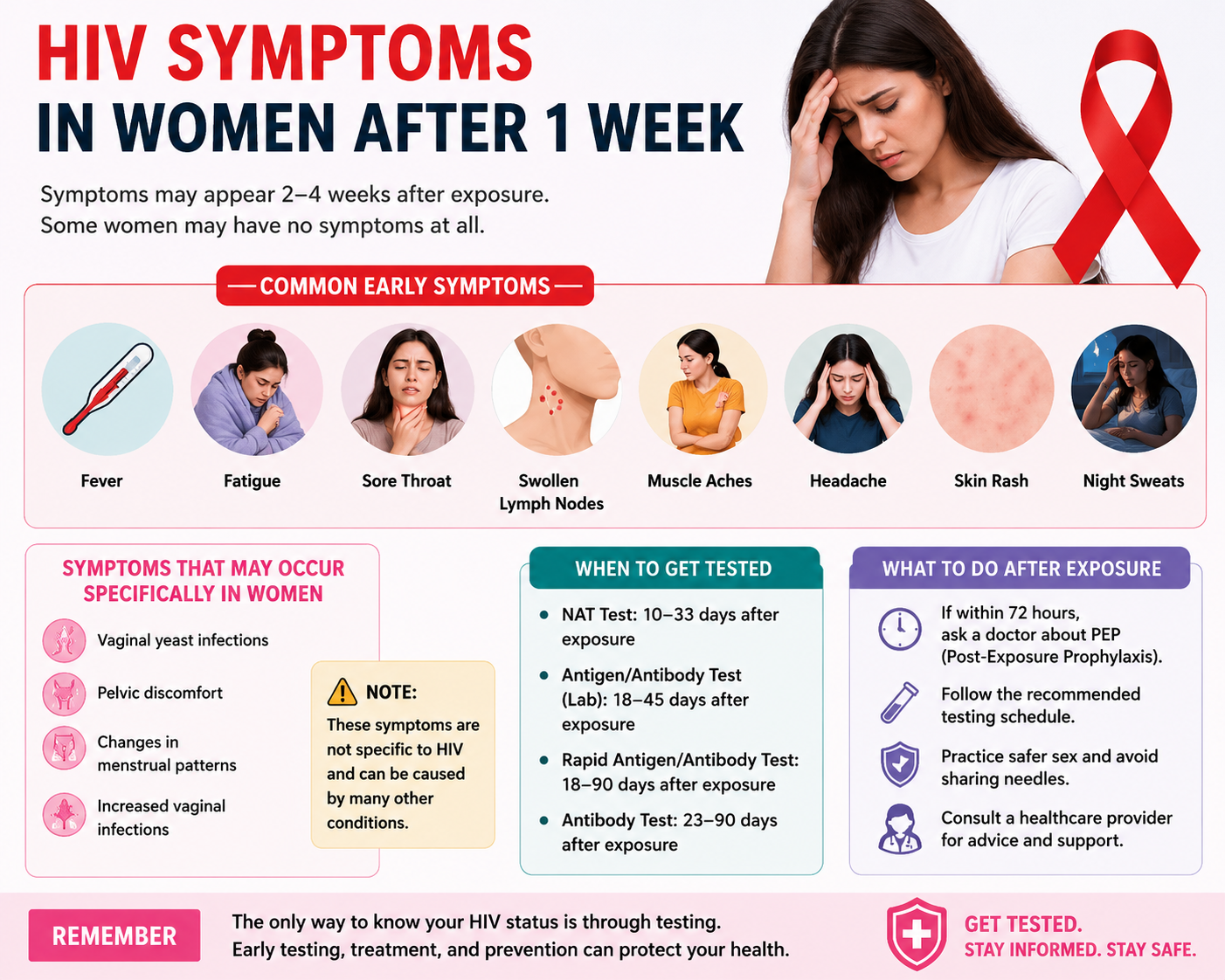
Many people search for information about HIV Symptoms in Women After 1 Week after a possible exposure. It's important to understand that symptoms, if they occur, vary widely from person to person. Some women develop symptoms within a few weeks, while others experience no symptoms at all during the early stages of HIV infection. Because early symptoms are often mild and resemble those of common viral illnesses, testing—not symptoms—is the only reliable way to know if someone has HIV.
Can HIV Symptoms Appear After 1 Week?
When discussing HIV Symptoms in Women After 1 Week, it's important to know that symptoms are uncommon within the first week after exposure. Early HIV symptoms, known as acute HIV infection or acute retroviral syndrome, typically appear about 2 to 4 weeks after infection, although the timing varies. Some people never notice symptoms, even during the early stage.
Because of this variation, the absence of symptoms after one week does not rule out HIV, and the presence of flu-like symptoms does not confirm it.
Possible Early Symptoms
If symptoms do develop during the acute stage, they may include:
- Fever
- Fatigue
- Sore throat
- Swollen lymph nodes
- Muscle aches
- Joint pain
- Headache
- Skin rash
- Night sweats
- Mouth ulcers
These symptoms are not unique to HIV and can occur with many other viral infections, including influenza or COVID-19.
Symptoms Specific to Women
Women may experience the same early symptoms as men, but some may also notice:
- Vaginal yeast infections
- Pelvic discomfort
- Changes in menstrual patterns
- Increased vaginal infections
These symptoms alone are not specific enough to diagnose HIV and should be evaluated by a healthcare provider.
Why Symptoms Alone Are Not Enough
Many people searching for HIV Symptoms in Women After 1 Week hope to determine their HIV status based on how they feel. Unfortunately, symptoms are not a reliable indicator because:
- Many infected individuals have no early symptoms.
- Symptoms overlap with common illnesses.
- The timing varies from person to person.
- Similar symptoms may have unrelated causes.
For these reasons, HIV testing is essential.
When Should You Get Tested?
The best time for testing depends on the type of HIV test used.
Common testing options include:
- Nucleic Acid Test (NAT): Can detect HIV approximately 10–33 days after exposure.
- Laboratory antigen/antibody test: Usually detects infection 18–45 days after exposure.
- Rapid antigen/antibody tests: Often detect infection 18–90 days after exposure.
- Antibody-only tests: May require 23–90 days after exposure to become positive.
If your first test is negative but performed during the "window period," your healthcare provider may recommend repeat testing later.
What to Do After a Possible Exposure
If you believe you've recently been exposed to HIV:
- Contact a healthcare provider or sexual health clinic as soon as possible.
- If the exposure occurred within the last 72 hours, ask about Post-Exposure Prophylaxis (PEP), a medication that can significantly reduce the risk of HIV infection if started promptly.
- Avoid assuming your HIV status based on symptoms alone.
- Follow the recommended testing schedule.
- Practice safer sex and avoid sharing needles until your status is confirmed.
Preventing HIV
Reducing HIV risk involves several preventive measures:
- Use condoms correctly and consistently.
- Consider Pre-Exposure Prophylaxis (PrEP) if you're at ongoing risk.
- Never share needles or injection equipment.
- Get tested regularly if you're sexually active or have increased risk factors.
- Encourage partners to know their HIV status.
These strategies are highly effective when used consistently.
When to Seek Medical Care
Seek medical attention promptly if you:
- Have had a possible HIV exposure.
- Develop persistent flu-like symptoms after a known risk.
- Experience unexplained fever, rash, or swollen lymph nodes.
- Need advice about HIV testing or preventive medication.
Early medical evaluation allows for timely testing, counseling, and treatment if necessary.
Conclusion
Searching for information about HIV Symptoms in Women After 1 Week is understandable after a possible exposure, but symptoms alone cannot determine whether someone has HIV. In fact, symptoms are often absent during the first week, and when they do occur, they usually develop later and resemble many other viral illnesses. The most reliable way to know your HIV status is through appropriate testing based on the recommended testing window. If you've had a recent exposure—especially within the past 72 hours—seek medical care immediately to discuss whether PEP is appropriate. Early testing, prompt medical advice, and preventive measures are the best ways to protect your health.

 English
 Arabic
 French
 Spanish
 Portuguese
 Deutsch
 Dutch
Dutch
 Italiano
 Russian
 Romaian
 Portuguese (Brazil)
 Greek
Greek
