


Top Menopause Belly Exercises to Strengthen Your Core
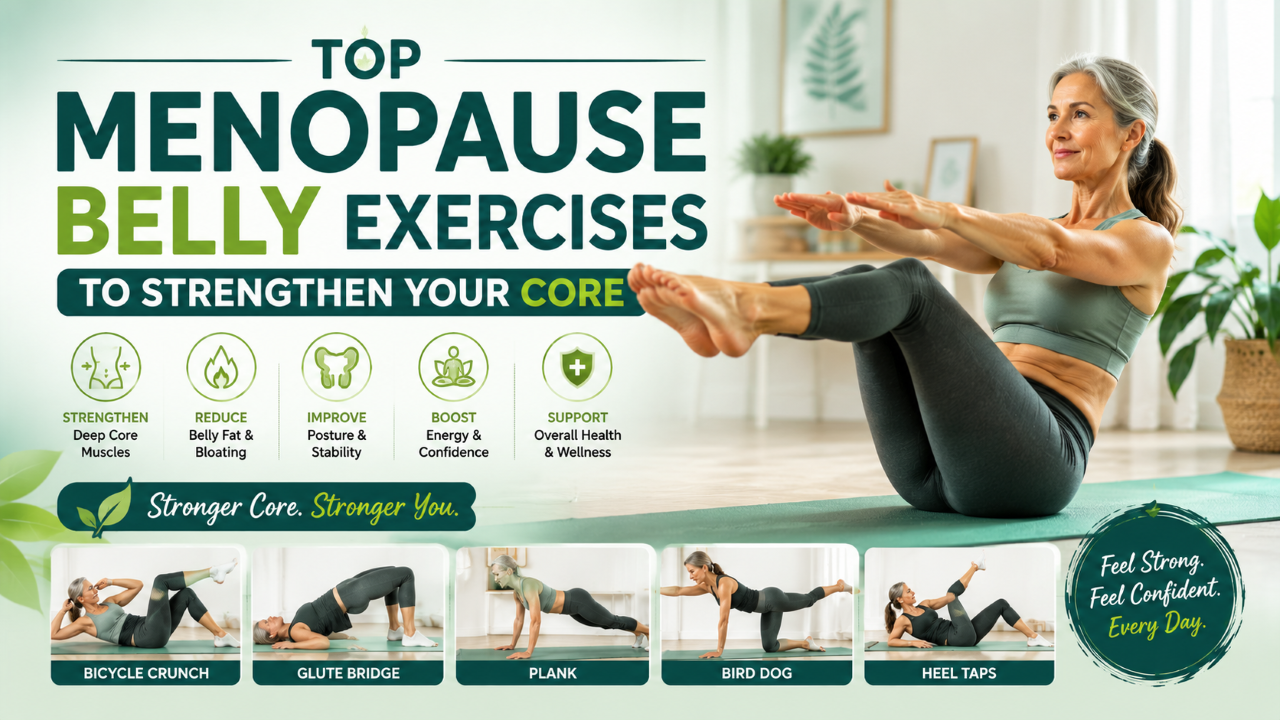
Menopause brings significant hormonal changes that affect almost every part of the body, including metabolism, muscle mass, and fat distribution. One of the most common concerns among women is increased abdominal fat that seems harder to lose than before. While there is no single exercise that can specifically burn belly fat, following menopause belly exercises as part of a balanced fitness routine can improve strength, posture, energy levels, and overall wellbeing. Combining resistance training, cardiovascular activity, flexibility work, and healthy lifestyle habits creates sustainable results that support long-term health rather than short-term weight loss.
Why Belly Fat Increases During Menopause
Hormonal changes, particularly declining estrogen levels, influence where the body stores fat. During menopause, many women notice that fat gradually shifts from the hips and thighs to the abdominal area. At the same time, natural muscle loss slows metabolism, making it easier to gain weight and more difficult to lose it.
Other contributing factors include:
-
Reduced physical activity
-
Poor sleep quality
-
Increased stress levels
-
Age-related muscle loss
-
Changes in insulin sensitivity
Understanding these factors helps create realistic expectations and encourages a long-term approach instead of relying on quick fixes.
Best Menopause Belly Exercises That Really Work
A successful workout routine should focus on improving overall fitness instead of targeting one specific body part. The following exercises help strengthen muscles, improve endurance, and support healthy body composition.
Strength Training
Strength training is one of the best exercises for menopause because it preserves lean muscle mass while increasing calorie expenditure throughout the day. Squats, lunges, push-ups, resistance band exercises, and dumbbell workouts all contribute to stronger muscles and improved metabolism.
Aim to complete strength training two to three times each week while gradually increasing resistance as your fitness improves.
Walking and Daily Movement
Walking remains one of the simplest and most effective ways to stay active. Following walkfit routines encourages consistency by combining structured walking sessions with achievable fitness goals. Daily walking improves cardiovascular health, supports weight management, reduces stress, and boosts energy without placing excessive strain on the joints.
Core Stability Exercises
Rather than performing endless crunches, focus on functional core movements that strengthen multiple muscles simultaneously.
Excellent options include:
-
Bird Dog
-
Dead Bug
-
Modified Plank
-
Glute Bridge
-
Standing Core Rotations
A stronger core improves posture, balance, and lower back support while making everyday movements easier.
Low-Impact Cardio
Low-impact cardio exercises increase heart rate while protecting the joints. Cycling, swimming, brisk walking, and low-impact interval training provide excellent cardiovascular benefits and complement strength training perfectly.
Exercise and Perimenopause: Why Starting Early Matters
Developing healthy habits before menopause offers long-term benefits. exercise and perimenopause helps preserve muscle mass, improve bone health, maintain mobility, and reduce future weight gain. Women who stay physically active during perimenopause often adapt more comfortably to hormonal changes while maintaining better overall fitness.
Even short, consistent workouts performed several times each week are more effective than occasional intense exercise sessions.
Benefits of Pilates for Midlife Women
Many women choose Pilates because it combines strength, flexibility, balance, and controlled breathing into one effective workout. The benefits of pilates include improved posture, stronger core muscles, greater flexibility, enhanced balance, and better body awareness.
Pilates also supports pelvic floor health, improves spinal mobility, and encourages proper movement patterns that reduce unnecessary strain during everyday activities.
Why Pilates Welwyn Garden City Is a Great Choice
If you prefer instructor-led sessions, pilates welwyn garden city offers structured classes suitable for beginners and experienced participants alike. Professional guidance helps ensure correct technique while providing modifications for different fitness levels, making workouts safer and more effective.
Group classes also create accountability, helping many women remain consistent with their fitness routine.
Exercises to Avoid During Menopause
Although regular activity is highly beneficial, some workouts may increase the risk of injury or excessive fatigue if performed incorrectly. Understanding exercises to avoid during menopause allows women to make smarter exercise choices.
Exercises that may require modification include:
-
High-impact jumping without preparation
-
Heavy lifting with poor form
-
Excessive high-intensity workouts without recovery
-
Repetitive movements causing joint discomfort
Listening to your body and allowing adequate recovery remains essential for long-term progress.
Creating a Sustainable Menopause Exercise Routine
An effective menopause exercise plan combines several forms of movement instead of relying on one workout style.
A balanced weekly routine may include:
-
Two or three strength training sessions
-
Three to five walking sessions
-
One or two Pilates classes
-
Daily stretching or mobility work
-
Regular recovery and adequate sleep
Consistency matters far more than perfection. Small improvements maintained over months often produce greater results than extreme workout programs followed for only a few weeks.
Healthy Lifestyle Habits That Support Exercise
Exercise works best when combined with healthy daily habits.
Prioritise:
-
Protein-rich meals to support muscle maintenance
-
Plenty of vegetables and whole foods
-
Regular hydration
-
Quality sleep
-
Stress management through mindfulness or gentle movement
Together, these habits improve recovery, increase energy, and help maintain a healthier body composition during menopause.
Conclusion
Menopause belly exercises are most effective when they become part of a balanced lifestyle rather than a temporary solution. Combining strength training, walking, Pilates, flexibility work, and proper recovery creates lasting improvements in fitness, mobility, and confidence. By staying consistent and choosing exercises that suit your body, you can successfully navigate menopause while building strength for the years ahead.
FAQs
1. Can menopause belly exercises specifically burn belly fat?
No exercise can target fat loss from one area alone. However, a combination of strength training, cardio, and healthy nutrition helps reduce overall body fat while improving muscle tone around the abdomen.
2. What are the best exercises for menopause?
Strength training, brisk walking, Pilates, cycling, swimming, and mobility exercises are among the most effective options because they improve muscle strength, cardiovascular health, and flexibility.
3. Is Pilates good during menopause?
Yes. Pilates improves posture, core stability, flexibility, balance, and body awareness while placing minimal stress on the joints, making it suitable for many women during menopause.
4. How often should I exercise during menopause?
Aim for at least 150 minutes of moderate physical activity each week, along with two or three strength training sessions for optimal health benefits.
5. Is walking enough to lose menopause belly fat?
Walking contributes to calorie expenditure and cardiovascular health. When combined with strength training and healthy eating habits, it supports long-term weight management.
6. Which exercises should be avoided during menopause?
Avoid high-impact or heavy exercises that cause pain, poor form, or excessive fatigue. Modify workouts according to your fitness level and recovery needs.
7. Can exercise improve menopause symptoms besides weight gain?
Yes. Regular exercise may improve sleep quality, mood, bone health, muscle strength, energy levels, and overall quality of life.
8. How long does it take to see results?
Many women notice improvements in strength, energy, and mobility within a few weeks, while visible body composition changes generally require several months of consistent exercise and healthy lifestyle habits.

 English
 Arabic
 French
 Spanish
 Portuguese
 Deutsch
 Turkish
 Italiano
 Russian
 Romaian
 Portuguese (Brazil)
 Greek
Greek
