


Common Performance Creative & Ad Testing Mistakes and How to Avoid Them
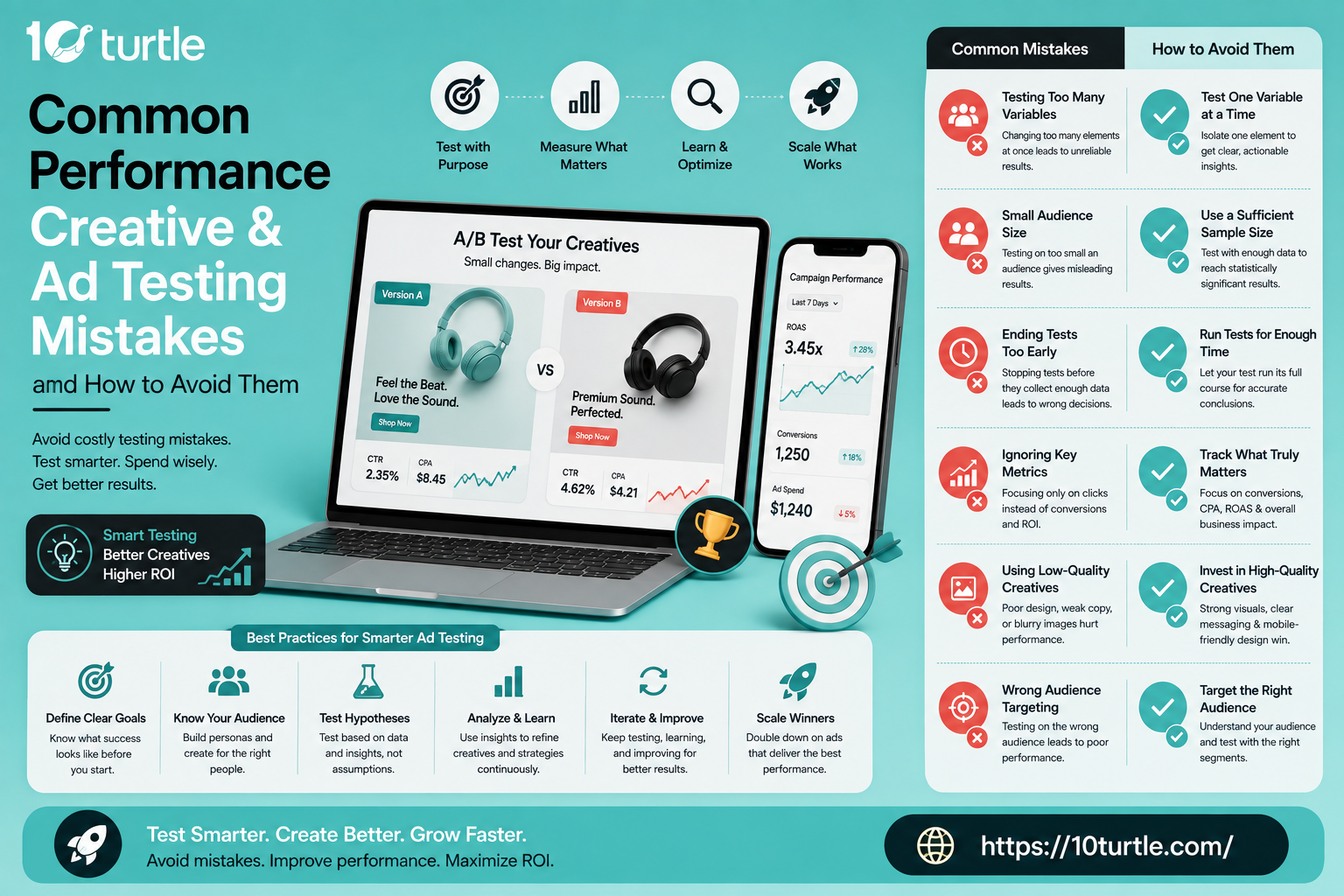
Running paid ads without a solid testing plan is one of the fastest ways to burn through a media budget. Many brands in the US market invest heavily in Facebook, Google, and TikTok campaigns, yet they still struggle to see consistent returns because their creative testing process is broken from the start. If you want to build a real performance marketing agency partnership that actually moves the needle, understanding where ad testing goes wrong is the first step. This guide breaks down the most common performance creative and ad testing mistakes marketers make, along with practical fixes you can apply right away, whether you're managing a small business budget or scaling a national campaign.
Why Ad Testing Matters More Than Ever
Ad fatigue happens fast. What worked six months ago on Instagram Reels might flop today because audiences have seen it too many times or the platform algorithm has shifted. Creative testing isn't a one-time task; it's an ongoing cycle of hypothesis, execution, and analysis. Brands that treat testing as a checkbox instead of a strategy end up wasting spend on underperforming assets while missing out on winning combinations that could lower their cost per acquisition.
Mistake #1: Testing Too Many Variables at Once
One of the biggest ad creative mistakes is changing the headline, image, call-to-action, and audience all in the same test. When everything shifts simultaneously, you have no way of knowing what actually drove the result. A/B testing best practices call for isolating one variable per test cycle. If you're testing a new thumbnail, keep the copy, targeting, and placement identical. This single change alone will give you clean, actionable data instead of a confusing mess of correlated metrics.
Mistake #2: Ending Tests Too Early
Impatience kills good testing programs. Many marketers pull the plug on a campaign after just a day or two because early numbers look weak, without giving the algorithm enough time to exit the learning phase. Statistical significance takes time and volume. A general rule of thumb is to let a test run until it has gathered enough impressions or conversions to be meaningful, usually a minimum of three to seven days depending on your budget and audience size. Cutting tests short often means killing a creative that would have eventually outperformed your control.
Mistake #3: Ignoring Creative Fatigue Signals
Frequency creep is real. When the same ad creative is shown to the same audience too many times, click-through rates drop and cost per click climbs. Brands that don't monitor frequency metrics closely often keep spending on tired creative long after it stopped converting well. Setting up frequency caps and rotating fresh creative assets every two to three weeks helps maintain engagement and keeps your cost efficiency in check.
Mistake #4: Weak or Generic Ad Copy
Ad copywriting mistakes are everywhere. Generic phrases like "shop now" or "best deals" no longer cut through the noise on a crowded feed. Successful direct response advertising leans on specificity: real numbers, real outcomes, and a clear reason to act now. Instead of vague promises, highlight a tangible benefit, address a specific pain point, and use language that mirrors how your actual customers talk about their problems.
Mistake #5: Not Segmenting Results by Placement
A creative that performs beautifully on Facebook Feed might completely underperform on Instagram Stories or Audience Network. Lumping all placements together in your reporting hides these differences. Reviewing performance data by placement, device, and even time of day gives you a much sharper picture of where your budget is working hardest, and where it's quietly being wasted.
Mistake #6: Skipping a Structured Testing Framework
Random, unplanned testing rarely scales. Without a documented framework, teams repeat the same experiments, lose track of past learnings, and fail to build institutional knowledge. Building a simple testing calendar, tracking hypotheses, results, and next steps in a shared document, turns ad testing into a repeatable growth engine rather than guesswork.
Mistake #7: Overlooking Landing Page Alignment
Even the best-performing ad creative will underdeliver if it sends traffic to a landing page that doesn't match the message. This is a mismatch problem that many advertisers overlook while obsessing over the ad itself. Your headline, offer, and visuals need to carry through from the ad to the landing experience. A disjointed journey increases bounce rate and quietly drags down your return on ad spend, even when the creative itself was strong.
New Insight: The Rise of AI-Assisted Creative Testing in 2026
A newer trend reshaping performance marketing across the US is the use of AI-driven creative generation tools to produce dozens of ad variations in minutes rather than days. Platforms like Meta's Advantage+ and Google's Performance Max now use machine learning to automatically test creative combinations in real time, reducing manual guesswork. However, the mistake many teams make here is trusting the automation blindly without human oversight. Even with AI-assisted testing, marketers still need to review brand voice, messaging tone, and compliance manually, since automated systems can sometimes generate combinations that miss the mark on brand consistency or accessibility standards.
How to Build a Smarter Testing Process Going Forward
Start with a clear hypothesis for every test. Document what you expect to happen and why. Limit each test to a single variable, give it enough time to reach significance, and always segment your results by placement and audience. Refresh creative regularly to avoid fatigue, and make sure your landing page experience matches the promise made in the ad. Over time, this disciplined approach compounds, turning your ad account into a genuine learning system rather than a series of disconnected campaigns.
FAQs
How long should I run an ad test before making a decision?
Most campaigns need at least three to seven days and a meaningful volume of impressions or conversions before the results can be trusted. Ending a test too early often leads to false conclusions.
What's the biggest mistake brands make with Facebook and Instagram ad testing?
Testing too many variables at once is the most common issue. It becomes impossible to know which change actually influenced performance.
How often should ad creative be refreshed?
As a general guideline, refresh creative every two to three weeks, or sooner if frequency metrics show audience fatigue setting in.
Does landing page design really affect ad performance?
Yes. A strong ad paired with a mismatched or slow-loading landing page will still underperform, since the user experience needs to feel consistent from click to conversion.
Is AI-generated ad creative reliable for 2026 campaigns?
AI tools can speed up creative production significantly, but human review is still essential to protect brand voice and ensure the output aligns with your actual audience and goals.
Final Thoughts
Performance creative and ad testing mistakes are common, but they're also fixable once you know what to look for. By isolating variables, giving tests enough time to breathe, watching for creative fatigue, and aligning your ad copy with your landing page experience, you'll build a testing process that consistently improves results instead of guessing at what might work next.

 English
 Arabic
 French
 Spanish
 Portuguese
 Deutsch
 Turkish
 Dutch
Dutch
 Italiano
 Russian
 Romaian
 Portuguese (Brazil)
