


SEO Score: The Complete Guide to Improving Your Website Rankings
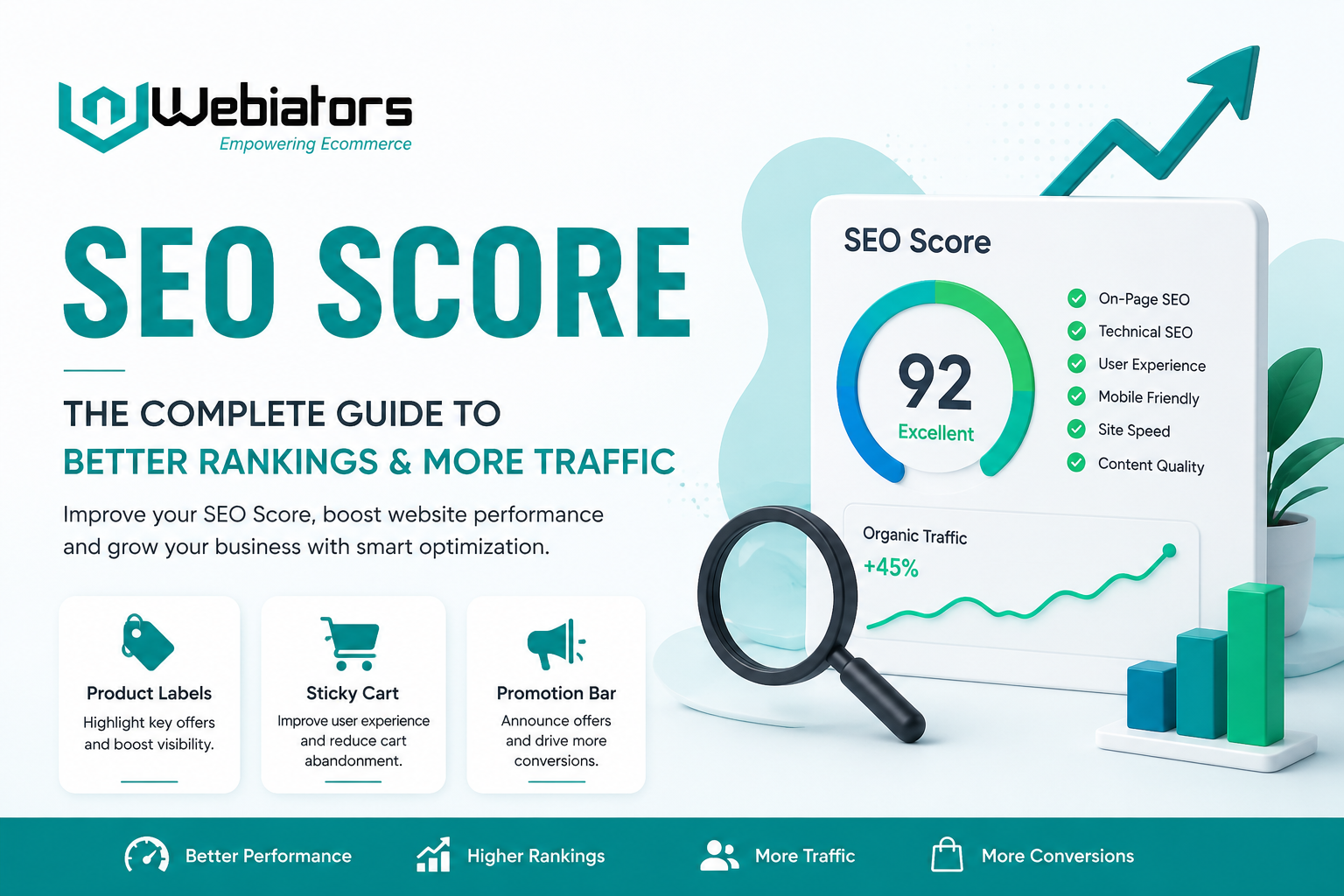
Every website owner wants better visibility on search engines, but ranking higher requires more than publishing content. One of the most important indicators of your website's health is its SEO Score. It reflects how well your site follows search engine best practices, making it easier for Google and other search engines to understand, index, and rank your pages.
Whether you run an eCommerce store, a business website, or a personal blog, improving your SEO Score helps attract qualified visitors, increase organic traffic, and generate better conversions.
What Is an SEO Score?
An SEO Score is a measurement of how effectively your website follows technical, on-page, and user experience SEO practices. Various SEO tools analyze hundreds of ranking factors and provide a score based on your website's overall optimization.
A high SEO Score generally indicates that your website has:
- Well-optimized content
- Fast loading speed
- Mobile responsiveness
- Proper metadata
- Strong internal linking
- Secure HTTPS connection
- Crawlable website structure
- Positive user experience
Although Google doesn't use a single "SEO Score," improving these factors increases your chances of achieving better rankings.
Why SEO Score Matters
A stronger SEO Score benefits your website in multiple ways.
Better Search Visibility
Search engines prefer websites that are technically sound and provide valuable information. A better SEO Score improves your opportunities to rank for competitive keywords.
Higher Organic Traffic
When your pages appear on the first page of search results, more users discover your business naturally without relying only on paid advertising.
Improved User Experience
SEO isn't just for search engines. Faster websites, better navigation, and organized content create a smoother experience for visitors.
Increased Trust
Websites with secure connections, structured content, and useful information appear more trustworthy to both users and search engines.
Factors That Improve Your SEO Score
1. Create High-Quality Content
Helpful, original, and informative content remains the foundation of SEO. Focus on solving user problems instead of stuffing keywords.
Your content should:
- Answer common questions
- Include relevant headings
- Use natural keywords
- Stay updated regularly
2. Optimize Title Tags and Meta Descriptions
Every page should have a unique title and compelling meta description containing the primary keyword naturally.
This improves click-through rates from search results.
3. Improve Website Speed
Page speed directly impacts user satisfaction.
You can improve loading speed by:
- Compressing images
- Using browser caching
- Reducing unnecessary scripts
- Optimizing CSS and JavaScript
Faster websites usually experience lower bounce rates.
4. Optimize Images
Images should include descriptive filenames and meaningful alt text.
Proper image optimization helps:
- Accessibility
- Image search visibility
- Faster loading
5. Build Strong Internal Links
Internal links help search engines understand your site's structure while guiding visitors toward related content.
For Shopify stores, connecting guides about Product Labels, Sticky Cart, and Promotion Bar creates stronger topical authority.
6. Mobile Optimization
Since Google primarily uses mobile-first indexing, your website should perform perfectly across smartphones and tablets.
Responsive design is no longer optional.
7. Use Structured Data
Schema markup helps search engines understand your content better and may improve eligibility for rich search results.
SEO Score Tips for Shopify Stores
Shopify merchants often compete in crowded markets. Improving your SEO Score can significantly increase product visibility.
Here are several best practices:
- Write unique product descriptions.
- Avoid duplicate content.
- Optimize collection pages.
- Compress product images.
- Improve Core Web Vitals.
- Create educational blog content.
- Add FAQs to important pages.
Store owners can also enhance the shopping experience using solutions from Webiators, including tools for Product Labels, Sticky Cart, and Promotion Bar to improve customer engagement while supporting better website structure.
Common SEO Score Mistakes
Many websites lose rankings because of avoidable issues.
Watch out for:
- Missing title tags
- Duplicate content
- Broken links
- Thin content
- Slow page speed
- Keyword stuffing
- Missing image alt text
- Poor mobile usability
- Weak internal linking
Fixing these issues often delivers noticeable SEO improvements.
How Often Should You Check Your SEO Score?
SEO is an ongoing process.
Consider reviewing your website:
- Monthly for technical issues
- After major website updates
- Before launching new content
- Following Google algorithm updates
Regular monitoring helps identify problems before they impact rankings.
Best Practices for Long-Term SEO Success
Instead of chasing quick wins, build sustainable SEO habits.
Focus on:
- Publishing helpful content consistently
- Updating outdated articles
- Improving website performance
- Building logical internal links
- Monitoring keyword performance
- Enhancing user experience
- Keeping your website secure
Search engines reward websites that consistently provide value.
Frequently Asked Questions
What is a good SEO Score?
Most SEO tools consider a score above 80 as strong, but continuous optimization is more important than reaching a perfect number.
Does Google use SEO Score as a ranking factor?
No. Google evaluates hundreds of individual ranking signals rather than a single SEO Score. However, improving your score usually strengthens those signals.
Can improving SEO Score increase traffic?
Yes. Better optimization often leads to improved rankings, higher visibility, and increased organic traffic over time.
How long does it take to improve SEO rankings?
Depending on your competition and website authority, noticeable improvements may take several weeks to several months.
Is technical SEO more important than content?
Both are essential. High-quality content attracts users, while technical SEO helps search engines crawl and understand your website efficiently.
Conclusion
A high SEO Score is the result of continuous improvement across technical SEO, content quality, website speed, and user experience. Instead of focusing only on numbers, prioritize creating a website that serves visitors while following search engine best practices. As your website becomes faster, more organized, and more helpful, you'll be better positioned to earn sustainable organic growth. Combined with user-focused Shopify enhancements such as Product Labels, Sticky Cart, and Promotion Bar, businesses can create an experience that benefits both customers and search performance.

 English
 Arabic
 French
 Spanish
 Portuguese
 Deutsch
 Turkish
 Dutch
Dutch
 Italiano
 Russian
 Portuguese (Brazil)
 Greek
Greek
