


Can Vision Therapy Help Adults with Lazy Eye? What Research Says ?
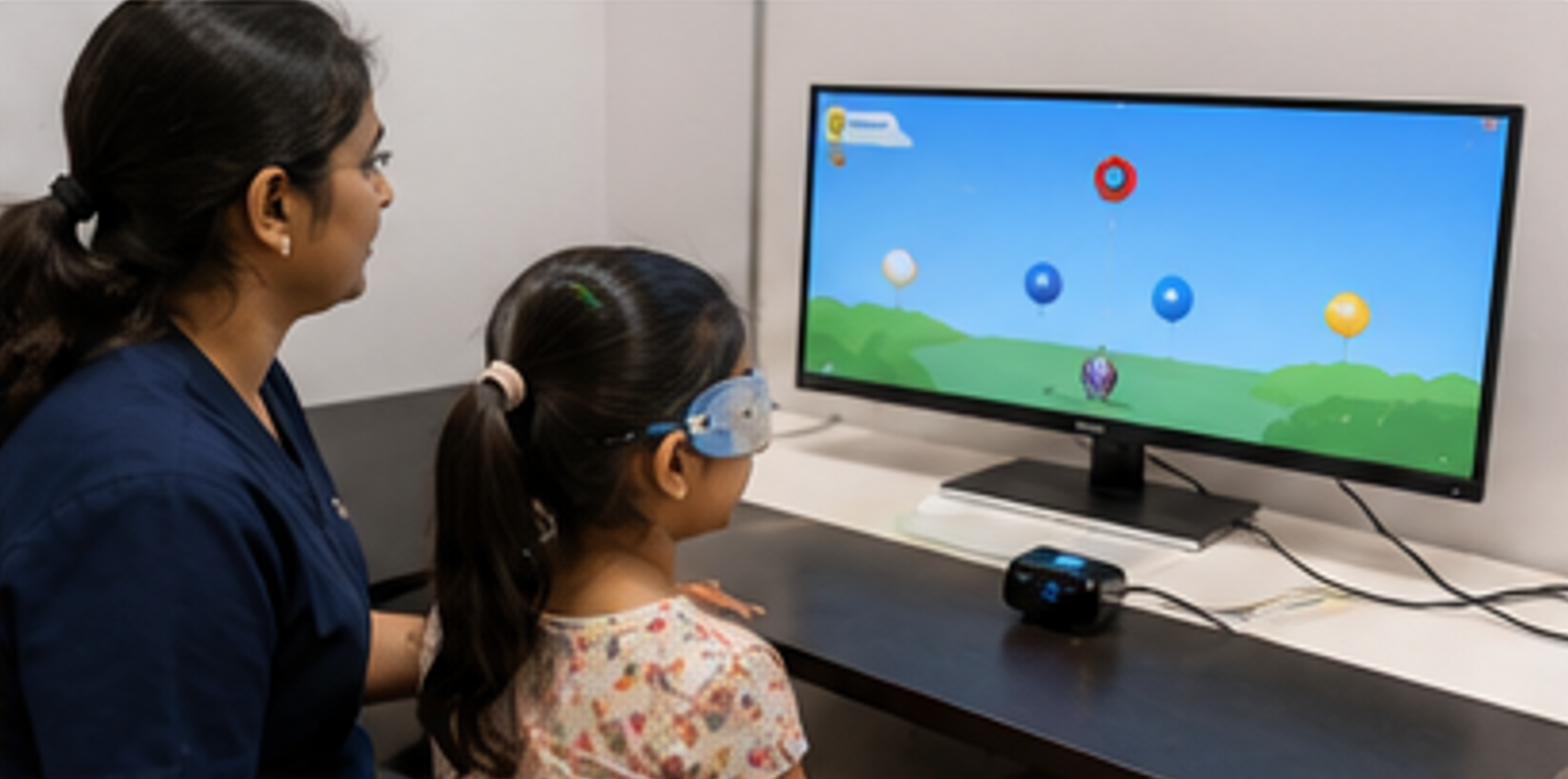
For many years, adults with a lazy eye were told that treatment was only effective during childhood. While early intervention still offers the greatest opportunity for improving vision, recent research suggests that some adults may also benefit from vision therapy and other treatment methods. The results vary from person to person, but age alone should not prevent someone from seeking professional advice. Modern Lazy eye treatment is based on the individual's condition, visual needs, and response to therapy rather than on age alone.
What Is a Lazy Eye?
A lazy eye, medically known as amblyopia, develops when one eye does not achieve normal vision because the brain relies more on the stronger eye. Over time, the weaker eye sends signals that the brain gradually ignores.
Common causes include:
-
Misaligned eyes
-
A significant difference in prescription between the eyes
-
Congenital cataracts
-
Drooping eyelids that block vision during early development
Although the condition usually begins in childhood, many people continue living with it into adulthood without realizing that treatment options may still exist.
Why Was Adult Treatment Once Considered Difficult?
For decades, doctors believed that vision development ended after early childhood.
This belief was based on the understanding that the brain becomes less adaptable with age, making it harder to strengthen the weaker eye later in life.
As a result, many adults were advised that little improvement could be expected.
Today, growing evidence suggests that the adult brain still has some ability to adapt, although progress is generally slower than in young children.
What Does Current Research Suggest?
Recent clinical studies have shown that certain adults can achieve measurable improvement in visual function through carefully planned treatment.
Researchers have reported improvements in areas such as:
-
Visual sharpness
-
Eye coordination
-
Depth perception
-
Contrast sensitivity
-
Binocular vision
The amount of improvement differs from one patient to another and depends on several clinical factors.
Not every adult experiences the same outcome, which is why individual assessment remains essential.
What Is Vision Therapy?
Vision therapy is a structured program designed to improve how the eyes and brain work together.
Unlike simple eye exercises found online, professional vision therapy is supervised by qualified eye care specialists and adjusted according to each patient's progress.
Sessions may involve activities that improve:
-
Eye coordination
-
Focusing ability
-
Visual tracking
-
Binocular vision
-
Depth perception
In many cases, therapy is combined with other forms of Lazy eye treatment rather than being used on its own.
Who May Benefit Most?
Vision therapy may be considered for adults who have:
-
Mild to moderate amblyopia
-
Stable overall eye health
-
Good commitment to regular therapy sessions
-
Vision problems affecting work or daily activities
-
A treatment plan recommended by an eye specialist
The success of therapy depends not only on the diagnosis but also on following the prescribed program consistently.
Other Treatment Options for Adults
Vision therapy is only one part of the available treatment choices.
Depending on the underlying cause, an eye specialist may also recommend:
-
Prescription glasses
-
Contact lenses
-
Eye patching in selected cases
-
Atropine eye drops in specific situations
-
Surgery for associated eye alignment problems
The treatment plan is developed after a detailed examination rather than following a standard approach for every patient.
What Factors Affect Recovery?
Several factors influence how much improvement an adult may achieve.
These include:
-
Severity of amblyopia
-
Age at the start of treatment
-
Underlying cause
-
Overall eye health
-
Consistency with therapy
-
Presence of other vision disorders
Patients who attend follow up appointments regularly are more likely to receive timely adjustments to their treatment plan.
Setting Realistic Expectations
Adults should understand that treatment aims to improve visual function rather than promise complete recovery in every case.
Some people notice better visual clarity, while others experience improvements in depth perception, eye coordination, or reduced visual discomfort.
Progress often happens gradually over several months, requiring patience and regular monitoring.
Discussing realistic goals with an eye specialist helps patients understand what improvements may be possible in their individual situation.
Why Professional Assessment Matters
Not every case of reduced vision is caused by amblyopia.
A detailed eye examination helps identify:
-
The actual cause of vision loss
-
Whether amblyopia is present
-
Any associated eye diseases
-
The most suitable treatment options
-
Expected outcomes based on current eye health
Self diagnosis or relying on unverified online exercises may delay appropriate care.
Conclusion
Although childhood remains the ideal time to address amblyopia, current research indicates that adults should not assume treatment is no longer possible. Vision therapy and other modern approaches may improve visual function for selected patients, depending on their individual condition. The key is obtaining an accurate diagnosis and following a treatment plan designed by an experienced eye specialist. Starting Lazy eye treatment after a professional evaluation offers adults the opportunity to improve eye coordination, visual performance, and overall quality of life.
Q.1 Can adults improve a lazy eye with vision therapy?
Ans. Yes. Some adults experience improvements in visual function through professionally supervised vision therapy, although results vary from person to person.
Q.2 Is vision therapy the only treatment for adults with amblyopia?
Ans. No. Treatment may also include prescription glasses, contact lenses, eye patching in selected cases, medication, or surgery depending on the underlying cause.
Q.3 How long does vision therapy take?
Ans. The duration varies according to the severity of amblyopia and the individual's response to treatment. Some patients require several months of supervised therapy.
Q.4 Can online eye exercises replace professional vision therapy?
Ans. No. Online exercises are not a substitute for a treatment program developed and monitored by a qualified eye specialist.
Q.5 Is complete recovery possible in adults?
Ans. Some adults achieve meaningful improvement, but outcomes differ for every patient. The extent of recovery depends on factors such as age, severity, overall eye health, and consistency with the prescribed treatment plan.

 English
 Arabic
 French
 Spanish
 Portuguese
 Deutsch
 Turkish
 Italiano
 Russian
 Romaian
 Portuguese (Brazil)
 Greek
Greek
