


The Evolution of Furniture Design for Senior Living Facilities
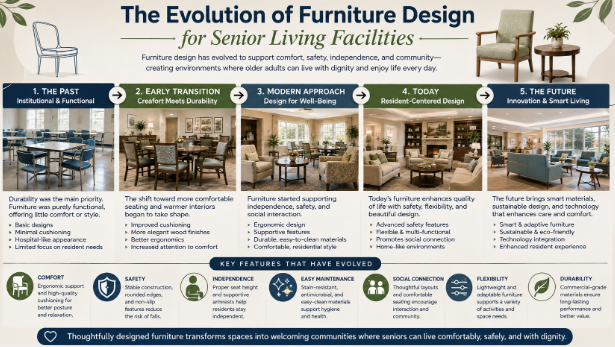
Senior living facilities have changed dramatically over the past few decades. What were once considered purely functional care environments have evolved into modern communities that focus on comfort, independence, dignity, and overall well-being. Along with advances in healthcare and personalized care services, furniture design has also undergone significant transformation.
Today, senior living furniture is designed to do much more than provide a place to sit. It supports mobility, improves safety, encourages social interaction, and helps create welcoming spaces where residents feel truly at home. The evolution of furniture design reflects the growing understanding that the physical environment plays an essential role in healthy aging.
From Institutional to Residential Design
In the past, many senior care facilities prioritized durability over comfort. Furniture often resembled hospital equipment, focusing mainly on functionality while offering little attention to appearance or resident experience.
Modern senior living communities have adopted a completely different approach. Today's furniture combines commercial durability with residential-style aesthetics, creating warm and inviting interiors that reduce stress and improve emotional well-being.
Residents now enjoy environments that feel comfortable and familiar rather than clinical.
Greater Focus on Resident Comfort
Comfort has become one of the defining features of modern furniture design.
Manufacturers now recognize that older adults spend a significant amount of time seated during meals, recreational activities, therapy sessions, and family visits.
Modern seating typically includes:
-
Ergonomic lumbar support
-
High-density cushioning
-
Comfortable armrests
-
Proper seat height
-
Balanced seat depth
These features improve posture while reducing pressure on joints and muscles.
Comfortable furniture encourages residents to remain active and engaged throughout the day.
Safety as a Design Priority
As understanding of fall prevention has improved, safety has become a central focus of furniture development.
Modern senior living furniture incorporates features such as:
-
Reinforced commercial frames
-
Stable construction
-
Rounded corners
-
Slip-resistant feet
-
Strong arm supports
These safety improvements help residents move with greater confidence while reducing the risk of injuries.
Furniture now plays an active role in supporting safe daily movement.
Supporting Independence
One of the biggest changes in furniture design has been the emphasis on maintaining resident independence.
Instead of creating furniture that requires assistance, manufacturers now focus on products that help residents perform everyday activities independently.
Appropriate seat height, supportive armrests, and ergonomic construction make standing and sitting easier while reducing physical effort.
Furniture designed for independence contributes to greater confidence and improved quality of life.
Better Materials for Longer Lifespan
Advances in manufacturing have introduced stronger and more durable materials suited for commercial healthcare environments.
Today's furniture often features:
-
Commercial-grade hardwoods
-
Powder-coated metal frames
-
High-performance upholstery
-
Scratch-resistant finishes
-
Moisture-resistant surfaces
These materials maintain their appearance while withstanding continuous daily use.
Improved durability reduces maintenance expenses and replacement costs for facility operators.
Easy Maintenance and Improved Hygiene
Healthcare environments require furniture that supports regular cleaning without compromising quality.
Modern furniture is designed using materials that resist stains, moisture, and bacteria.
Common features include:
-
Antimicrobial upholstery
-
Easy-clean fabrics
-
Protective surface coatings
-
Scratch-resistant materials
-
Moisture-resistant finishes
These innovations simplify housekeeping while supporting infection prevention and healthier living environments.
Furniture That Encourages Social Interaction
Furniture design now considers how residents interact with one another.
Instead of arranging seating in isolated rows, modern communities create conversational layouts that encourage communication and participation.
Comfortable lounges, cafés, libraries, and outdoor seating areas become gathering places where residents develop friendships and enjoy community life.
Thoughtful furniture placement strengthens social connections and reduces feelings of isolation.
Flexible Solutions for Modern Communities
Senior living facilities now host a wide variety of daily activities.
Furniture has evolved to become more adaptable, allowing rooms to be reconfigured for:
-
Wellness programs
-
Educational workshops
-
Group activities
-
Family events
-
Entertainment sessions
Flexible furniture improves operational efficiency while supporting changing resident needs.
Versatile designs allow communities to maximize available space without sacrificing comfort.
The Role of Professional Suppliers
Experienced aged care furniture suppliers have contributed significantly to the evolution of senior living interiors.
Professional suppliers understand modern healthcare requirements and provide guidance on:
-
Furniture planning
-
Product selection
-
Material recommendations
-
Space optimization
-
Long-term project support
Their expertise helps facilities create environments that combine functionality, comfort, and attractive design.
Reliable suppliers continue introducing innovative furniture solutions that improve resident experiences.
Innovation from Trusted Manufacturers
Leading senior living furniture manufacturers continue investing in research and development to improve both furniture performance and resident comfort.
Their innovations focus on:
-
Ergonomic engineering
-
Commercial durability
-
Resident safety
-
Contemporary aesthetics
-
Sustainable manufacturing practices
These advancements have transformed senior living furniture into products that meet the highest standards of quality while supporting long-term healthcare goals.
Manufacturers continue driving innovation that benefits residents, caregivers, and facility operators alike.
Looking Toward the Future
Furniture design for senior living facilities has evolved from basic functionality to comprehensive resident-centered solutions. Modern furniture now supports physical comfort, emotional well-being, safety, accessibility, and social engagement while maintaining the durability required for busy healthcare environments.
As senior living communities continue to grow and evolve, furniture will remain one of the most important elements in creating environments where older adults can live independently, comfortably, and with dignity. By working with experienced suppliers and trusted manufacturers, facilities can continue embracing innovative furniture solutions that enhance resident care and deliver long-term value for years to come.

 English
 Arabic
 French
 Spanish
 Portuguese
 Deutsch
 Turkish
 Dutch
Dutch
 Italiano
 Romaian
 Portuguese (Brazil)
 Greek
Greek
