


Learning Management System (LMS): Features, Benefits & Best Software Guide
Introduction
In today's digital age, online learning has become increasingly popular, and with that comes the need for a reliable Learning Management System (LMS). An LMS is a software application that helps facilitate the creation, management, and delivery of educational content. In this article, we will explore the key features and benefits of an LMS, as well as provide a guide to some of the best software options available in the market.
What are the key features of a Learning Management System (LMS)?
A Learning Management System typically includes features such as:
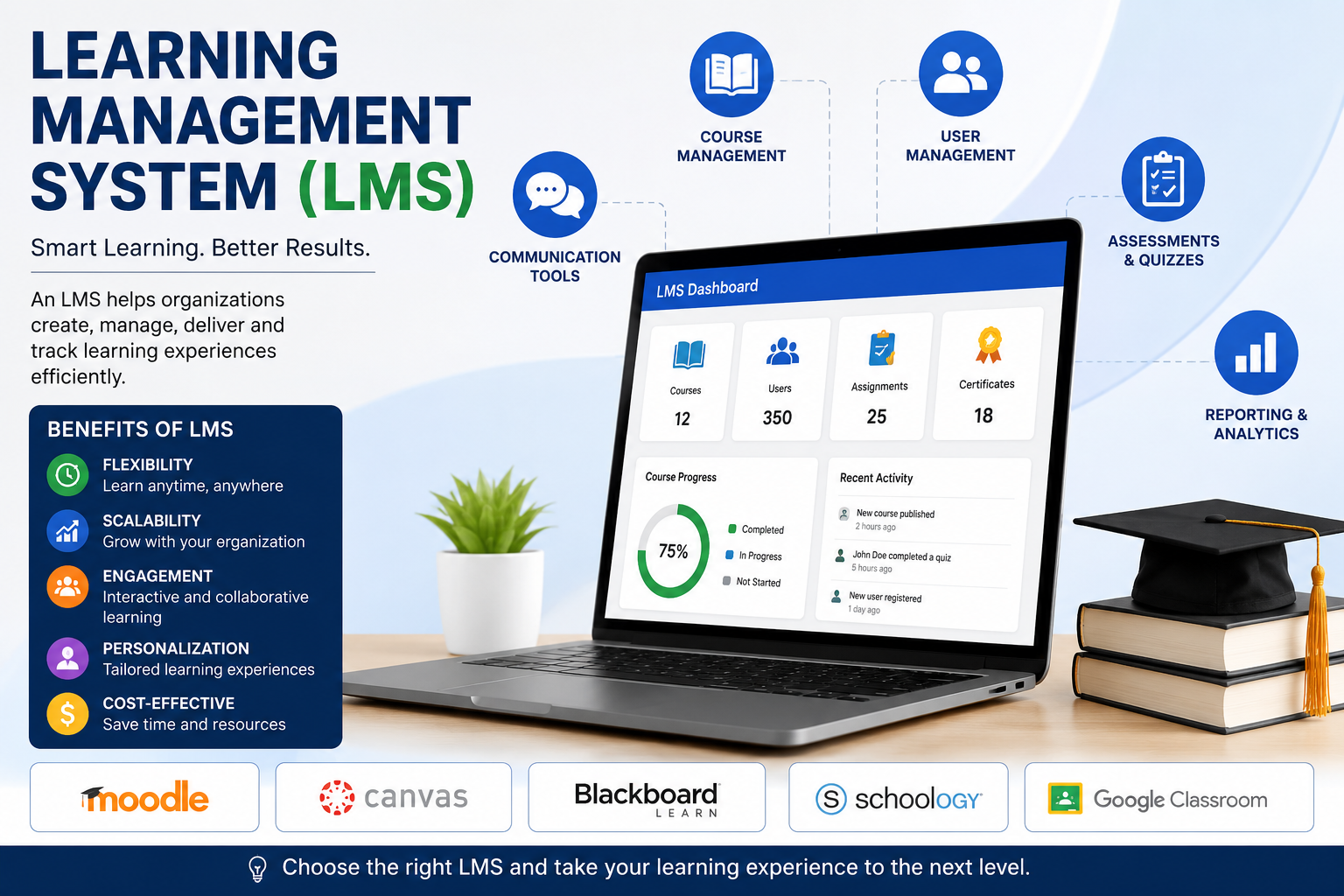
- Course management: Allows instructors to create and organize course content.
- User management: Enables administrators to manage user roles and permissions.
- Assessment tools: Provides tools for creating quizzes, assignments, and exams.
- Reporting and analytics: Allows for tracking student progress and assessing the effectiveness of courses.
- Communication tools: Enables interaction between instructors and students through discussion forums, messaging, and announcements.
What are the benefits of using a Learning Management System (LMS)?
Using an LMS offers various benefits, including:
- Flexibility: Students can access learning materials at their own pace and convenience.
- Scalability: LMS can easily accommodate a large number of users and courses.
- Engagement: Interactive features such as quizzes and discussion forums promote active learning.
- Personalization: Allows for tailored learning paths based on individual preferences and progress.
- Cost-effective: Reduces the need for physical resources and streamlines training processes.
What are some of the best Learning Management System (LMS) software options?
When it comes to choosing an LMS, there are several options available in the market. Some of the best LMS software options include:
- Moodle: An open-source platform known for its flexibility and customization options.
- Canvas: A cloud-based LMS known for its user-friendly interface and mobile accessibility.
- Blackboard Learn: A robust LMS with advanced features such as virtual classrooms and grading tools.
- Schoology: A user-friendly platform with integrated social media tools for collaboration.
- Google Classroom: A free LMS integrated with Google Apps for Education, ideal for seamless integration with other Google tools.
Remember, when choosing an LMS, consider factors such as your organization's specific needs, budget, and technical requirements. Each LMS has its own set of features and pricing plans, so be sure to do thorough research before making a decision.
Conclusion
In conclusion, a Learning Management System (LMS) is a valuable tool for organizations and educational institutions looking to streamline their training and education processes. By understanding the key features and benefits of an LMS, as well as exploring some of the best software options available, you can make an informed decision that best suits your needs. Whether you are a small business looking to train your employees or a school aiming to enhance student learning, investing in an LMS can help take your online education to the next level.

 English
 Arabic
 French
 Portuguese
 Deutsch
 Turkish
 Dutch
Dutch
 Italiano
 Russian
 Romaian
 Portuguese (Brazil)
 Greek
Greek
