


Subclass 482 Visa Sponsorship: What Employers and Workers Need to Know
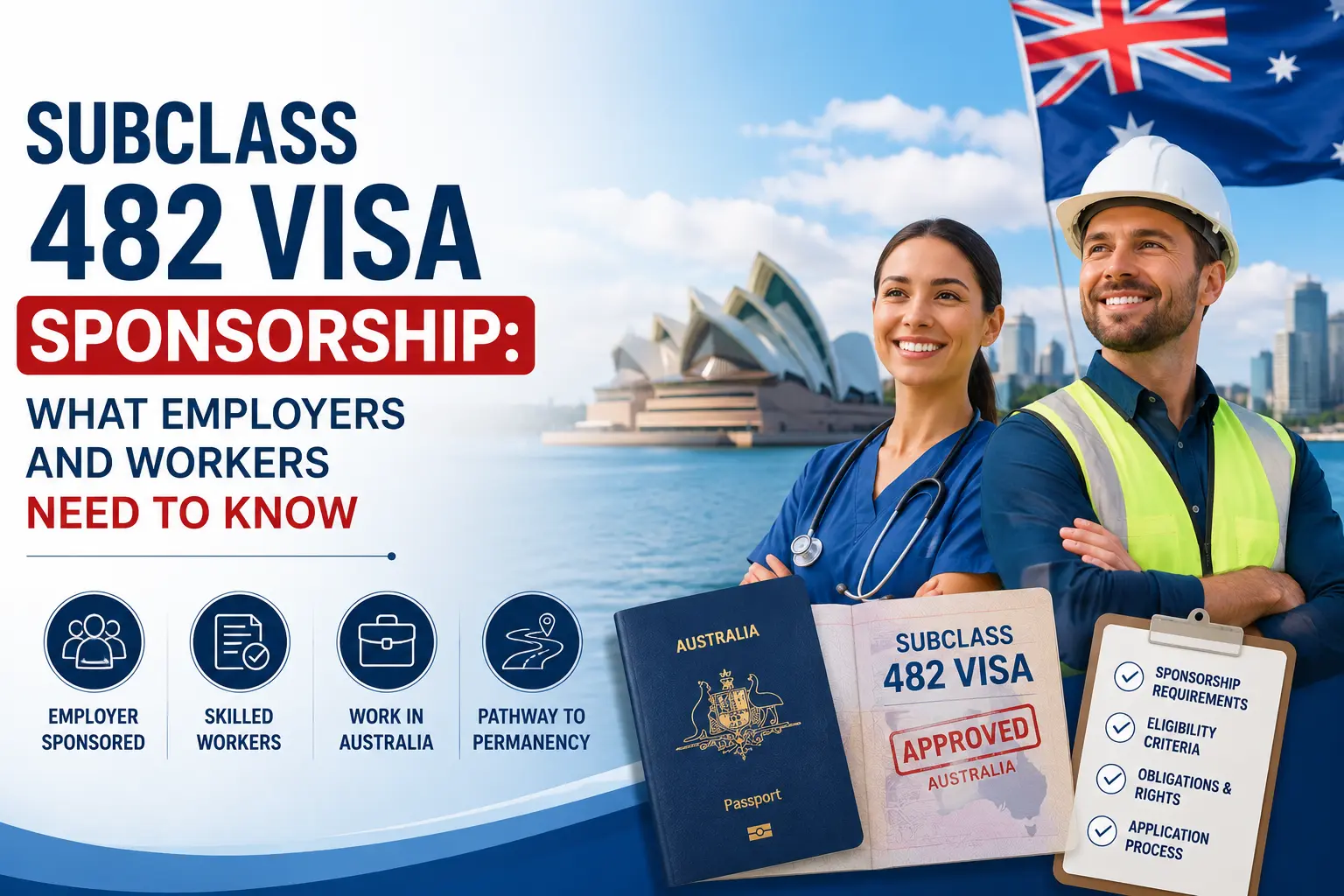
If you've been looking into hiring overseas talent, or you're a skilled worker hoping to land a job in Australia, you've probably run into the term Subclass 482 visa sponsorship more than once. It's the go-to visa for employer-sponsored work in Australia, and understanding how it actually works can save both sides a lot of confusion, delays, and money.
Here's the honest, practical rundown of what this visa involves, who it's for, and what both employers and workers need to have sorted before diving in.
What Is the Subclass 482 Visa, Really?
The Subclass 482 is Australia's main temporary employer-sponsored visa. It lets an Australian business hire a skilled worker from overseas when they genuinely can't find someone suitable locally. Worth knowing: the visa is now officially part of what's called the Skills in Demand (SID) visa framework, which replaced the older Temporary Skill Shortage (TSS) visa setup at the end of 2024. The subclass number stayed the same - 482 - but a lot changed underneath it, from the occupation lists to the salary rules to how quickly workers can move toward permanent residency.
So if you've seen the name "TSS visa" floating around in older articles, that's the same visa people are now referring to when they talk about 482 visa sponsorship.
How the Sponsorship Process Actually Works
482 visa sponsorship isn't a single step - it's really three separate approvals that all need to line up:
-
Sponsorship approval: The employer applies to become an approved Standard Business Sponsor with the Department of Home Affairs. Without this, nothing else can move forward.
-
Nomination approval: The employer nominates a specific role for a specific person, showing it's a genuine, ongoing position that meets the salary and occupation requirements.
-
Visa application: The worker then lodges their own visa application, backed by that nomination.
Each of these gets assessed on its own merits, so even a strong candidate can hit delays if the employer's sponsorship or nomination paperwork isn't solid.
The Streams: Which One Applies to You?
This is where a lot of people get tripped up, because the 482 visa isn't a single pathway — it runs through a few different streams, and the one that applies depends mostly on salary and occupation.
Specialist Skills stream – For higher-paid roles, generally where the salary clearly sits above the top threshold. Because there's less need to check occupation lists, this stream often processes noticeably faster than the others.
Core Skills stream – The most commonly used stream in 2026, covering a wide range of professional, trade, and technical occupations listed on the Core Skills Occupation List (CSOL). This is where most everyday subclass 482 visa sponsorship applications land.
Essential Skills stream - Aimed at select lower-paid, essential occupations where Australia has ongoing shortages, subject to specific eligibility settings.
Labour Agreement stream - Used when an employer has a formal labour agreement with the Australian government, usually to cover industries with persistent skill shortages that don't fit neatly into the standard occupation lists.
What Workers Need to Meet Eligibility
If you're the one being sponsored, here's what generally needs to be in place:
-
An employer willing to sponsor you. This is non-negotiable - without a nominating employer, there's no 482 visa application.
-
A role on the relevant occupation list, matched to whichever stream applies to your salary and job type.
-
Relevant work experience, generally around the past few years in a role closely related to your nominated occupation.
-
A skills assessment, if your occupation is one that requires it - and this usually needs to be started before you apply.
-
Competent English, unless you qualify for an exemption based on things like your background or study history.
-
Health and character checks, including a medical exam and police clearance certificates from countries you've lived in.
What Employers Need to Get Right
Sponsorship isn't just paperwork for the worker - employers carry real obligations too, and getting them wrong is one of the biggest reasons applications get refused or delayed.
-
Meet the salary threshold. Every stream has its own minimum salary requirement, reviewed and adjusted each year, so it's worth checking the current figures rather than relying on numbers from an older article.
-
Pay market rate. Beyond the minimum threshold, the salary offered also needs to reflect what an Australian worker would genuinely earn in the same role.
-
Prove the role is genuine. The position needs to be real, ongoing, and something the business actually needs - not created purely to bring someone into the country.
-
Keep records straight. Payroll, occupation, and nominated salary all need to match up, since compliance checks increasingly rely on automatic data-matching rather than manual audits.
-
Budget for the full cost. Beyond visa application charges, sponsors typically need to cover nomination fees, sponsorship charges, and a mandatory training contribution known as the Skilling Australians Fund levy.
How Long Does It All Take?
Processing times vary a lot depending on the stream and how complete the application is. As a general pattern, Specialist Skills nominations tend to move faster since they're prioritised, while Core Skills applications being higher in volume - can take noticeably longer, especially if supporting documents need extra review. Sponsorship approval for a brand-new employer can also add several months on its own. Because these timeframes shift, it's always worth checking current estimates rather than assuming last year's numbers still apply.
Does the 482 Visa Lead to Permanent Residency?
For a lot of sponsored workers, the 482 isn't the final stop - it's a stepping stone. After completing a qualifying period with the sponsoring employer, eligible workers can move toward permanent residency through the Subclass 186 Employer Nomination Scheme, via the Temporary Residence Transition stream. That qualifying period has actually been shortened in recent updates, and in many cases, time spent working across more than one approved sponsor can still count toward it. It's a detail worth confirming directly, since exemptions and rules can vary by occupation and circumstance.
Final Thoughts
Subclass 482 visa sponsorship genuinely works best when both sides employer and worker, go in prepared. Employers need to get their sponsorship status, nomination, and salary obligations right, while workers need to make sure their occupation, experience, and documentation line up with the correct stream. Get those pieces sorted, and the 482 remains one of the most reliable ways to bring skilled talent into Australia, with a realistic path to permanent residency down the line.
Rules, salary thresholds, and processing times around this visa change fairly often, so before locking in any plans, it's worth checking the latest details directly on the Department of Home Affairs website or speaking with a registered migration agent.
Frequently Asked Questions
1. What is Subclass 482 visa sponsorship?
It's when an approved Australian employer nominates a skilled overseas worker for a genuine, ongoing role, allowing that worker to live and work in Australia temporarily under the sponsor.
2. Who is eligible to be sponsored on a 482 visa?
Workers need a nominating employer, an occupation on the relevant list, relevant work experience, competent English, and to pass health and character checks for their chosen stream.
3. What are the different 482 visa streams?
There are four: Specialist Skills, Core Skills, Essential Skills, and Labour Agreement. The right one depends mainly on the offered salary and the worker's occupation.
4. How much does 482 visa sponsorship cost employers?
Costs include sponsorship and nomination fees, the visa application charge paid by the worker, and the Skilling Australians Fund levy, a mandatory employer training contribution.
5. Can a 482 visa lead to permanent residency?
Yes. After a qualifying employment period with the sponsor, eligible workers can apply for PR through the Subclass 186 visa's Temporary Residence Transition stream.
6. How long does 482 visa sponsorship take to process?
It varies by stream and application quality. Specialist Skills nominations are usually faster, while Core Skills and new sponsorships can take considerably longer to finalise.

 English
 Arabic
 French
 Spanish
 Portuguese
 Deutsch
 Turkish
 Dutch
Dutch
 Italiano
 Romaian
 Portuguese (Brazil)
 Greek
Greek
