


The Complete Guide to Carpet Cleaning for Allergies in Edmonton: What Edmonton Homeowners Need to Know
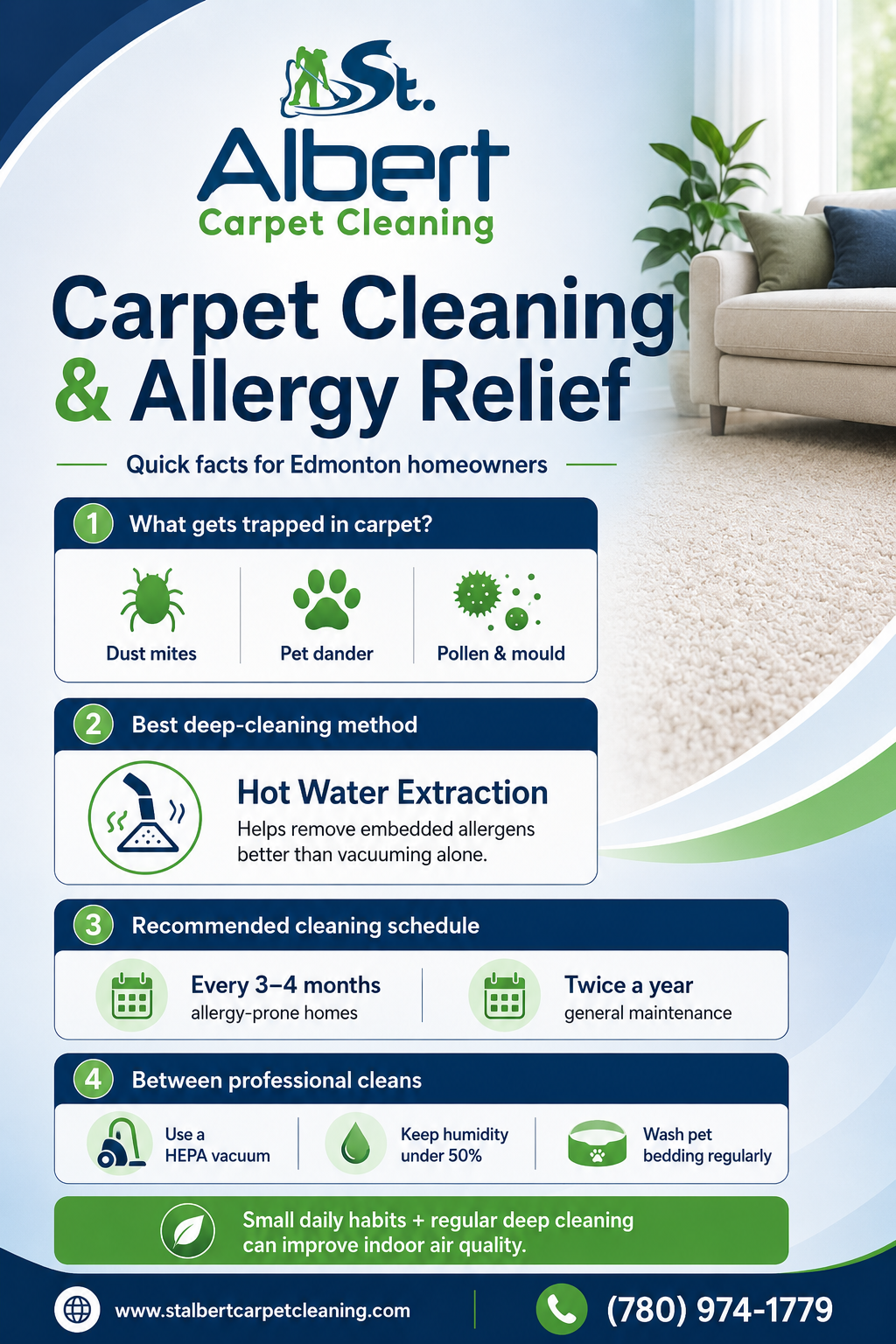
If your allergies flare up the moment you walk into your living room, your carpet might be more involved than you think. Carpets trap far more than dirt — they hold onto dust, skin flakes, pollen, and microscopic mites long after the room looks clean. For Edmonton homeowners dealing with seasonal allergies or year-round sensitivities, understanding what's actually living in carpet fibres — and what allergens in carpet removal actually involves — is the first step toward real relief.
Why Carpets Are a Major Allergy Trigger
What's actually hiding in your carpet fibres
Carpet acts like a filter for the air in your home, but it never empties itself. Every time someone walks across the room, fibres release a small cloud of trapped particles back into the air you breathe. Over weeks and months, that buildup forms a surprisingly dense reservoir of allergens just below your feet, which is exactly why indoor air quality carpet cleaning matters so much for allergy-prone households.
Why vacuuming alone isn't enough
Most vacuums only get the top layer of the carpet. Dust mite waste, pet dander, and similar particles end up packed down in the padding and lower fibres, well past where the suction actually reaches. So you end up moving things around more than actually getting rid of them — which is where proper dust mites carpet professional cleaning comes in.
The Most Common Allergens Found in Carpets
Dust mites
They live off shed skin flakes and tend to do best in warm, slightly damp spots — which describes most lived-in carpet pretty well. It's actually their droppings, not the mites themselves, that set off a lot of indoor allergy symptoms.
Pet dander
Funny enough, pet dander still shows up in homes that have never had a pet — it hitches a ride in on clothes, shoes, or visitors. In pet-owning households, carpet fibres act as a long-term storage system for dander that is constantly kicked back into the air.
Mould spores
Edmonton gets pretty damp during spring melt and again in the fall, and that extra moisture gives mould spores a chance to settle into carpet and padding — especially near basement areas or exterior walls.
Seasonal pollen
Pollen tracked in on shoes, clothing, and pets settles into carpet fibres and can continue to trigger symptoms long after pollen season outdoors ends.
Steam Cleaning vs. Dry Cleaning — Which Is Better for Allergy Relief?
Steam cleaning, technically known as hot water extraction, uses heated water and pressure to flush allergens out of deep carpet fibres before extracting the moisture and debris. According to the IICRC (Institute of Inspection, Cleaning and Restoration Certification), most cleaning pros point to hot water extraction as one of the more reliable ways to get embedded soil and allergens out of carpet — which is why steam cleaning allergy relief Edmonton services have become such a popular option for sensitive households. Dry cleaning uses less water and dries fast, so it's handy for delicate carpets or when you need the room back in use quickly. The catch is, it doesn't really get down into the base of the fibres. If allergies or asthma are a concern in your home, steam cleaning is usually the better call — it physically flushes particles out instead of just lifting what's sitting on top, making it a smart choice for carpet cleaning for asthma sufferers.
How Often Should Allergy Sufferers Have Carpets Professionally Cleaned?
A common question homeowners ask is how often to clean carpet for allergies. Most allergy-sensitive households do well with a professional cleaning every three to four months. If you've got pets, young kids, or someone managing asthma, lean toward the shorter end of that window. No major allergy concerns in the house? Twice a year is usually plenty to keep things under control.
What to Look for in an Allergy-Relief Carpet Cleaning Service
Not all carpet cleaning is created equal when allergens are the concern. Look for a provider that uses hot-water extraction rather than light surface cleaning, offers allergen- or sanitizing-treatment add-ons, and follows IICRC-recognized cleaning standards. Asking how long drying typically takes is also worth it — lingering moisture can actually encourage mould growth, which defeats the purpose entirely.
DIY Tips to Manage Allergens Between Professional Cleans
Between professional cleans, a few habits make a real difference. Grab a HEPA-filter vacuum if you can — regular vacuums tend to blow fine particles right back into the air instead of trapping them. Sturdy mats at your entryways cut down on what gets dragged in from outside in the first place. Keeping humidity under 50% also helps a lot, since dust mites and mould both struggle without that moisture. And if you've got pets, washing their bedding regularly goes a long way toward reducing dander buildup.
Final Thoughts
Carpet allergens aren't something you can fully solve with vacuuming alone, but they also aren't something you have to live with. A combination of smart daily habits and regular professional deep cleaning makes a measurable difference in indoor air quality — something organizations like Asthma Canada consistently point to as a meaningful factor in managing indoor allergy and asthma symptoms.
For Edmonton and St. Albert homeowners looking to go deeper, allergy relief carpet cleaning services use hot water extraction methods designed specifically to target embedded allergens, and general professional carpet cleaning in St. Albert can help keep your home's air quality on track between deep cleans.

 English
 Arabic
 French
 Spanish
 Portuguese
 Turkish
 Dutch
Dutch
 Italiano
 Russian
 Romaian
 Portuguese (Brazil)
 Greek
Greek
