


Welding Hood Auto Darkening Technology: What Makes It Work So Quic
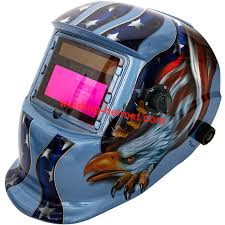
The welding environment presents a unique set of hazards, with intense ultraviolet and infrared radiation posing the most immediate threat to unprotected eyes. Traditional passive welding helmets address this danger through a permanently darkened lens, requiring the operator to flip the helmet down before striking an arc and lift it afterward to inspect the work. This constant movement creates inefficiency and, over time, contributes to neck fatigue and workflow interruption. The welding hood auto darkening solution emerged as a technological answer to these limitations, employing a sophisticated filter that transitions from a clear state to a dark shade within fractions of a second upon arc detection. The underlying mechanism relies on photoelectric sensors that capture the arc's light emission and trigger a liquid crystal display to adjust its opacity, effectively blocking harmful radiation while permitting safe viewing. But does this sophisticated engineering actually deliver a safer and more productive experience, or does it represent an over-engineered solution for a problem that traditional gear already solves adequately?
The answer to that question largely depends on the nature of the work and the frequency with which the equipment is used. For a professional fabricator who spends extended periods performing precise welds on critical components, the advantages of a Welding Hood Auto Darkening system become immediately apparent. The capacity to maintain continuous visual contact with the workpiece before, during, and after the arc eliminates the split-second disorientation that occurs when transitioning from a dark lens to a clear view. This uninterrupted observation enables better torch placement, more accurate bead following, and immediate detection of defects in the cooling weld pool. The reduction in neck movement also translates to measurable decreases in physical strain over an eight-hour shift, allowing the welder to maintain better posture and focus. For the occasional user performing simple repairs or hobby projects, however, these advantages may not justify the significant price differential, and a well-designed passive helmet might serve every functional requirement without unnecessary complexity.
Technical specifications provide the objective foundation for comparing different Welding Hood Auto Darkening units and understanding their performance capabilities. The switching speed, often measured in fractions of a millisecond, represents the most critical safety parameter. A lens that requires 0.1 milliseconds to darken exposes the eyes to arc light for a hundred-thousandth of a second, while a slower 0.4 millisecond response allows four times that duration, potentially increasing the cumulative light exposure over thousands of arcs across a career. The optical clarity rating, graded according to the EN 379 standard, directly affects the operator's ability to discern fine details and distinguish between the weld puddle, the surrounding base metal, and the molten filler material. A 1/1/1/1 rating indicates the highest possible performance across all categories, whereas lower ratings introduce varying degrees of distortion, color shift, or light scattering. The shade range, typically adjustable between DIN 9 and DIN 13, determines the lens's suitability for different welding processes, with lower numbers appropriate for low-amperage TIG operations and higher numbers required for heavy stick welding at elevated currents. Selecting a model that offers independent adjustment of these parameters provides flexibility across diverse job requirements.
Beyond the core optical performance, the practical usability of a Welding Hood Auto Darkening system depends on several additional design considerations. The number and placement of arc sensors influence the helmet's reliability, particularly in challenging positions where the torch or the operator's body might obstruct direct line-of-sight to the arc. Models equipped with four sensors distributed across the viewing area generally provide more consistent darkening than those with only two sensors, reducing the likelihood of unexpected bright flashes during out-of-position welding. The sensitivity control permits fine-tuning for specific applications, with higher sensitivity necessary for low-current TIG welding where the arc produces less initial light output. The delay function controls the duration the lens remains dark after the arc extinguishes, preventing the bright afterglow from hot metal from causing discomfort or momentary blindness. A well-designed helmet also incorporates a comfortable headgear with adjustable tension, tilt, and distance settings to accommodate various head shapes and ensure the helmet stays securely positioned without excessive pressure on any single point.
Durability and maintenance represent often-overlooked factors that significantly influence the long-term value proposition of a Welding Hood Auto Darkening purchase. The outer protective cover lens, which shields the expensive main filter from sparks and spatter, should be easily replaceable without requiring specialized tools or extensive disassembly. The main filter itself should exhibit resistance to thermal shock and physical impact, maintaining its optical properties across thousands of switching cycles. The battery system, whether solar-assisted or user-replaceable, must provide reliable power for extended periods, with some models incorporating low-battery indicators that alert the operator before the unit fails. Regular cleaning of the sensors and the cover lens with appropriate materials prevents gradual performance degradation from accumulated dust or residue. Manufacturers that offer readily available spare parts and clear maintenance instructions demonstrate a commitment to supporting their products beyond the initial sale, contributing to higher customer satisfaction and longer equipment service life.
The economic analysis of a Welding Hood Auto Darkening purchase extends beyond the initial price comparison to include productivity gains, reduced error rates, and improved operator comfort. A fabricator who produces higher-quality welds with fewer defects, requiring less grinding and rework, directly benefits the bottom line through faster project completion and lower material waste. The welder who experiences reduced eye strain and neck fatigue finishes the day more alert and capable of maintaining consistent quality across the entire shift. These productivity improvements often exceed the initial price premium within weeks for professional operations, making the auto-darkening helmet a straightforward investment rather than an expense. For the small workshop or individual user, the calculation may weigh differently, but the availability of entry-level models with adequate performance provides an accessible starting point for those seeking to experience the benefits. Whether the choice falls on a sophisticated professional model or a more basic unit, a Welding Hood Auto Darkening from a reputable manufacturer such as Cenwanmachine represents a meaningful step toward safer and more efficient welding practice. To find a selection of reliable units designed for various applications and budgets, visit https://www.welding-helmet.com/. A welding helmet serves as the first line of defense against one of the trade's most serious hazards, and selecting the right one ensures that your vision remains protected while your productivity stays high. Have you evaluated whether your current helmet truly provides the protection and comfort required for your specific welding tasks?

 English
 Arabic
 French
 Spanish
 Portuguese
 Deutsch
 Turkish
 Dutch
Dutch
 Russian
 Romaian
 Portuguese (Brazil)
 Greek
Greek
