


Keyword Research Techniques for Higher Organic Search Traffic
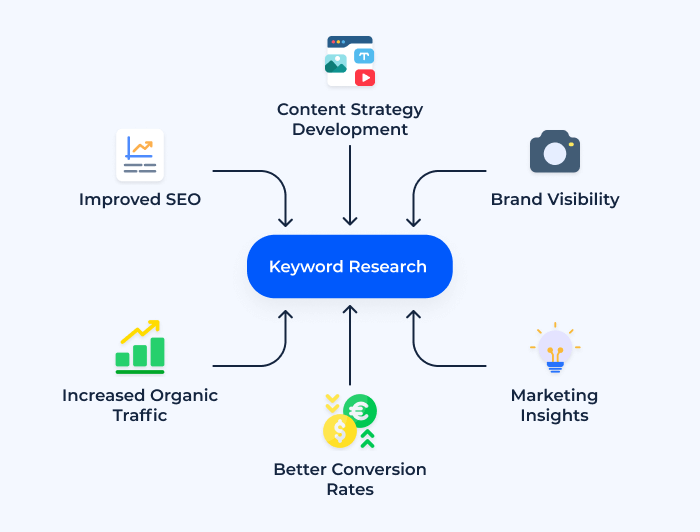
Organic search success begins with understanding what your audience is searching for and why. Keyword Research helps professionals identify valuable search opportunities, create relevant content, and improve search engine visibility.
A structured approach to selecting keywords increases qualified traffic, strengthens website authority, and supports long-term digital marketing growth. Applying proven methods ensures every piece of content targets the right audience while achieving measurable SEO results.
What is Keyword Research?
Keyword Research is the process of discovering the search terms people use in search engines to find products, services, or information. It helps businesses create content that matches user needs, improves search rankings, and attracts qualified visitors.
Effective SEO Keyword Research enables professionals to understand search behaviour and build content strategies that generate sustainable organic traffic.
Types of keywords
Keywords are commonly grouped into short-tail, medium-tail, and Long-Tail Keyword categories. Short-tail keywords attract high search volumes but are highly competitive, while long-tail phrases target specific user needs with better conversion potential.
Combining different keyword types creates a balanced SEO strategy that reaches users at multiple stages of their buying journey.
Keyword intent
Keyword intent explains why users perform a search. Informational intent focuses on learning, navigational intent helps users find a specific website, commercial intent compares solutions, and transactional intent indicates purchasing readiness.
Understanding search intent ensures content satisfies user expectations while improving engagement, rankings, and conversion rates.
Why are Advanced Keyword Techniques Important
Modern SEO requires more than selecting popular search terms. Advanced Keyword Research Techniques help professionals identify opportunities with lower competition, higher relevance, and stronger conversion potential.
These methods improve content quality, increase organic visibility, strengthen topic authority, and help businesses stay competitive as search engine algorithms continue evolving.
Know Your Audience First
Successful optimisation starts with understanding customer interests, challenges, and search behaviour. Build audience personas by identifying demographics, industry needs, frequently asked questions, and buying motivations.
Combining customer insights with Keyword Research Brainstorming creates highly relevant content that addresses genuine user problems and increases website engagement.
3 steps for an effective keyword search
A structured process ensures keyword selection supports business objectives and audience expectations. Following a clear framework improves content planning, increases search visibility, and simplifies long-term SEO management.
These three essential steps help professionals build a focused keyword strategy that produces measurable results.
1. Setting Clear Goals
Define the purpose of your keyword campaign before researching search terms. Goals may include increasing website traffic, generating leads, improving local visibility, promoting services, or growing online sales.
Clear objectives help prioritise keywords that align with business outcomes rather than simply targeting high-volume searches.
2. Brainstorming Keyword Ideas
Generate keyword ideas by listing customer questions, products, services, industry terminology, and frequently searched topics. Expand these ideas using Keyword Research Brainstorming, customer feedback, online forums, and search suggestions.
This process uncovers valuable content opportunities that competitors may overlook while supporting comprehensive content planning.
3. Refining the keyword list
Evaluate every keyword based on search volume, competition, relevance, search intent, and conversion potential.
Remove overly broad or unrelated phrases while prioritising keywords that closely match business objectives. A refined keyword list improves content quality, increases ranking opportunities, and delivers more targeted organic traffic.
Tools for a professional keyword analysis
Professional keyword tools provide accurate search data, competition analysis, and content opportunities. They simplify research, identify ranking potential, and help marketers make informed SEO decisions.
Selecting reliable platforms improves efficiency while supporting data-driven content optimisation strategies.
Google Keyword Planner
Google Keyword Planner provides search volume estimates, keyword suggestions, seasonal trends, and competition insights directly from Google.
Although originally designed for advertising campaigns, it remains an excellent resource for identifying relevant search opportunities and supporting comprehensive SEO Keyword Research strategies.
Semrush
Semrush offers extensive keyword databases, competitor analysis, keyword difficulty scores, ranking tracking, backlink insights, and content recommendations.
Professionals use this platform to discover profitable opportunities, monitor competitors, and develop advanced SEO campaigns supported by reliable performance data.
UberSuggest
UberSuggest provides keyword ideas, search volumes, SEO difficulty, content suggestions, and competitor analysis within a user-friendly interface.
It is particularly useful for beginners and small businesses seeking affordable keyword insights while building effective organic search strategies.
Techniques to find relevant Keywords
Finding valuable keywords requires combining research tools with customer insights and competitive analysis.
Effective Keyword Research Techniques uncover opportunities that increase search visibility while supporting content aligned with user intent and business objectives.
Using autocomplete features
Google autocomplete, related searches, and "People Also Ask" sections reveal real search behaviour and trending topics. These suggestions often identify valuable Long-Tail Keyword opportunities with lower competition and stronger relevance, making them ideal for creating informative, highly targeted content.
Analysing competitor keywords
Review competitors' websites to identify the keywords driving their organic traffic. Examine page titles, headings, content themes, and ranking pages to identify opportunities they target successfully.
Competitive analysis helps uncover content gaps while strengthening your own optimisation strategy using proven Keyword Research Techniques.
Keep Track of the Right Keyword Metrics
Monitor search volume, keyword difficulty, click-through rate, ranking position, conversion rate, and search intent regularly.
Tracking these performance indicators helps refine optimisation strategies, identify emerging opportunities, and improve content effectiveness through continuous SEO Keyword Research and performance evaluation.
Conclusion
Effective Keyword Research is the foundation of every successful organic SEO strategy.
By understanding search intent, using professional tools, applying advanced Keyword Research Techniques, targeting every valuable
By continuously refining your keyword strategy through SEO Keyword Research and Keyword Research Brainstorming, professionals can create content that attracts qualified visitors, improves search rankings, increases website authority, and delivers sustainable organic search traffic that supports long-term business growth and stronger online visibility.

 English
 Arabic
 French
 Spanish
 Portuguese
 Deutsch
 Turkish
 Dutch
Dutch
 Italiano
 Russian
 Romaian
 Portuguese (Brazil)
