


Conversation Intelligence: How AI Analyzes Sales Calls for Insights
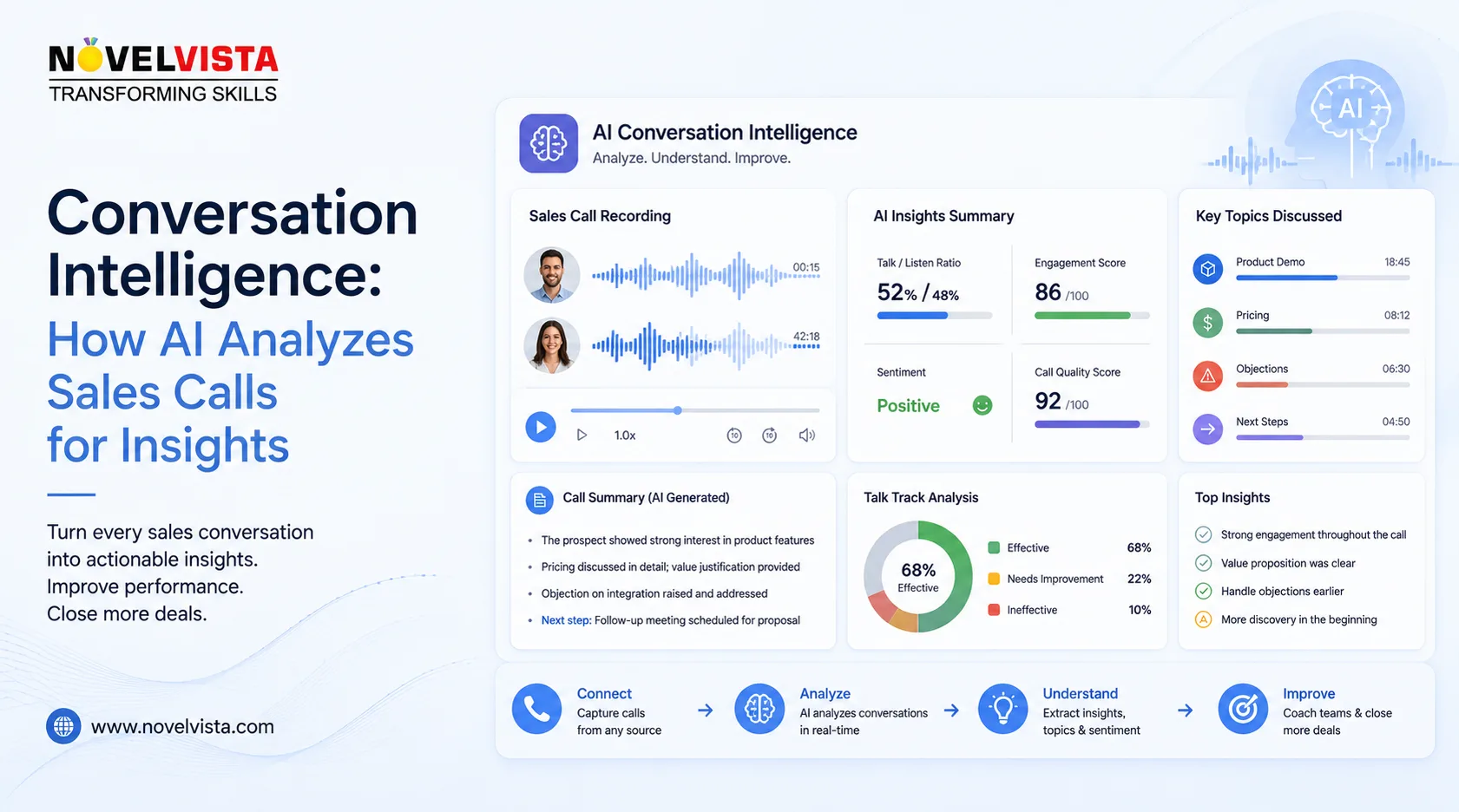
Sales conversations contain a significant amount of valuable Ai for Business Development information. Customers discuss their priorities, concerns, budgets, competitors, implementation challenges, and expectations during calls. However, much of this information is often lost in handwritten notes, incomplete CRM updates, or recordings that managers rarely have time to review.
Conversation intelligence uses artificial intelligence to capture, transcribe, analyze, and interpret sales calls. It converts spoken conversations into structured insights that sales teams can use to improve coaching, forecasting, customer engagement, and decision-making.
Rather than treating each call as an isolated interaction, conversation intelligence helps organizations identify patterns across hundreds or thousands of conversations. This gives sales leaders a clearer view of what customers are saying, how representatives are performing, and which factors influence successful outcomes.
How Conversation Intelligence Works
A conversation intelligence platform typically records or imports sales calls from video conferencing systems, telephony platforms, or customer relationship management tools. Speech recognition technology then converts the audio into a searchable transcript.
Natural language processing and machine learning models analyze the transcript to identify topics, questions, objections, commitments, competitors, product mentions, and customer sentiment. The system may also evaluate speaking patterns such as talk-to-listen ratio, interruptions, pauses, response time, and the length of representative monologues.
Modern platforms can automatically create call summaries, highlight important moments, identify next steps, and update relevant CRM fields. Instead of manually reviewing a complete 45-minute call, a sales manager can quickly access the main discussion points and critical sections.
The objective is not simply to create a transcript. The real value comes from translating an unstructured conversation into actionable sales intelligence.
Identifying Customer Needs and Buying Signals
Customers often reveal important buying signals indirectly. They may ask about implementation timelines, integration requirements, contract terms, security controls, pricing models, or user capacity. These questions can indicate that the opportunity is moving from general interest toward active evaluation.
Conversation intelligence can detect and categorize such signals. It can also highlight references to decision-makers, procurement processes, budget approval, or target deployment dates.
For example, when a prospect asks whether a platform can integrate with an existing enterprise system, the question may indicate a serious operational requirement. When a customer discusses a specific launch date, it may provide evidence that the opportunity has a defined timeline.
By capturing these details consistently, sales teams can improve qualification and prioritize opportunities based on actual customer behaviour rather than intuition alone.
Understanding Objections and Competitive Pressure
Sales calls frequently contain objections related to price, technical capability, internal approval, implementation effort, security, or return on investment. When these objections remain hidden inside individual conversations, organizations may struggle to understand why deals are delayed or lost.
AI can group similar objections across multiple calls and identify recurring patterns. Sales leaders may discover that customers repeatedly raise concerns about onboarding complexity, contract flexibility, or integration support.
Conversation intelligence can also detect competitor mentions. It may show which competitors appear most frequently, what features customers compare, and why prospects prefer one solution over another.
This information can improve sales enablement, product positioning, pricing strategy, and competitive messaging. Instead of relying only on anecdotal feedback from sales representatives, organizations can use direct evidence from customer conversations.
Improving Sales Coaching
Traditional sales coaching often depends on managers joining live calls or reviewing a small selection of recordings. This process is time-consuming and may not provide a complete view of representative performance.
Conversation intelligence allows managers to evaluate calls using consistent criteria. They can review whether a representative asked discovery questions, understood the customer’s problem, explained value clearly, addressed objections effectively, and agreed on next steps.
AI-generated call scores can help identify coaching opportunities, although they should not be treated as the only measure of performance. A representative with a high talk ratio may need to improve active listening, while another may need support in handling pricing objections or asking stronger follow-up questions.
Managers can also use successful calls as learning examples. When a top-performing representative handles a difficult objection effectively, the relevant call segment can be shared with the wider team.
This creates a more evidence-based coaching process and helps new sales employees learn from real customer interactions.
Supporting More Accurate Forecasting
Sales forecasts often depend on representative judgment and manually updated CRM fields. This can result in optimistic forecasts, outdated opportunity stages, or incomplete information.
Conversation intelligence adds another layer of evidence. It can identify whether the customer confirmed a budget, involved an executive sponsor, discussed implementation timing, or agreed to a specific next action.
The absence of these indicators can also be meaningful. An opportunity may be marked as advanced in the CRM, but the latest calls may show limited customer engagement or no clear decision process.
By comparing conversation signals with CRM data, sales leaders can assess deal health more accurately and identify opportunities that require intervention.
Risks and Limitations
Conversation intelligence must be implemented carefully. Organizations need clear policies for call recording, consent, access control, retention, and data protection. Customers and employees should understand when conversations are being recorded and how the information will be used.
AI analysis can also misunderstand accents, technical terminology, context, humour, or emotional tone. Sentiment analysis, in particular, may oversimplify complex human communication.
Organizations should therefore treat AI-generated insights as decision support rather than unquestioned truth. Human review remains essential, especially when insights influence performance evaluations or major commercial decisions.
Turning Conversations into Business Intelligence
Conversation intelligence gives organizations access to information that previously remained scattered across individual calls. It can reveal customer priorities, recurring objections, competitive risks, coaching needs, and indicators of deal progress.
The strongest results come when these insights are integrated into daily sales workflows. Call summaries should support CRM updates, objection trends should influence enablement content, and customer feedback should reach product and marketing teams.
AI cannot replace the trust, judgment, and empathy required in sales conversations. However, it can help organizations understand those conversations at scale. By transforming spoken interactions into structured intelligence, sales teams can make better decisions, improve customer engagement, and create a more consistent and informed sales process.

 English
 Arabic
 French
 Spanish
 Portuguese
 Deutsch
 Turkish
 Dutch
Dutch
 Italiano
 Russian
 Romaian
 Portuguese (Brazil)
