


Bias and Fairness in AI-Powered Hiring Tools
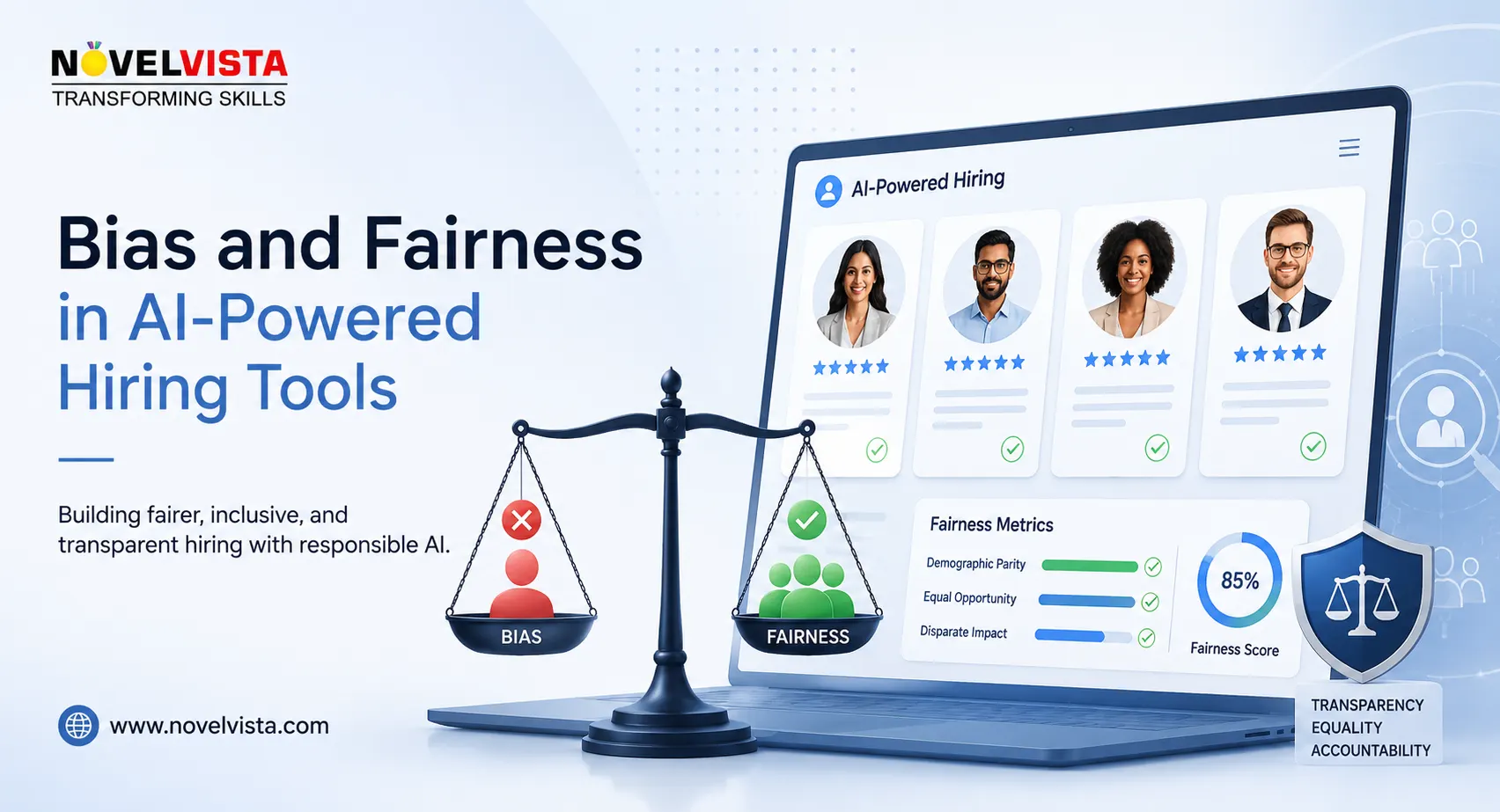
Artificial intelligence is increasingly being used to support recruitment decisions, from screening résumés and ranking candidates to evaluating video interviews and predicting job performance. These tools promise faster hiring, lower administrative costs, and more consistent decision-making. However, when AI for Hr systems are trained on incomplete, unbalanced, or historically biased data, they can reproduce and even amplify unfair hiring practices.
Bias in AI-powered hiring tools does not usually originate from the technology alone. It develops through a combination of historical hiring patterns, data selection, algorithm design, business objectives, and human decision-making. Understanding these causes is essential for organizations that want to use AI responsibly.
One of the most significant causes of hiring bias is historical training data. Machine learning models often learn from previous recruitment decisions, employee performance records, promotion histories, and retention data. If an organization has historically hired more candidates from a particular gender, age group, university, region, or social background, the system may identify those characteristics as indicators of success.
For example, an AI tool trained on the profiles of previous high-performing employees may favour candidates whose résumés resemble those profiles. If the existing workforce lacks diversity, the model may unintentionally penalize candidates from underrepresented groups. In this situation, the algorithm does not create the original discrimination, but it converts historical inequality into an automated decision pattern.
Another major cause is unrepresentative data. A hiring model must be trained on data that reflects the diversity of the applicant population. When certain groups are poorly represented, the system may perform less accurately for them. This can affect résumé interpretation, speech analysis, facial recognition, personality assessment, and automated interview scoring.
For instance, a voice-analysis system trained mainly on speakers with a specific accent may incorrectly evaluate candidates with different accents or speech patterns. Similarly, video-based hiring tools may produce inconsistent results across different skin tones, lighting conditions, disabilities, or cultural communication styles.
Bias can also arise through proxy variables. Even when sensitive attributes such as race, gender, religion, or age are removed from a dataset, other information may indirectly reveal them. Postal codes, university names, employment gaps, professional associations, language preferences, and extracurricular activities can act as substitutes for protected characteristics.
An algorithm may therefore discriminate without directly accessing a candidate’s demographic information. Removing sensitive fields alone is not enough. Organizations must examine whether other variables produce similar discriminatory effects.
The design of the algorithm and its target objective can also introduce unfairness. Hiring systems are usually optimized for measurable outcomes such as employee retention, performance ratings, productivity, or promotion potential. However, these measures may themselves contain bias.
Performance reviews can reflect manager subjectivity, unequal access to opportunities, workplace culture, or inconsistent evaluation standards. If an AI model treats these ratings as objective indicators of success, it may learn biased assumptions. The problem is not simply inaccurate data; it is the use of socially influenced outcomes as unquestioned truth.
Human choices during model development also play a critical role. Developers, data scientists, HR teams, and recruitment managers decide which data to include, which outcomes to predict, and which errors are considered acceptable. These decisions may reflect unconscious assumptions about what an ideal candidate looks like.
For example, an organization may value candidates who follow traditional career paths, use certain résumé formats, or demonstrate a particular communication style. An AI system built around these preferences may disadvantage career changers, candidates with employment gaps, people with disabilities, or applicants from different cultural backgrounds.
Job descriptions and candidate sourcing methods can create bias before the AI system even evaluates applicants. Gender-coded language, unnecessary qualification requirements, restrictive experience criteria, and targeted advertising can influence who applies. If the applicant pool is already unbalanced, the hiring algorithm will operate on a biased foundation.
Automation bias is another important concern. Recruiters may place excessive trust in algorithmic recommendations because the system appears objective and data-driven. Candidates ranked lower by the tool may receive less attention, even when the ranking is based on weak or biased indicators. Human reviewers may stop questioning the system and treat its output as a final decision rather than one source of evidence.
Fair hiring therefore requires more than purchasing a technically advanced recruitment platform. Organizations should conduct bias testing before deployment, review outcomes across demographic groups, document the data used to train models, and regularly audit hiring decisions. Human oversight must be meaningful, with recruiters empowered to challenge algorithmic recommendations.
Transparency is equally important. Candidates should understand when AI is being used, what information is being assessed, and how they can request clarification or appeal a decision. Vendors should also provide evidence about model accuracy, fairness testing, data governance, and limitations.
AI-powered hiring tools can improve recruitment efficiency, but efficiency should not come at the cost of equal opportunity. Bias usually emerges from the interaction between historical data, organizational practices, model design, and human behaviour. By addressing these root causes, companies can build hiring processes that are not only faster, but also more accountable, inclusive, and fair.

 English
 Arabic
 French
 Spanish
 Deutsch
 Turkish
 Dutch
Dutch
 Italiano
 Russian
 Romaian
 Portuguese (Brazil)
 Greek
Greek
