


Do You Need a One-Point or Two-Point Rifle Sling?
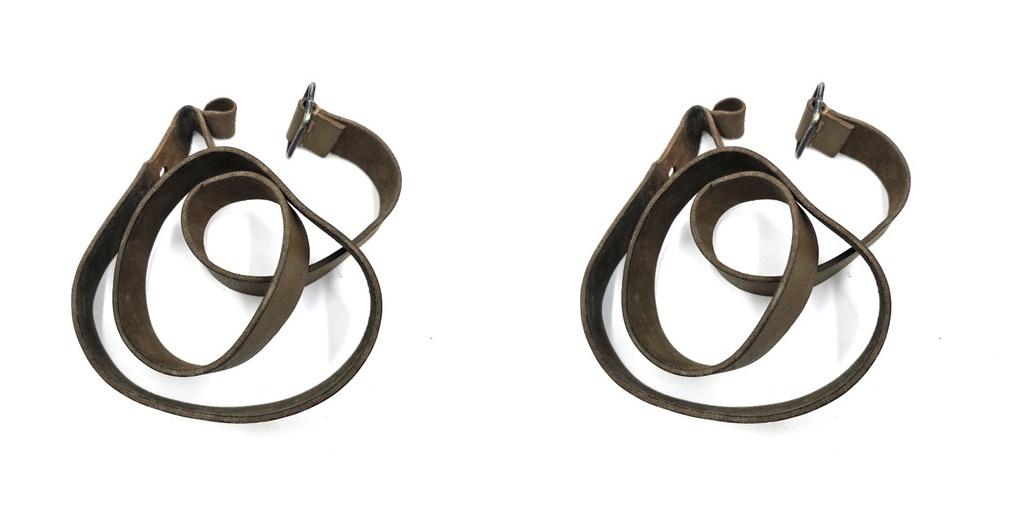
Two of the most popular types of rifle slings are one-point and two-point slings, but they are intended for primarily different uses. Here’s what you should know about them, from a high level.
One-Point Slings
As the name suggests, a one-point rifle sling attaches to the firearm at one point. The primary purpose of a one-point sling is to aid in weapon retention.
That is, if you’re running a rifle, but the gun jams or runs out of ammo or anything like that, and you need to draw a sidearm, you can drop the rifle. It won’t hang comfortably, but you won’t lose it.
A one-point sling also helps you retain the weapon, keeping it out of hostile hands.
These factors make one-point slings practical in combat zones, as well as in competitions like three-gun where you will be running more than one platform.
However, one-point slings are not particularly effective in scenarios in which the primary purpose is to carry the gun.
Two-Point Slings
Gun contrast to one-point slings, two-point rifle slings typically attach to two studs, one on the forend of the rifle, and the other on the stock.
This creates a loop that you can place over your shoulder or your back, so that the gun can be carried hands-free (or relatively hands-free) so as to give you the freedom to carry other gear.
Two-point slings also make it much more comfortable to carry a rifle over greater distances with less fatigue. For this reason, two-point rifle slings (and shotgun slings) are particularly popular with hunters.
Which Is for You?
Ultimately, whether a one-point sling or a two-point sling will work best for you will be determined primarily by what you carry and why you are carrying it.
If you are a sportsman that carries a rifle or shotgun in the field, and are a hunter, a two-point sling will offer you much greater value. This is even more so the case if you carry long distances to your stand or spot.
For those of you that are competitors in competitions like three-gun, or who carry sporting platforms like AR-style rifles, a one-point sling will likely offer greater value.
What Else to Look for in a Rifle Sling?
In addition to the configuration of the rifle sling itself, there are other things you can look for to make sure you’re getting quality:
- High-quality rifle slings are often made from leather, neoprene, or nylon, but they can also be made from cotton canvas or other durable materials.
- Shell loops. Some rifle and shotgun slings have shell and cartridge loops facilitating access to ammo, and expanding your ability to carry more of it.
- Thumb loops. A good rifle sling should have a thumb loop near the bottom. This will make it much easier for you to carry the rifle.
- Easy adjustment features. Most good slings have easy-adjust slides or straps that make it easy to add slack or remove it so you can carry more comfortably.
- Quick-attach mounts. Lastly, many quality rifle slings are outfitted with quick-attach mounts that make it easy to get the sling on or off the studs in a matter of seconds.
Shop Rifle Slings at SARCO, Inc.
Looking for a new shotgun or rifle sling? You can get it online at SARCO, Inc. Check out their collection of slings, which includes historically significant models like M1907 slings, and if you have any questions about what they sell or are looking for something specific, get in touch with them and they will be happy to help.
For more information about Springfield Parts and 1911 Accessories Please visit: Sarco Inc.

 English
 Arabic
 French
 Spanish
 Portuguese
 Deutsch
 Turkish
 Dutch
Dutch
 Russian
 Romaian
 Portuguese (Brazil)
 Greek
Greek
