


Brake Fluid Change Guide: Why It Matters & How It's Done
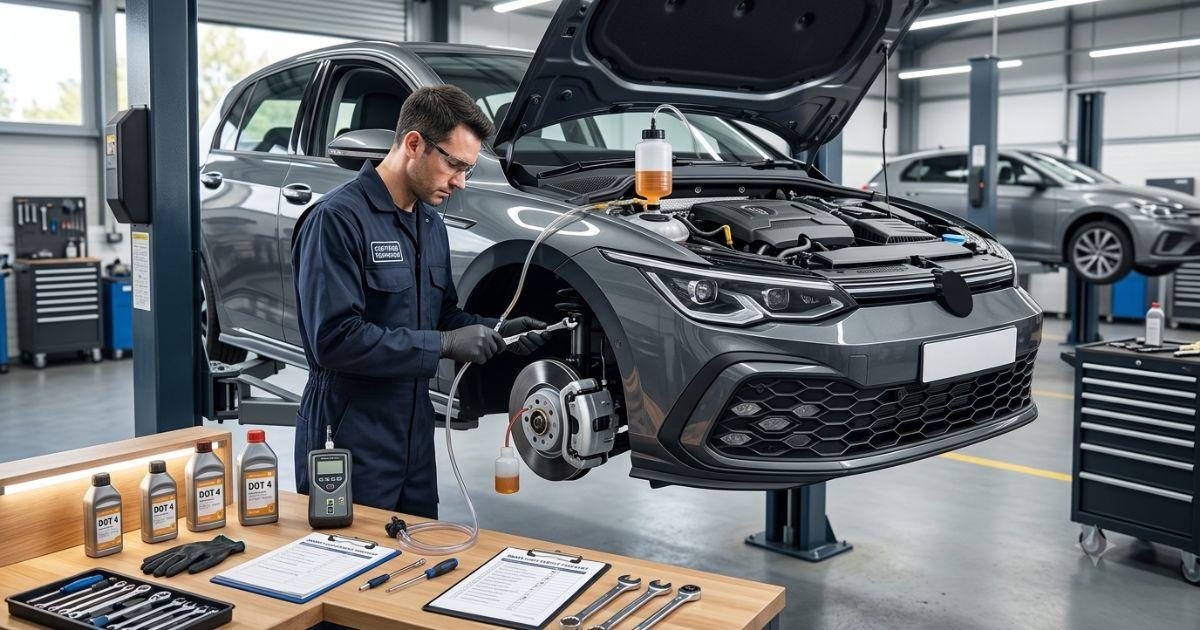
Performing a regular brake fluid change is essential for maintaining your vehicle's braking system safety and ensuring reliable stopping power on every journey.
This vital liquid acts as the lifeblood of your car's stopping mechanism, transferring force from your pedal to the wheels. Over time, this fluid absorbs moisture from the air, which can lead to dangerous performance degradation.
Understanding the science behind your car's maintenance requirements helps you avoid expensive repairs and keeps your family safe. Following a professional auto service schedule protects the integrity of your entire car.
The Science of Your Hydraulic Brake System
Your car relies on a complex hydraulic brake system fluid network to bring the vehicle to a halt. When you press the pedal, the fluid moves through steel lines and activates the brake pads. This process creates intense heat, which the fluid must withstand without boiling or thinning out.
Because this system is sealed but porous, moisture eventually seeps in and mixes with the liquid. This dilution lowers the boiling point, making the brakes feel spongy or unresponsive in emergencies.
Why Moisture is the Enemy of Your Brakes
Brake fluid is hygroscopic, which is a technical way of saying it loves to absorb water. As water content increases inside the lines, the fluid’s ability to perform under high pressure drops significantly.
During hard braking, that absorbed water can turn into steam, creating air bubbles in your lines. Because gas compresses much more easily than liquid, your pedal will sink toward the floorboard. Keeping your system dry is the primary reason why professional brake maintenance service guide intervals must be respected.
Understanding Different Fluid Specifications
Manufacturers specify precise standards for your car to ensure it handles heat and pressure correctly. You might hear technicians mention various DOT 3 and DOT 4 brake fluid types during your visit. DOT 3 is standard for many older models, while DOT 4 is common in modern vehicles with ABS.
It is critical never to mix these standards unless your owner's manual specifically allows it. Using the wrong specification can damage internal seals and compromise your ability to stop quickly.
What Happens During the Service
A professional technician follows a strict brake system fluid replacement process to ensure the entire circuit is clean. They start by flushing out the old, contaminated liquid from the master cylinder and all four wheel calipers.
Fresh, high-quality fluid is then pumped through the system until all air bubbles are completely removed. Finally, they test the pedal feel to ensure firm, consistent pressure across all four braking components. This thorough procedure restores your confidence in your car’s ability to respond exactly as needed.
Signs You Need a Service Immediately
You should not wait for your scheduled service if you notice any warning signs. Keeping an eye on your car’s behaviour can prevent a dangerous situation on the motorway:
-
Spongy Pedal: If the brake pedal feels soft or sinks, your fluid likely needs immediate attention.
-
Warning Lights: Your dashboard might display a brake fluid level or system pressure warning alert.
-
Corrosion: Dark, murky, or black fluid in the reservoir indicates severe contamination and moisture absorption.
-
Burning Smell: A strange, acrid odour after heavy braking suggests the fluid is overheating and breaking down.
-
Noise: While not always related to fluid, grinding sounds often accompany long-neglected braking maintenance cycles.
Benefits of Consistent Maintenance
Prioritising your car's maintenance is the smartest investment you can make for your vehicle's long-term health. Regular changes prevent rust from forming on internal metal parts, such as the master cylinder and callipers.
This proactive habit keeps your car’s performance sharp, safe, and reliable for many thousands of miles. Furthermore, it ensures your vehicle easily passes the annual MOT test without unexpected failures. Consistent care is the easiest way to keep your running costs low and your safety high.
Conclusion
Your safety on the road depends entirely on your vehicle's ability to stop instantly when necessary. Scheduling a brake fluid change is a small but vital task that protects every passenger in your car.
Ignoring this service risks pedal fade and significantly longer stopping distances in heavy traffic scenarios. Trust your local mechanic to use the correct fluid type and follow the right replacement process. Stay safe, stay alert, and keep your braking components in prime condition all year round.
FAQs
1. How often should I have the fluid replaced?
Most manufacturers recommend a complete brake fluid change every two years or every 24,000 miles. This interval accounts for the natural moisture absorption rate typical for UK driving conditions. You should check your specific owner's manual for the exact manufacturer-approved timeline for your model.
2. Can I just top up the reservoir instead?
Simply topping up the reservoir does not remove the contaminated, moisture-laden liquid already in your lines. You must perform a complete brake system fluid replacement process to ensure your stopping power is truly restored. Topping up is merely a temporary patch that ignores the real underlying issue of fluid degradation.
3. Are DOT 3 and DOT 4 interchangeable?
They are not always compatible, so you must always follow your specific vehicle manufacturer’s guidelines. Mixing DOT 3 DOT 4 brake fluid types can potentially damage your seals or affect the boiling point performance. Always refer to your reservoir cap for the exact required specification before adding any new liquid.
4. Why does my pedal feel soft after driving?
A soft pedal usually indicates that your fluid has absorbed too much water and is boiling under heat. This is a clear sign that you require a professional brake maintenance service guide visit immediately. Continuing to drive with a soft pedal is dangerous as it significantly increases your emergency stopping distance.
5. What are the dangers of low brake fluid?
Low fluid levels can cause your brakes to lose pressure, making it difficult or impossible to stop. This often indicates a leak within your hydraulic brake system fluid lines or excessively worn brake pads. You should have a mechanic inspect the system right away if the level drops below the minimum mark.
6. Will this service help my MOT pass?
Yes, a clean and effective braking system is a critical requirement for passing the UK MOT test. Technicians check for fluid contamination and system leaks as part of standard vehicle braking system safety inspections. Ensuring your fluid is fresh and clear is a simple way to avoid an unnecessary test failure.
7. Does driving style affect how often I need this service?
Yes, heavy braking in stop-start traffic creates more heat, which accelerates the breakdown of the liquid's properties. Drivers who frequently travel in hilly regions or tow heavy loads require a more frequent brake fluid change routine. Your driving habits play a major role in how quickly your system's performance will naturally decline.
8. Is the service expensive to perform?
Compared to the cost of replacing damaged calipers or master cylinders, this service is very affordable. It is considered a core part of routine brake maintenance service guide requirements for all modern vehicles. Taking action now saves you from much larger repair bills in the future.
9. Can I see if the fluid is bad?
You can look at the reservoir, and if the liquid appears dark or cloudy, it needs replacement. Healthy hydraulic brake system fluid should always appear clear or light amber in colour. If you notice any debris or discolouration, schedule a professional check-up as soon as possible.
10. Does this service include brake pad replacement?
This is a separate service from replacing pads, though a mechanic will often inspect both at the same time. While a brake system fluid replacement process focuses on the liquid lines, the pads are the physical friction components. Both are essential for your overall safety, but they require different maintenance and attention schedules.

 English
 Arabic
 French
 Spanish
 Portuguese
 Deutsch
 Turkish
 Dutch
Dutch
 Russian
 Romaian
 Portuguese (Brazil)
 Greek
Greek
