


Real Estate Tokenization Development Services: Structuring Digital Property Solutions
The Role of Development Services in Tokenization
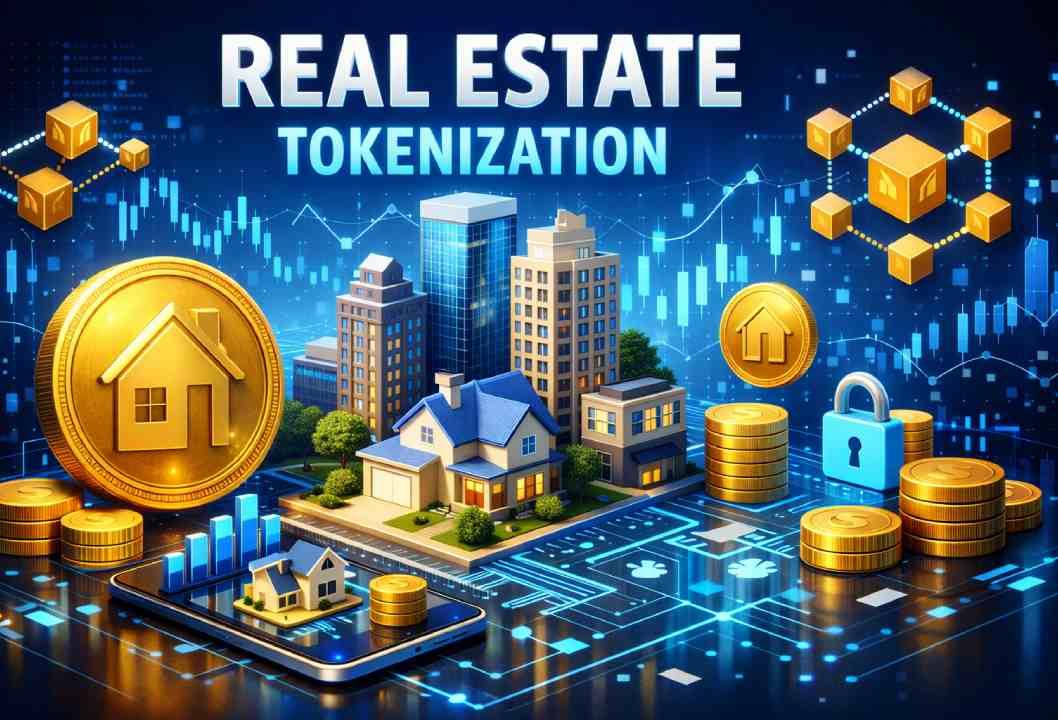
Real estate tokenization development services function as system architects. Their responsibility is to design, integrate, and operationalize the full lifecycle of a tokenized property.
This involves aligning three critical layers:
Legal Layer
Defines ownership structures, investor rights, and regulatory compliance mechanisms.
Financial Layer
Establishes valuation models, revenue distribution mechanisms, and investment structures.
Technical Layer
Implements blockchain infrastructure, smart contracts, and digital interfaces.
The effectiveness of a tokenization project depends on how well these layers are integrated into a cohesive system.
Structuring the Legal Framework
One of the most critical aspects of tokenized real estate is the legal structure that underpins digital ownership.
Special Purpose Vehicles (SPVs)
In most cases, properties are held within Special Purpose Vehicles (SPVs), which act as legal entities representing the asset. Tokens are then linked to shares or economic rights within the SPV rather than the property directly.
This structure ensures:
- Clear ownership representation
- Legal enforceability of investor rights
- Separation of liabilities
Regulatory Classification of Tokens
Tokens may be classified as securities, utility tokens, or hybrid instruments depending on jurisdiction. Development services ensure that token design aligns with applicable regulations, including securities laws and investor protection requirements.
Compliance Integration
Compliance mechanisms such as KYC (Know Your Customer) and AML (Anti-Money Laundering) are embedded into the platform to regulate investor participation and maintain legal integrity.
Designing the Financial Model
Tokenization is not just a technical process—it is a financial restructuring of real estate assets.
Asset Valuation
Accurate valuation forms the foundation of token pricing. Development services incorporate valuation methodologies that consider:
- Market conditions
- Rental income projections
- Asset appreciation potential
Fractionalization Strategy
Determining how an asset is divided into tokens is a key decision. This includes:
- Total token supply
- Price per token
- Minimum investment thresholds
The goal is to balance accessibility with financial viability.
Revenue Distribution Mechanisms
Token holders often receive income through rental yields or profit-sharing models. Smart contracts are designed to automate these distributions based on predefined rules.
Building the Technical Infrastructure
The technical layer is where tokenization becomes operational. Development services design and implement the infrastructure required to support digital property systems.
Blockchain Integration
A blockchain network serves as the foundation for recording ownership and transactions. The choice of blockchain affects scalability, transaction costs, and interoperability.
Smart Contract Development
Smart contracts define the logic governing token issuance, transfers, and financial operations. These contracts must be secure, transparent, and thoroughly audited to prevent vulnerabilities.
Token Standards
Standardized token protocols ensure compatibility with wallets, exchanges, and other blockchain systems. This enhances liquidity and usability.
Platform Development and User Experience
A tokenized real estate platform must be accessible and intuitive for both operators and investors.
Investor Interface
Platforms include dashboards that allow investors to:
- View property details
- Track ownership and returns
- Participate in transactions
Administrative Controls
Operators require backend systems to manage:
- Asset listings
- Investor onboarding
- Compliance processes
- Financial reporting
Wallet Integration
Secure digital wallets enable users to store and transfer tokens. Integration with custodial and non-custodial wallet solutions enhances flexibility.
Structuring the Tokenization Workflow
Real estate tokenization follows a structured workflow that development services help design and implement.
Asset Selection and Due Diligence
The process begins with identifying suitable properties and conducting legal, financial, and technical due diligence.
Legal Structuring
The asset is placed within a legal framework, typically an SPV, and ownership rights are defined.
Token Design and Issuance
Tokens are created based on the financial and legal structure, with smart contracts governing their functionality.
Platform Deployment
The tokenization platform is configured and launched, enabling investor access.
Investor Onboarding and Fundraising
Investors are onboarded through compliance checks, and capital is raised through token sales.
Ongoing Management
Post-launch operations include asset management, revenue distribution, and reporting.
Interoperability and Secondary Markets
One of the defining advantages of tokenization is the ability to create secondary markets for real estate assets.
Development services structure systems that allow:
- Peer-to-peer token transfers
- Integration with digital asset exchanges
- Cross-platform compatibility
This enhances liquidity and enables continuous price discovery, which is rarely possible in traditional real estate markets.
Security and Risk Management
Security is a critical component of tokenization platforms.
Smart Contract Audits
Contracts are audited to identify vulnerabilities and ensure reliability.
Data Protection
Sensitive user data must be secured through encryption and access controls.
Operational Risk Controls
Systems are designed to prevent fraud, unauthorized transactions, and technical failures.
Scalability and Future-Proofing
As tokenization adoption grows, platforms must be designed to scale.
Development services incorporate:
- Modular architecture for adding new features
- Support for multiple asset classes
- Integration with evolving blockchain technologies
Future-proofing ensures that platforms remain relevant as the digital asset ecosystem evolves.
Challenges in Structuring Digital Property Solutions
Despite its potential, real estate tokenization presents several challenges.
Regulatory Uncertainty
Different jurisdictions have varying rules, making global implementation complex.
Market Adoption
Investor awareness and trust in tokenized assets are still developing.
Technical Complexity
Even with development services, integrating multiple systems requires careful planning and execution.
Liquidity Constraints
Secondary markets for tokenized real estate are still emerging and may not yet offer full liquidity.
The Broader Impact on Real Estate Markets
Real estate tokenization is gradually transforming the structure of property markets.
Increased Accessibility
Smaller investors can participate in high-value assets through fractional ownership.
Enhanced Transparency
Blockchain-based records improve trust and reduce information asymmetry.
Improved Efficiency
Automation reduces administrative overhead and transaction times.
Globalization of Investment
Investors can access properties across borders without traditional barriers.
Future Outlook
The evolution of real estate tokenization development services will be shaped by several trends:
- Greater regulatory clarity across jurisdictions
- Integration of artificial intelligence for asset analysis
- Expansion of secondary trading platforms
- Convergence with decentralized finance (DeFi) systems
As these developments unfold, tokenized real estate is likely to become a more standardized component of global financial systems.
Conclusion
Real estate tokenization development services are central to structuring digital property solutions that are legally compliant, financially viable, and technologically robust. By integrating legal frameworks, financial models, and blockchain infrastructure, these services transform physical assets into programmable digital instruments.
The shift toward tokenized real estate is not merely a technological upgrade—it represents a reconfiguration of how property ownership and investment are conceptualized. Through careful structuring and implementation, development services enable this transformation while addressing the complexities inherent in bridging traditional real estate systems with blockchain-based innovation.
As adoption continues to expand, the role of structured development will remain critical in ensuring that tokenized property ecosystems are efficient, secure, and accessible to a broader range of participants.

 English
 French
 Spanish
 Portuguese
 Deutsch
 Turkish
 Dutch
Dutch
 Italiano
 Russian
 Romaian
 Portuguese (Brazil)
 Greek
Greek
