


Pain Relief After Orthopedic Surgery: Is Tapentadol Used?
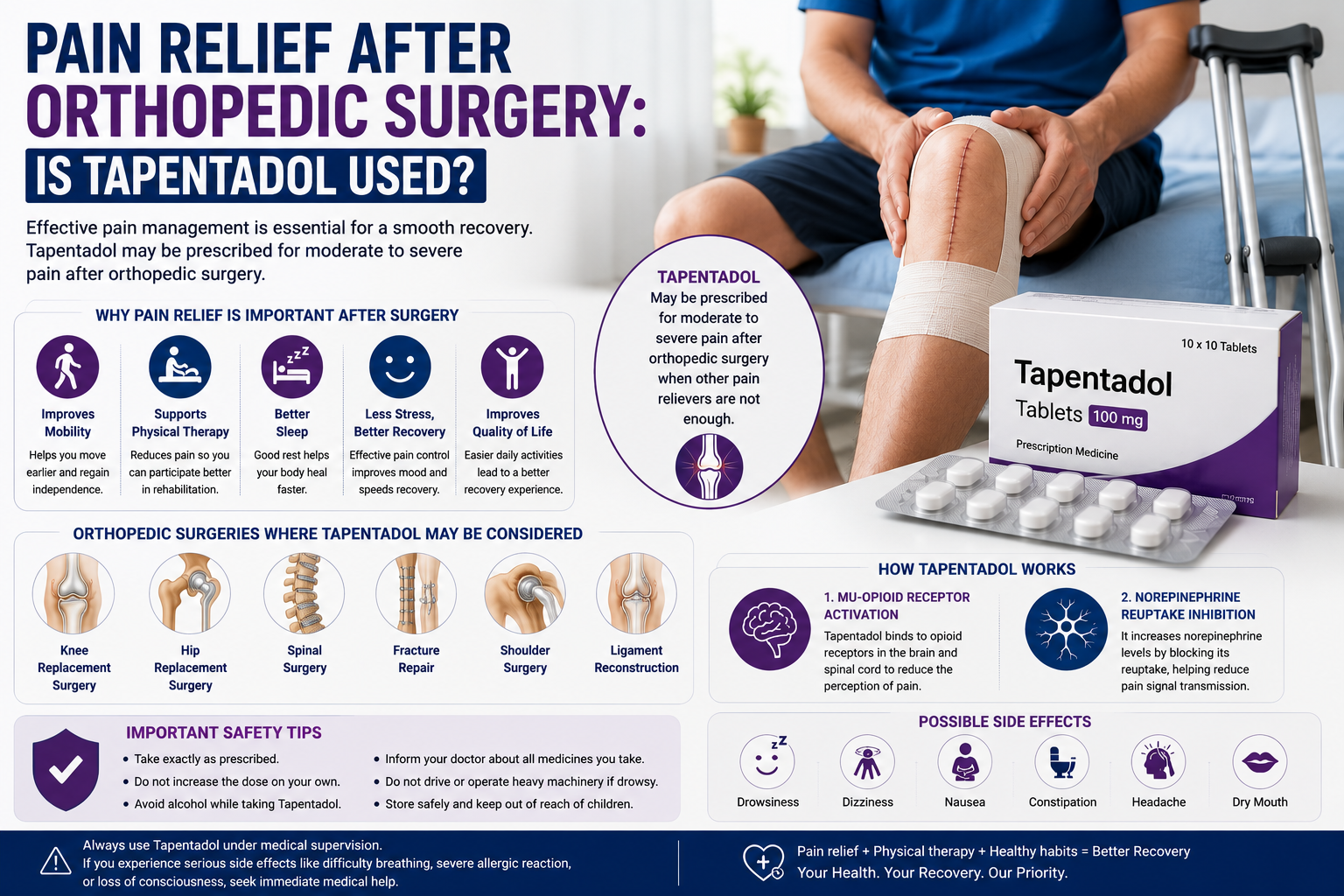
Pain Relief After Orthopedic Surgery: Is Tapentadol Used?
Orthopedic surgery is often performed to repair damaged bones, joints, muscles, ligaments, or tendons. Procedures such as knee replacement, hip replacement, spinal surgery, fracture repair, and ligament reconstruction can significantly improve mobility and quality of life. However, recovering from these surgeries often involves moderate to severe pain, especially during the first few days or weeks.
Effective pain management is a key part of recovery because it allows patients to move comfortably, participate in physical therapy, and regain independence. Among the prescription medications that healthcare providers may consider is Tapentadol, an opioid analgesic with a unique dual mechanism of action.
This article explains why pain occurs after orthopedic surgery, how Tapentadol works, when it may be prescribed, its benefits, potential risks, and important safety considerations.
Why Does Orthopedic Surgery Cause Pain?
Every surgical procedure involves some degree of tissue injury. During orthopedic surgery, surgeons may:
- Make surgical incisions
- Repair or remove damaged tissue
- Reconstruct ligaments or tendons
- Insert metal plates, screws, or joint implants
- Realign fractured bones
As the body begins healing, inflammation develops naturally. This inflammation causes swelling, tenderness, stiffness, and pain around the surgical site.
Although this discomfort is expected, controlling pain is essential to support recovery.
Common Orthopedic Surgeries That May Require Strong Pain Management
Orthopedic procedures that often result in moderate to severe post-operative pain include:
Knee Replacement Surgery
Patients usually experience pain and stiffness during the first weeks after surgery while learning to walk and exercise again.
Hip Replacement Surgery
Pain control helps patients begin walking sooner and participate in rehabilitation.
Spinal Surgery
Back and neck procedures can cause significant discomfort that requires careful pain management.
Fracture Repair
Broken bones repaired with surgery often remain painful until healing progresses.
Shoulder Surgery
Rotator cuff repair and shoulder replacement commonly require prescription pain medication during recovery.
Ligament Reconstruction
Procedures such as ACL reconstruction involve rehabilitation that benefits from effective pain control.
Why Is Pain Management So Important?
Pain relief after orthopedic surgery is about much more than comfort.
When pain is managed effectively, patients may:
- Walk earlier
- Perform rehabilitation exercises
- Improve circulation
- Sleep more comfortably
- Reduce stress related to pain
- Regain independence faster
Poorly controlled pain may delay rehabilitation and make recovery more difficult.
What Is Tapentadol?
Tapentadol is a prescription opioid analgesic used to treat moderate to severe pain in adults.
Unlike many traditional opioid medications, Tapentadol works through two different mechanisms.
1. Mu-Opioid Receptor Activation
Tapentadol binds to opioid receptors located in the brain and spinal cord.
This reduces how strongly the brain interprets incoming pain signals.
2. Norepinephrine Reuptake Inhibition
Tapentadol also blocks the reuptake of norepinephrine, a neurotransmitter involved in the body's natural pain-control system.
This additional action helps reduce pain signal transmission through the nervous system.
Because of these two mechanisms, Tapentadol offers a different approach to pain management than medications that rely only on opioid receptor activation.
Is Tapentadol Used After Orthopedic Surgery?
Yes. Healthcare providers may prescribe Tapentadol for moderate to severe post-operative pain after orthopedic surgery when stronger prescription pain management is appropriate.
However, it is not routinely prescribed for every patient. The decision depends on several factors, including:
- Type of surgery
- Severity of pain
- Age
- Overall health
- Liver and kidney function
- Previous opioid use
- Other medications
- Risk of side effects or drug interactions
Each treatment plan is individualized to meet the patient's needs.
Benefits of Tapentadol During Recovery
When prescribed appropriately, Tapentadol may provide several benefits during orthopedic recovery.
Supports Early Mobility
Reducing pain helps many patients begin walking and moving sooner after surgery.
Helps Patients Participate in Physical Therapy
Physical therapy is essential after many orthopedic procedures.
Pain control allows patients to perform stretching and strengthening exercises more comfortably.
Improves Sleep
Pain frequently interferes with sleep during recovery.
Better pain management may improve rest, allowing the body to recover more effectively.
Makes Daily Activities Easier
Simple tasks like standing, dressing, or getting in and out of bed often become easier when pain is managed appropriately.
When Might Tapentadol Be Prescribed?
Healthcare providers may consider Tapentadol after procedures such as:
- Total knee replacement
- Total hip replacement
- Spinal fusion
- Fracture surgery
- Shoulder replacement
- Rotator cuff repair
- Ligament reconstruction
- Major orthopedic trauma surgery
Prescription decisions depend on individual patient needs rather than the surgery alone.
How Long Is Tapentadol Usually Used?
For many patients recovering from surgery, Tapentadol is prescribed for a short period to manage post-operative pain.
The duration depends on:
- Surgical procedure
- Pain severity
- Recovery progress
- Overall health
Patients should never continue taking Tapentadol longer than recommended without consulting their healthcare provider.
Possible Side Effects
Like all opioid medications, Tapentadol may cause side effects.
Common side effects include:
- Drowsiness
- Dizziness
- Nausea
- Vomiting
- Constipation
- Dry mouth
- Headache
These effects vary from person to person.
Seek immediate medical attention if you experience:
- Difficulty breathing
- Severe allergic reactions
- Extreme drowsiness
- Loss of consciousness
- Seizures
Safe Use Tips
To reduce risks while taking Tapentadol:
- Take the medication exactly as prescribed.
- Do not increase the dose without medical advice.
- Avoid alcohol during treatment.
- Do not crush or chew extended-release tablets.
- Tell your healthcare provider about every medication and supplement you use.
- Avoid driving until you know how the medicine affects you.
- Store the medication securely away from children.
Supporting Recovery Beyond Medication
Medication is only one part of successful orthopedic recovery.
Healthcare providers may also recommend:
- Physical therapy
- Walking programs
- Gentle stretching
- Ice therapy (when advised)
- Healthy nutrition
- Adequate hydration
- Proper sleep
- Regular follow-up appointments
Combining these approaches often produces better long-term recovery.
Frequently Asked Questions
Is Tapentadol prescribed after every orthopedic surgery?
No. The decision depends on the type of surgery, pain severity, medical history, and your healthcare provider's assessment.
Does Tapentadol help bones heal faster?
No. Tapentadol does not speed bone or tissue healing. It helps reduce pain, making rehabilitation and daily activities more manageable.
Can Tapentadol be used after knee replacement surgery?
Healthcare providers may prescribe Tapentadol after knee replacement surgery for moderate to severe pain when they determine it is appropriate.
Can I stop taking Tapentadol once I feel better?
If you have been taking Tapentadol for more than a short period, speak with your healthcare provider before stopping it. They will advise you on the safest way to discontinue treatment if needed.
Conclusion
Pain after orthopedic surgery is a normal part of the healing process, but it should not prevent patients from participating in recovery. Effective pain management helps improve comfort, supports physical therapy, encourages mobility, and contributes to a smoother rehabilitation experience.
For selected patients, Tapentadol may be prescribed to manage moderate to severe post-operative pain. Because it is a prescription opioid medication, it should always be taken exactly as directed and under the supervision of a qualified healthcare professional. Combined with rehabilitation, healthy lifestyle habits, and regular follow-up care, appropriate pain management can help patients recover safely and regain their quality of life.

 English
 Arabic
 French
 Spanish
 Deutsch
 Turkish
 Dutch
Dutch
 Italiano
 Russian
 Romaian
 Portuguese (Brazil)
 Greek
Greek
