


Circular Knitting Machine Cams: Types, Materials, Selection Guide, and Performance Factors
Introduction
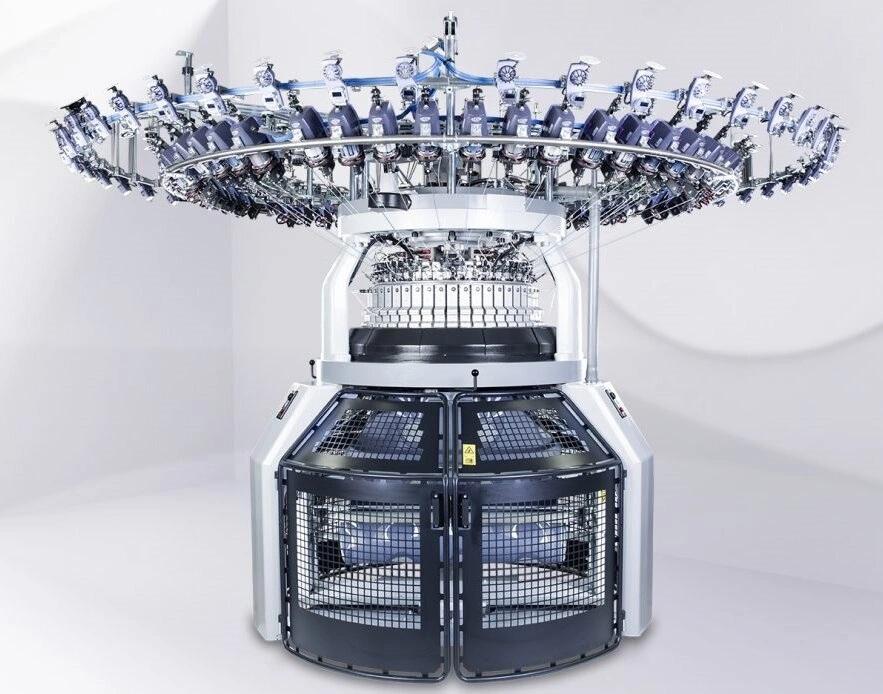
In circular knitting machines, every component plays an important role in determining fabric quality, production efficiency, and machine stability. Among all components, the cam is one of the most essential yet frequently underestimated parts. Although small in size compared with the machine frame, cylinder, or drive system, the cam directly controls the movement of knitting needles and sinkers, making it a key element in stitch formation and overall knitting performance.
Today’s circular knitting machines are designed to manufacture a wide range of fabrics, including single jersey, rib, interlock, jacquard, fleece, and various technical textiles. As textile manufacturers continue to demand higher production speeds, improved fabric consistency, reduced downtime, and longer machine service life, the importance of precision cam design has become increasingly significant.
A poorly manufactured or incorrectly selected cam can result in various production issues, such as needle breakage, excessive vibration, yarn damage, uneven loops, fabric defects, and increased maintenance costs. On the other hand, a high-precision cam enables smooth needle movement, stable high-speed operation, improved fabric quality, and extended service life of related knitting components.
This guide provides a comprehensive overview of circular knitting machine cams, including their working principles, major types, material selection, manufacturing processes, and key factors to consider when choosing the right cam for different knitting applications.
What Is a Cam in a Circular Knitting Machine?
A cam is a precision-engineered guide component installed around the needle cylinder or dial of a circular knitting machine. Its main function is to control the movement path of knitting needles and sinkers throughout the knitting cycle.
Unlike active mechanical parts that rotate or generate power, the cam itself remains fixed in position. During operation, the rotating cylinder causes the needle butts to move along the cam track. The specially designed cam profile guides the needles upward and downward at precise timing intervals.
Through this controlled movement, the cam enables essential knitting actions, including:
- Clearing previous loops
- Receiving new yarn
- Forming stitches
- Creating tuck stitches
- Producing floating yarn structures
- Transferring loops
- Releasing finished stitches
The accuracy of the cam profile directly affects knitting performance. Even a small deviation in cam geometry can influence stitch formation, fabric appearance, machine stability, and production efficiency.
Main Types of Circular Knitting Machine Cams
Circular knitting machines use different cam designs to perform specific knitting functions. Each type plays an important role in controlling needle and sinker movement.
1. Needle Raising Cam
The needle raising cam controls the upward movement of knitting needles during the knitting cycle. It lifts the needles to the required height, allowing them to clear existing loops and prepare for new yarn insertion.
The lifting movement directly affects:
- Stitch formation
- Yarn feeding accuracy
- Needle loading
- Loop uniformity
A well-designed raising cam ensures smooth needle movement while reducing impact stress and mechanical wear.
2. Stitch Cam
The stitch cam controls the downward movement of the needle after yarn feeding. This movement determines the final stitch length and fabric characteristics.
The stitch cam directly influences:
- Fabric density
- Fabric weight
- Loop structure
- Stitch appearance
Many modern circular knitting machines feature adjustable stitch cams, allowing operators to modify stitch length without replacing the entire cam component.
3. Guard Cam
Guard cams provide additional support and stability for needle movement, especially during high-speed operation.
Their main functions include:
- Guiding needle movement smoothly
- Reducing needle vibration
- Minimizing mechanical wear
- Improving overall machine stability
A properly designed guard cam helps maintain consistent knitting performance and extends component lifespan.
4. Sinker Cam
Sinkers are responsible for controlling loop formation and fabric take-down operations. The sinker cam manages sinker movement during key processes such as:
- Holding loops
- Knocking over stitches
- Positioning yarn
- Supporting fabric formation
High-quality sinker cams reduce yarn friction and ensure accurate loop formation.
5. Tuck Cam
Some fabrics require tuck stitches rather than standard knit stitches. The tuck cam controls partial needle movement, allowing the old loop to remain on the needle while a new loop is added.
Tuck cams are widely used in:
- Jacquard fabrics
- Pattern knitting
- Decorative textiles
- Functional fabrics
6. Float Cam
Float cams are designed for knitting structures where certain needles intentionally skip yarn formation, creating floating yarn effects.
They are commonly used in:
- Jacquard knitting
- Pattern fabrics
- Decorative textiles
- Double jersey machines
Why Cam Selection Is Important
Choosing the correct cam is not simply a matter of replacing worn components. Different knitting applications require different needle movements, knitting depths, and timing sequences. The cam profile must match the fabric structure, machine specifications, and production requirements.
An unsuitable cam design may cause:
- Uneven stitch length
- Yarn breakage
- Needle damage
- Fabric streaks
- Excessive machine vibration
- Higher operating temperatures
- Reduced production efficiency
By selecting the right cam, manufacturers can achieve significant improvements in:
- Fabric quality
- Machine productivity
- Energy efficiency
- Component durability
- Production consistency
Selecting Cam Curves for Different Fabrics
One of the most important factors when selecting a circular knitting machine cam is the curve profile. The cam curve determines the speed, timing, and smoothness of needle movement throughout the knitting process.
Different fabric structures require different cam designs to achieve optimal performance.
Single Jersey Fabrics
Single jersey fabrics require smooth and stable needle movement to maintain consistent stitch formation.
The cam curve should provide:
- Moderate needle lifting speed
- Smooth acceleration and deceleration
- Reduced mechanical impact
- Stable loop formation
A properly optimized cam profile helps prevent uneven stitches and improves fabric appearance.
Rib Fabrics
Rib knitting machines use both cylinder needles and dial needles working together. Because two needle systems must operate in precise coordination, cam design is especially important.
A suitable rib cam should ensure:
- Accurate synchronization between needle sets
- Smooth needle transition
- Reduced collision risk
- Consistent stitch formation
Poor cam timing may result in unstable operation and fabric defects.
Interlock Fabrics
Interlock knitting requires extremely accurate needle control because cylinder and dial needles must intermesh perfectly.
The cam profile must provide:
- Precise needle timing
- Reduced vibration
- Stable high-speed operation
- Accurate loop transfer
High-quality interlock cams are essential for producing dense, uniform fabrics.
Fleece Fabrics
Fleece knitting machines usually require deeper sinker movement and longer needle travel to create pile structures.
Specialized cam designs help achieve:
- Proper yarn insertion
- Effective pile formation
- Stable fabric take-down
- Reduced yarn damage
Jacquard Fabrics
Jacquard knitting involves selective needle operation to create complex patterns and designs.
These machines require advanced cam systems capable of coordinating multiple knitting actions while maintaining:
- Pattern accuracy
- Needle timing precision
- High-speed stability
- Fabric consistency
Material Selection Is Critical for Cam Performance
Because cams are continuously exposed to mechanical contact with needle butts and sinkers, material selection directly affects service life and operating reliability.
During high-speed knitting, each needle passes over the cam surface thousands of times per minute. Over long periods of operation, this creates significant mechanical stress, including:
- Sliding friction
- Contact pressure
- Heat generation
- Surface fatigue
- Continuous wear
Therefore, high-quality circular knitting machine cams are generally manufactured from wear-resistant alloy tool steels designed to maintain dimensional accuracy under demanding conditions.
Why Cr12MoV Steel Is Commonly Used for Circular Knitting Machine Cams
Many professional circular knitting machine cam manufacturers choose Cr12MoV tool steel because of its excellent combination of hardness, wear resistance, and dimensional stability.
The major advantages include:
Excellent Wear Resistance
Cr12MoV maintains its precise cam profile even after millions of knitting cycles, helping ensure stable needle movement and consistent fabric quality.
High Hardness
After proper heat treatment, Cr12MoV achieves high surface hardness while maintaining sufficient toughness, allowing it to withstand continuous mechanical contact.
Excellent Dimensional Stability
The material experiences minimal deformation during heat treatment, which helps preserve the accuracy of the cam profile.
Superior Fatigue Resistance
During operation, cams experience repeated impact and cyclic loading from needle movement. Cr12MoV provides excellent resistance against fatigue damage.
Extended Service Life
Compared with ordinary carbon steel, Cr12MoV offers significantly improved durability and maintains performance over longer operating periods.
The Importance of Proper Heat Treatment
Using high-quality raw material alone is not enough to guarantee cam performance. Heat treatment is another essential step that determines the final mechanical properties of the cam.
Professional manufacturers typically apply controlled processes such as:
- Vacuum hardening
- Tempering
- Stress relieving
- Precision grinding
Improper heat treatment may lead to:
- Surface cracks
- Excessive brittleness
- Accelerated wear
- Dimensional distortion
A well-controlled heat treatment process ensures that the cam achieves the ideal balance between hardness and toughness.
Recommended Cam Hardness
In industrial applications, circular knitting machine cams commonly require a hardness level of approximately:
HRC 63.5 ± 1
This hardness range provides an effective balance between wear resistance and impact resistance.
If Hardness Is Too Low:
Problems may include:
- Faster surface wear
- Loss of cam profile accuracy
- Reduced stitch consistency
- Shorter service life
If Hardness Is Too High:
Potential issues include:
- Increased brittleness
- Higher risk of cracking
- Surface chipping
- Possible needle damage
Maintaining the correct hardness specification is essential for achieving reliable long-term performance.
Surface Roughness Has a Major Impact on Performance
Many users focus mainly on hardness while overlooking surface finishing. However, the working surface quality of the cam has a direct influence on machine efficiency and component lifespan.
Since needle butts continuously slide along the cam surface, poor surface finishing can increase:
- Friction
- Heat generation
- Lubrication difficulty
- Needle wear
A precisely polished cam surface allows smoother needle movement and reduces unnecessary resistance.
Recommended Surface Finish
High-quality circular knitting machine cams typically achieve a working surface roughness of:
Ra ≤ 0.8 μm
This precision finish helps reduce:
- Needle butt wear
- Friction losses
- Heat accumulation
- Machine noise
- Energy consumption
It also improves stitch consistency during high-speed knitting operations.

 English
 Arabic
 French
 Spanish
 Portuguese
 Deutsch
 Turkish
 Dutch
Dutch
 Russian
 Romaian
 Portuguese (Brazil)
 Greek
Greek
