


Working Capital Loans: Win Bigger Construction Contracts
What Real Impact Do Small Business Loans for Working Capital Have on Your Next Big Bid?
AI OverviewWinning large construction contracts requires massive upfront funding before the first owner payment arrives. General contractors must secure enough funding to cover immediate material down payments, equipment rental deposits, and weekly mobilization payroll cycles. Without adequate capital reserves, a major project win can outpace a firm's operational liquidity, causing critical project delays, vendor disputes, and bonding friction. |
Introduction
The financial strain of mobilizing a new construction project often hits before the first excavator moves any dirt. Contractors frequently face heavy upfront expenditures for raw materials, site safety setups, and specialized labor deposits weeks before submitting their initial progress billing. This upfront cash drain creates an operational bottleneck, forcing firms to drain their emergency reserves just to start the job. When a firm wins multiple bids simultaneously, this cash gap compounds, risking immediate payroll shortfalls and strained supplier relationships. Resolving this issue demands an objective look at capital deployment during the pre-construction phase. Utilizing structured small business loans for working capital allows a business to bridge this specific mobilization gap without halting ongoing operations.
Mobilization Phase Funding Realities
Initial project expenses regularly outpace the liquid cash reserves held by mid-sized contracting firms. When a contract is signed, the immediate need for security bonding, municipal permits, and site preparation requires instant cash deployment. This initial strain is compounded because traditional institutional lenders often require months to process standard credit applications, rendering them useless for rapid project startups. Securing small business loans for working capital provides a dedicated pool of cash to absorb these sudden upfront costs, ensuring your crews break ground on schedule.
Capital Reserves and Project Selection
Targeting higher-value commercial projects requires proof of financial capacity during the pre-qualification round. Project owners and municipal agencies review your current balance sheets to confirm you can sustain operations during slow payment periods.
Assessing Balance Sheet Capacity
A thin cash position forces estimators to pass on profitable contracts out of fear that a single payment delay will stall the entire company. Maintaining active small business loans for working capital improves your liquid asset ratio, giving project owners confidence that your business can survive extended billing cycles.
Managing Extended Retainage Timelines
Retainage holding accounts routinely freeze up to ten percent of your gross contract value until the final punch list is signed off. Having small business loans for working capital ensures your company can fund new project bids while your earned profits remain locked in these client accounts.
Analyzing Commercial Loan Terms
Evaluating Interest Structures
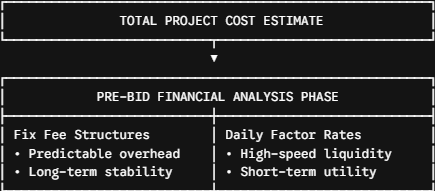
Selecting the right funding mechanism depends heavily on studying specific commercial loan terms before submitting an official project estimate. Contractors must balance the speed of capital acquisition against the total cost of borrowing to maintain project profitability.
-
Fixed interest rates offer long-term payment predictability over multi-year horizons.
-
Variable rates can fluctuate based on broader market benchmarks, impacting future monthly cash flow.
-
Factor rates calculate total payback costs upfront, making them ideal for short-term financing needs.
Understanding how different commercial loan terms affect your weekly overhead allows your estimating team to price bids accurately, protecting your net margins from unexpected financing costs.
Material Procurement Strategy Shifts
Volatile supply chains require contractors to purchase bulk materials well ahead of schedule to lock in favorable pricing. Suppliers rarely offer extended credit terms to builders tackling projects that are larger than their usual operational footprint.
With small business loans for working capital, procurement managers can issue immediate cash deposits to secure structural steel, lumber, and concrete before market prices climb. This cash buying power also positions your firm as a preferred customer, granting you priority status on delivery schedules when regional supply shortages threaten to delay local building projects.
Workforce Stability and Equipment Access
Securing Specialized Site Crews
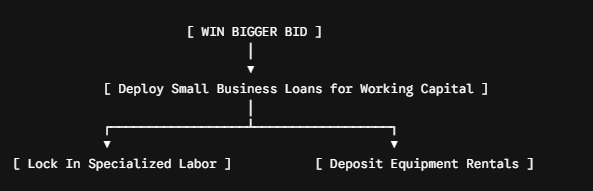
Retaining skilled tradespeople requires absolute payroll consistency, regardless of when a project owner approves your monthly progress payment. If a specialized crew experiences a delayed paycheck, they will quickly migrate to a competing job site, stalling your project schedule.
Funding Heavy Machinery Rentals
Using small business loans for working capital allows project managers to meet payroll deadlines every single week without exception. This liquid cash also funds the steep upfront deposits required by heavy machinery rental houses for cranes, bulldozers, and specialized scaffolding systems.
Balance Sheet Management Practices
Maintaining operational momentum requires a clean separation between your project expenses and your daily administrative capital. Relying on your main operational account to fund massive project starts risks depleting the cash needed for office lease payments, corporate insurance premiums, and non-project staff salaries.
By integrating small business loans for working capital into your broader financial plan, you create a distinct buffer that insulates your core business from field disruptions. This approach ensures that even if a major client delays a progress payment by thirty days, your firm continues to run smoothly.
Analyzing commercial loan terms ensures that the repayment schedule aligns perfectly with your projected milestones, keeping your debt service manageable. Wise builders treat funding as an operational tool, much like heavy machinery, to scale their capacity safely.
Smart contractors regularly align their project pipelines with flexible funding options to avoid cash flow droughts during peak construction season. Navigating these options requires looking beyond traditional banking limitations to discover speed-optimized funding routes.
Evaluating the specific commercial loan terms available on the market helps you select a facility that matches your typical invoicing cycle. This strategic positioning allows your team to pursue multiple high-value bids simultaneously, driving sustainable top-line revenue growth.
Firms that maintain constant access to liquidity can handle volatile economic shifts and changing project scopes much better than cash-strapped competitors. Ultimately, securing small-business loans for working capital turns your estimating team from cautious participants into aggressive market competitors.
When your business is backed by structured funding, you no longer have to wait for old accounts receivable to clear before pursuing your next contract. This consistent liquidity allows your firm to maintain momentum, win larger assignments, and build stronger relationships with project owners.
Before committing to a specific funding path, it is vital to review how different commercial loan terms impact your overall debt-to-equity ratio. Balancing short-term cash needs with long-term corporate health is the hallmark of a sophisticated construction enterprise, much like professionals who work with Simply Capital Source to secure strategic operating assets.
Frequently Asked Questions (FAQs)
1. How do small business loans for working capital assist with initial project mobilization?
These specific funding tools provide immediate cash to pay for permits, order raw materials, and cover labor costs before the first project draw is paid.
2. Why should contractors closely analyze commercial loan terms before signing an agreement?
Reviewing the commercial loan terms ensures that the repayment schedule, interest rates, and fees will not consume your estimated project profit margins.
3. Can a construction firm use small business loans for working capital to purchase heavy machinery?
Yes, this cash can cover upfront equipment lease deposits or short-term rental fees required to get specialized machinery onto the job site quickly.
4. How does having active small business loans for working capital affect the bidding process?
It demonstrates to project owners that your company has the financial liquidity to sustain daily operations during prolonged payment delays.
5. What are the typical commercial loan terms for short term construction financing?
These terms frequently range from a few months to several years, depending on whether the funding is structured as a line of credit or a term loan.

 English
 Arabic
 French
 Spanish
 Portuguese
 Deutsch
 Turkish
 Italiano
 Russian
 Romaian
 Portuguese (Brazil)
 Greek
Greek
