


Advanced Materials for High-Performance Hydraulic Buffer Systems
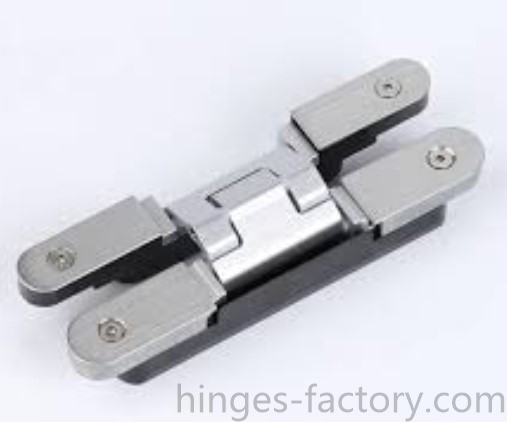
Architectural hardware has evolved beyond simple mechanical connections to become an important contributor to building safety, operational comfort, and long-term reliability. In modern commercial buildings, residential developments, and public facilities, Hydraulic Buffer Hinges are widely adopted because they combine hydraulic motion control with durable mechanical construction. Their carefully engineered design allows doors to move smoothly while minimizing impact, supporting a quieter and more comfortable environment for daily use.
Material engineering remains one of the most important factors influencing hinge reliability. Engineers carefully evaluate metallic materials according to strength, toughness, corrosion resistance, and fatigue performance before selecting suitable manufacturing materials. Premium alloy steel provides excellent structural stability under repeated operating cycles, while corrosion-resistant materials protect the hinge body from environmental influences encountered during long-term service. Careful material selection also contributes to consistent dimensional stability, helping maintain reliable operation throughout the product lifecycle.
Surface treatment technologies further enhance product durability by protecting structural components against wear and environmental exposure. Advanced coating processes improve corrosion resistance while maintaining an attractive appearance suitable for contemporary architectural projects. Precision polishing reduces friction between contacting surfaces, allowing moving components to interact smoothly while minimizing mechanical resistance. These surface engineering techniques contribute to longer service life and improved operational consistency.
Precision manufacturing forms the foundation of dependable hydraulic hardware production. Modern machining equipment produces hinge bodies and internal mechanical components with excellent dimensional accuracy. Strict manufacturing control ensures consistent assembly quality throughout the production process. Multiple inspection procedures verify machining precision, structural alignment, and functional performance before products advance to final quality evaluation, ensuring reliable operation after installation.
The hydraulic buffering mechanism provides controlled resistance during door movement, allowing energy generated by closing motion to be absorbed gradually rather than transferred directly to surrounding hardware. This engineering approach improves operational smoothness while reducing unnecessary stress on door frames and supporting structures. The result is quieter movement, improved user comfort, and reduced mechanical wear across the complete door system.
Modern architectural applications require hardware capable of performing reliably under different operational conditions. Commercial office buildings benefit from smoother traffic flow supported by controlled door movement. Hospitality environments require quieter operation to improve visitor experience, while healthcare facilities and educational institutions appreciate hardware that enhances safety through stable and predictable movement characteristics. These diverse applications demonstrate the importance of well-engineered hydraulic technology within contemporary construction.
Structural optimization continues to improve hinge performance through engineering analysis and digital simulation. Designers evaluate force distribution, movement characteristics, and component interaction before production begins, allowing mechanical structures to be refined for greater efficiency. Optimized internal geometry improves movement consistency while reducing unnecessary stress concentrations, supporting dependable operation over extended periods of continuous use.
Automation has significantly improved manufacturing capability across the architectural hardware industry. Intelligent machining systems provide higher production consistency while reducing process variation. Automated inspection equipment continuously evaluates product quality, allowing manufacturers to maintain stable production standards. Digital manufacturing management further enhances efficiency by supporting real-time monitoring and continuous process improvement throughout the production cycle.
Growing attention to sustainable manufacturing has encouraged continuous improvement in production methods. Efficient material utilization, environmentally responsible finishing technologies, and optimized manufacturing workflows help reduce resource consumption while maintaining high product quality. These developments support modern architectural projects that increasingly value both durability and responsible manufacturing practices.
Supported by ongoing advances in engineering, manufacturing technology, and materials science, Hydraulic Buffer Hinges continue to provide dependable motion control for modern buildings requiring smooth operation and long-term reliability. Lanxi Maya Hardware Co., Ltd. remains committed to developing innovative architectural hardware through precision manufacturing and advanced engineering, with comprehensive technical resources and product information available at https://www.hinges-factory.com/product/catalogue-download/ for customers worldwide.

 English
 Arabic
 French
 Spanish
 Portuguese
 Deutsch
 Turkish
 Italiano
 Russian
 Romaian
 Portuguese (Brazil)
 Greek
Greek
