


Hydraulic Butterfly Valve: Structure, Working Principle, Advantages, and Industrial Applications
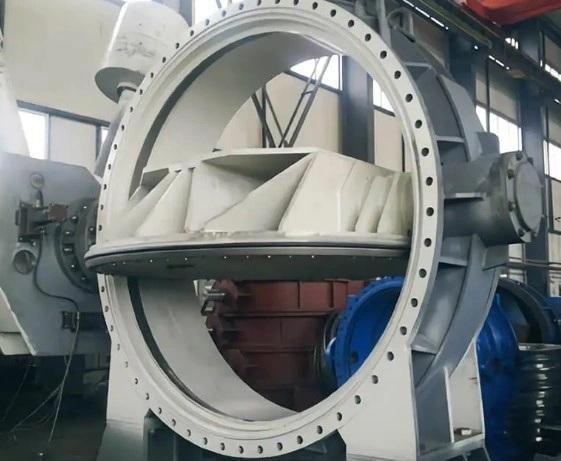
In modern industrial pipeline systems, the valve actuation method plays a critical role in determining operational efficiency, reliability, and application suitability. When pipeline sizes exceed DN600 and operating pressures reach several megapascals, traditional electric actuators may struggle to provide sufficient torque for reliable valve operation. Pneumatic actuators can also face limitations in large-diameter valve applications due to restricted output force.
Hydraulic actuation technology has emerged as an effective solution for these demanding conditions because of its high power density, excellent torque output, rapid response, and precise control capability. Hydraulic butterfly valves, developed based on hydraulic drive systems, are widely used in large-scale fluid control applications where reliable opening, closing, and flow regulation are required.
This article provides a detailed overview of hydraulic butterfly valves, including their definition, structure, operating principle, key advantages, limitations, and major industrial applications.
What Is a Hydraulic Butterfly Valve?
A hydraulic butterfly valve is a quarter-turn rotary valve operated by a hydraulic actuator. It uses hydraulic pressure to generate the torque required to rotate the valve disc, allowing the valve to achieve fully open, fully closed, or intermediate throttling positions.
Unlike conventional butterfly valves operated by manual, electric, or pneumatic methods, hydraulic butterfly valves are designed for applications requiring extremely high operating torque and dependable performance under demanding conditions.
They are commonly used in:
- Hydropower plants
- Water transmission systems
- Pumping stations
- Petrochemical facilities
- Oil and gas pipelines
- HVAC systems
- Fire protection networks
- Wastewater treatment plants
In large-diameter pipeline systems, hydraulic butterfly valves provide fast operation, reliable shutoff, and stable flow adjustment, making them an essential component in modern industrial fluid transportation systems.
The valve operates through a hydraulic actuator connected to the valve stem. When hydraulic oil enters the actuator, it drives internal pistons or vanes, converting hydraulic energy into rotary mechanical movement. This rotation turns the butterfly disc inside the valve body by approximately 90 degrees, controlling the flow passage.
Compared with electric actuators, hydraulic actuators can produce significantly higher torque in a compact design, making hydraulic butterfly valves particularly suitable for large valves such as DN600, DN1200, DN1600, and even larger sizes.
The valve body is typically manufactured from materials such as:
- Cast steel
- Ductile iron
- Stainless steel
These materials provide excellent mechanical strength, corrosion resistance, and pressure-bearing capability, enabling reliable operation in high-pressure, high-temperature, and harsh industrial environments.
Main Structure of Hydraulic Butterfly Valves
A hydraulic butterfly valve consists of several major components, each contributing to reliable sealing, efficient operation, and long service life.
The main components include:
- Valve body
- Butterfly disc
- Valve seat and sealing system
- Hydraulic actuator
- Control accessories
1. Valve Body Structure
The valve body is the primary pressure-containing component. It connects the valve with the pipeline and supports all internal operating parts.
Hydraulic butterfly valves are generally available in two installation designs:
Wafer Type Butterfly Valve
Wafer butterfly valves feature a compact structure and lightweight design. They are suitable for applications where installation space is limited.
Flanged Type Butterfly Valve
Flanged butterfly valves are connected to pipelines through bolts and flanges. They provide stronger mechanical stability and are commonly used in large industrial pipelines.
The valve body design must withstand:
- Internal pressure
- Mechanical stress
- Temperature changes
- Fluid impact
2. Butterfly Disc Design
The butterfly disc is the main flow-control element inside the valve body.
During operation:
- When the disc is parallel to the flow direction, the valve is fully open.
- When the disc rotates 90 degrees and becomes perpendicular to the flow direction, the valve is fully closed.
Different disc designs affect sealing performance, torque requirements, and service life.
Common butterfly disc structures include:
- Concentric design
- Single eccentric design
- Double eccentric design
- Triple eccentric design
Concentric Butterfly Valve
The shaft center and sealing center are aligned. This design offers a simple structure and is commonly used in low-pressure applications.
Double Eccentric Butterfly Valve
The shaft is offset from the disc center and sealing surface, reducing friction between the disc and seat during operation.
Triple Eccentric Butterfly Valve
The triple-offset design minimizes sealing contact during rotation and provides improved durability, making it suitable for high-pressure and high-temperature applications.
3. Valve Seat and Sealing System
The sealing system ensures that the valve prevents leakage when fully closed.
When the butterfly disc contacts the valve seat, a tight sealing surface is created to isolate the fluid.
Common seat materials include:
- EPDM rubber
- NBR rubber
- PTFE
- Other elastomer materials
The correct sealing material depends on operating conditions such as:
- Fluid type
- Temperature range
- Pressure level
- Corrosion characteristics
Proper material selection helps maintain long-term sealing performance and reduces maintenance requirements.
4. Hydraulic Actuator
The hydraulic actuator is the power source of the valve. It converts hydraulic energy into mechanical rotation to operate the butterfly disc.
Hydraulic actuators mainly include two types:
Double-Acting Hydraulic Actuator
A double-acting actuator uses hydraulic pressure for both opening and closing movements.
Advantages:
- High torque output
- Accurate positioning
- Stable operation
- Suitable for frequent operation
It is widely used in large industrial valve applications requiring precise control.
Single-Acting Hydraulic Actuator
A single-acting actuator uses hydraulic pressure for movement in one direction, while springs provide the return force.
Advantages:
- Fail-safe operation
- Automatic return during power loss
- Improved safety performance
It is commonly used in emergency shutdown and safety-critical systems.
5. Control Accessories
Hydraulic butterfly valves can be equipped with various control components to improve automation and monitoring capability.
Typical accessories include:
- Valve position indicators
- Limit switches
- Manual override devices
- Hydraulic control modules
- Remote monitoring systems
When integrated with PLC or SCADA systems, hydraulic butterfly valves can achieve:
- Remote operation
- Automatic adjustment
- Fault monitoring
- Safety protection
Working Principle of Hydraulic Butterfly Valves
Hydraulic butterfly valves operate by converting hydraulic energy into rotary valve movement.
The basic operating process includes the following steps:
- The hydraulic pump delivers oil from the hydraulic power unit to the actuator.
- Hydraulic pressure pushes the actuator piston.
- Linear piston movement is converted into rotary motion through a crank mechanism or gear system.
- The valve stem rotates the butterfly disc.
- The disc changes position to control fluid flow.
By adjusting hydraulic pressure and flow rate, operators can control the disc angle and achieve accurate flow regulation.
Double-Acting Hydraulic Operation
In a double-acting hydraulic system, oil pressure controls both opening and closing directions.
This allows the valve to:
- Stop at any intermediate position
- Maintain accurate flow control
- Respond quickly to control signals
It is commonly applied in systems requiring continuous adjustment.
Spring-Return Hydraulic Operation
Spring-return hydraulic actuators provide a fail-safe function.
During normal operation:
- Hydraulic pressure moves the valve to the operating position.
During hydraulic power failure:
- Spring force automatically returns the valve to a predefined safety position.
This design is widely used in:
- Fire protection systems
- Emergency shutdown systems
- Critical industrial processes
Advantages and Limitations of Hydraulic Butterfly Valves
Advantages
1. High Torque Output
The greatest advantage of hydraulic butterfly valves is their ability to generate extremely high torque.
Large valves must overcome:
- Fluid pressure
- Seal friction
- Mechanical resistance
Hydraulic actuators provide powerful output force within a relatively compact structure, making them suitable for very large pipeline applications.
2. Precise Control and Fast Response
Hydraulic oil has low compressibility, allowing accurate actuator movement and stable valve positioning.
Benefits include:
- Precise throttling control
- Smooth operation
- Rapid emergency response
3. Excellent Safety Performance
Hydraulic actuators can operate independently from electrical equipment installed directly on the valve.
This makes them suitable for hazardous environments such as:
- Oil refineries
- Gas processing facilities
- Chemical plants
4. Long Service Life
With proper maintenance, hydraulic cylinders, sealing components, and valve structures can provide reliable long-term operation.
Limitations
Despite their advantages, hydraulic butterfly valves also have some disadvantages.
Higher System Complexity
A hydraulic system requires additional components, including:
- Hydraulic power units
- Oil reservoirs
- Hydraulic piping
- Control valves
This increases installation complexity.
Higher Maintenance Requirements
Hydraulic systems require regular inspection of:
- Hydraulic oil quality
- Leakage conditions
- Pressure stability
- Actuator components
Compared with simpler electric or manual systems, maintenance requirements are higher.
Industrial Applications of Hydraulic Butterfly Valves
Hydraulic butterfly valves are widely used in industries where large flow capacity, high torque operation, and reliable control are required.
1. Municipal Water Supply and Pumping Stations
Large water transmission systems commonly use hydraulic butterfly valves for pipelines ranging from DN600 to DN2000 or larger.
Their advantages include:
- Smooth opening operation
- Rapid emergency closing
- Prevention of water hammer effects
Hydraulic systems can provide controlled opening and closing speeds to protect pumps and pipelines.
2. Hydropower Plants and Hydraulic Engineering
In hydropower stations, hydraulic butterfly valves serve as important isolation devices for pressure pipelines.
They must withstand:
- High water pressure
- Frequent pressure changes
- Strict sealing requirements
During startup:
- Bypass systems balance pressure first.
- The main butterfly valve then opens gradually.
During shutdown:
- Controlled closing prevents sudden pressure fluctuations.
3. Petrochemical and Oil & Gas Systems
Hydraulic butterfly valves are widely used in:
- Crude oil pipelines
- LPG transportation systems
- Refinery process pipelines
Their advantages include:
- High torque capability
- Reliable emergency isolation
- Suitability for hazardous environments
Combined with explosion-proof hydraulic power units, they can provide safe remote operation.
4. Wastewater Treatment Systems
Large wastewater and sludge pipelines often require DN800–DN1600 butterfly valves.
These applications involve:
- Corrosive fluids
- Abrasive particles
- Frequent operation
Hydraulic butterfly valves with suitable materials, such as ductile iron bodies and EPDM seals, provide reliable performance.
5. Thermal Power and Nuclear Facilities
Cooling water systems in power plants require large valves to regulate water circulation.
Although these valves may operate infrequently, they must provide reliable emergency shutdown capability.
Spring-return hydraulic actuators are often selected for these safety-critical applications.
6. Chemical and Polymer Industries
Chemical plants use hydraulic butterfly valves for controlling:
- Acids
- Solvents
- Oils
- Chemical materials
Proper selection of valve materials and sealing systems ensures corrosion resistance and stable production operation.
Conclusion
Hydraulic butterfly valves are essential control devices for large-diameter and high-pressure pipeline systems. Their high torque capability, precise positioning, rapid response, and reliable safety performance make them ideal for demanding industrial applications.
From municipal water networks and hydropower stations to petrochemical plants, wastewater facilities, and chemical processing industries, hydraulic butterfly valves provide dependable solutions for large-scale fluid control.
When selecting a hydraulic butterfly valve, engineers should carefully evaluate:
- Pipeline size and pressure
- Fluid characteristics
- Operating temperature
- Automation requirements
- Safety conditions
By selecting suitable valve materials, sealing designs, actuator types, and hydraulic configurations, users can achieve efficient and reliable long-term operation.
With the continued advancement of industrial automation, hydraulic butterfly valves integrated with PLC, SCADA, and intelligent control systems will continue to play an important role in creating safer, smarter, and more efficient fluid management solutions.

 English
 Arabic
 French
 Spanish
 Portuguese
 Deutsch
 Turkish
 Dutch
Dutch
 Italiano
 Russian
 Romaian
 Portuguese (Brazil)
