Many factory owners believe the fastest path to higher output is buying new machines. When production targets rise or delivery pressure increases, adding equipment often seems like the obvious answer. New machinery can certainly improve capacity, but in many industrial units the real bottleneck is not machine count. It is the surrounding environment. Dust buildup, weak airflow, excessive heat, and poor extraction can reduce the performance of existing assets long before another machine is needed.
This is why experienced factory owners increasingly review environmental efficiency before approving capital purchases. If current machines are underperforming because conditions around them are poor, buying more equipment may only multiply the same problems. Smart investment decisions begin by removing hidden barriers already inside the plant.
Modern manufacturers now treat air systems as part of productivity planning. GPT India helps industrial businesses improve output through practical dust and airflow solutions designed for cleaner, steadier operations.
One common issue is dust interference. Fine particles generated during cutting, grinding, mixing, sanding, or handling can spread across machine zones. Sensors may become dirty, cooling vents may clog, moving parts may wear faster, and repeated cleaning may interrupt work. Existing machines then deliver less than their true potential.
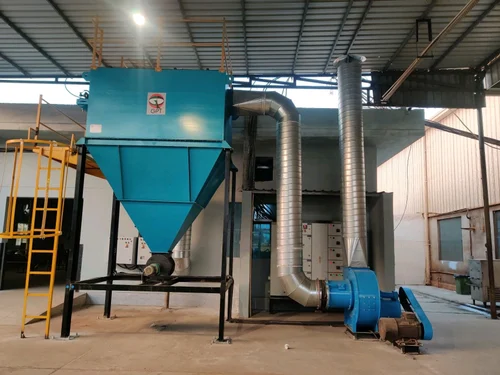
A properly designed Dust Collection System helps capture particles near source points before they spread through the wider facility. Cleaner surroundings often allow machines to run more consistently with fewer interruptions.
In woodworking, furniture, and panel industries, heavy fine particulate loads are common. A dedicated Wood Dust Collector helps control particles close to active equipment, reducing contamination around rails, motors, and working surfaces. Many businesses discover that machine efficiency improves when dust pressure falls.
Some facilities process materials that generate heavier debris along with fine dust. In these environments, a Cyclone Dust Collector can be useful as an early-stage separator. Removing larger particles first helps protect downstream filtration and maintain smoother airflow performance.
Another overlooked reason output falls is weak airflow. If extraction is poor or ventilation is uneven, heat builds around machinery and employees. Workers tire faster, detailed tasks slow down, and machines may face higher thermal stress. Management may interpret lower productivity as lack of capacity when it is actually an environmental issue.
An Air Washer System can help improve internal comfort by circulating and conditioning air. Better temperature balance often supports steadier worker performance and more consistent production through long shifts.
Factories using fabrication, welding, or thermal processes may also experience smoke and vapor accumulation. If emissions linger, visibility, comfort, and nearby cleanliness can decline. A Fume Extraction System helps remove contaminants near the source before they spread through production areas.
Large industrial spaces often need dependable pressure-based airflow through ducts or extraction lines. Centrifugal Blowers are commonly used where stronger controlled movement is required. Correctly selected airflow equipment can improve the performance of entire systems rather than one single machine.
Many owners also underestimate the value of recovered time. If teams spend hours cleaning, waiting for maintenance, managing heat discomfort, or restarting dust-affected equipment, total capacity falls. Solving these hidden losses may create output gains without adding another machine.
Another advantage of fixing air problems first is lower risk. New machinery requires capital, training, floor space, power planning, and integration time. If current environmental conditions are poor, the new asset may enter the same inefficient setting and fail to deliver expected returns.
Some factories discover that after improving dust control and airflow, their existing line can handle more work than expected. Better uptime, faster movement, fewer stoppages, and stronger consistency sometimes remove the immediate need for additional purchases.
Low-cost generic fans or temporary fixes often disappoint because they address symptoms rather than root causes. Random air movement may shift dust instead of capturing it. Cheap solutions chosen only by price can prolong inefficiency.
Where continuous filtration is needed, a Pulse Jet Bag Filter is commonly valuable because it helps maintain airflow while cleaning filter media during operation. Stable performance is especially useful in busy production environments.
GPT India focuses on practical industrial requirements rather than one-size-fits-all supply. Every factory has different layouts, production goals, dust loads, and equipment density. Solutions based on real conditions often create stronger investment value.
GPT India is located at 59/2/1, Site 4, Industrial Area, Sahibabad, Ghaziabad, Uttar Pradesh, 201010. Businesses can contact +91-9773500660 or email info@gpt-india.com for industrial dust and air management guidance.
FAQs
Why should factories fix air problems before buying machines? Existing equipment may already have unused capacity limited by poor conditions.
How does a Dust Collection System improve productivity? It reduces contamination, cleaning delays, and interruptions near machines.
Where is a Wood Dust Collector most useful? It is highly useful in furniture, plywood, and woodworking operations.
Can heat reduce factory output? Yes, heat can slow workers and increase stress on machines.
Why are custom systems better than cheap temporary fixes? They solve root causes based on actual plant conditions.
Conclusion
Buying new machines can be valuable, but it is not always the first answer. Many factories lose output because dust, heat, and weak airflow are holding back the equipment they already own. Businesses that solve environmental bottlenecks first often gain cleaner operations, stronger productivity, and smarter returns on future investments.




 English
 Arabic
 Spanish
 Portuguese
 Deutsch
 Turkish
 Dutch
Dutch
 Italiano
 Russian
 Romaian
 Portuguese (Brazil)
 Greek
Greek
