


How Do You Prove Medical Malpractice in an Eye Injury Case?
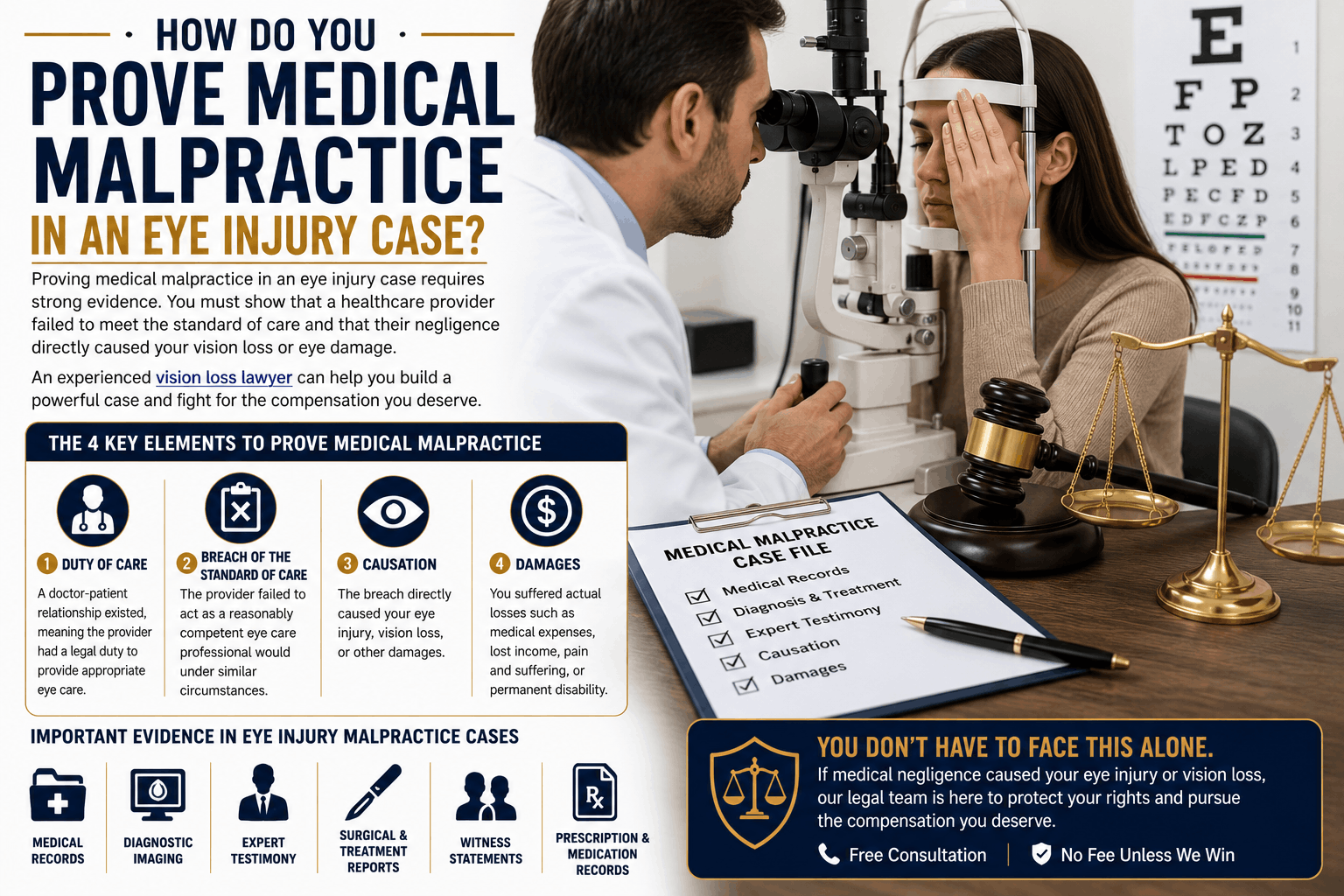
An eye injury caused by medical negligence can have life-changing consequences. Whether the injury resulted from a surgical mistake, delayed diagnosis, medication error, or improper treatment, victims often face permanent vision loss, expensive medical care, and emotional hardship. However, proving medical malpractice is more complicated than simply showing that an injury occurred. If you believe your eye injury was preventable, consulting an experienced attorney for eye injury malpractice claims can help you gather the evidence needed to build a strong case.
Medical malpractice claims require substantial evidence demonstrating that a healthcare provider failed to meet the accepted standard of care and that this failure directly caused your injury. Understanding what must be proven is the first step toward protecting your legal rights.
What Is Medical Malpractice?
Medical malpractice occurs when a doctor, ophthalmologist, surgeon, hospital, or another healthcare professional provides care that falls below the accepted medical standard, resulting in harm to a patient.
Not every poor medical outcome qualifies as malpractice. Some procedures involve known risks even when performed correctly. A malpractice claim generally arises only when the provider's negligence causes an avoidable injury.
The Four Elements Required to Prove Medical Malpractice
To successfully pursue an eye injury malpractice claim, you typically must establish four legal elements.
1. Duty of Care
First, you must prove that a doctor-patient relationship existed.
This establishes that the healthcare provider owed you a professional duty to provide treatment consistent with accepted medical standards.
Examples include:
-
Eye examinations
-
Cataract surgery
-
LASIK procedures
-
Emergency eye treatment
-
Retina surgery
-
Glaucoma management
-
Follow-up care
Without a duty of care, there can be no malpractice claim.
2. Breach of the Standard of Care
Next, you must show that the provider failed to act as a reasonably competent healthcare professional would have under similar circumstances.
Examples of negligent conduct include:
-
Misdiagnosing an eye condition
-
Delaying treatment
-
Surgical mistakes
-
Prescribing the wrong medication
-
Failure to monitor complications
-
Improper use of medical equipment
-
Failure to refer a patient to a specialist
Expert medical testimony is often required to explain how the provider's actions deviated from accepted medical practice.
3. Causation
One of the most challenging aspects of medical malpractice cases is proving causation.
You must demonstrate that the provider's negligence directly caused your eye injury—not an unrelated medical condition or unavoidable complication.
For example:
-
A delayed diagnosis allowed retinal detachment to progress until permanent blindness occurred.
-
A surgical error damaged the optic nerve during cataract surgery.
-
Improper medication permanently injured the cornea.
Medical experts frequently analyze treatment records to establish this connection.
4. Damages
Finally, you must prove that the malpractice caused measurable losses.
Damages may include:
Economic Damages
-
Medical expenses
-
Future treatment costs
-
Rehabilitation
-
Vision therapy
-
Lost wages
-
Reduced earning capacity
-
Assistive technology
Non-Economic Damages
-
Pain and suffering
-
Emotional distress
-
Mental anguish
-
Loss of enjoyment of life
-
Permanent disability
-
Loss of independence
The greater the long-term impact of the injury, the higher the potential value of the claim.
Evidence That Helps Prove an Eye Injury Malpractice Case
Strong evidence is essential for establishing liability.
Helpful evidence may include:
Medical Records
Complete medical records document:
-
Symptoms
-
Diagnoses
-
Treatment plans
-
Surgical notes
-
Follow-up care
-
Prescriptions
These records often reveal whether appropriate care was provided.
Diagnostic Tests
Imaging and diagnostic studies can show the extent of the injury.
Examples include:
-
Optical Coherence Tomography (OCT)
-
Fundus photography
-
Visual field testing
-
Fluorescein angiography
-
CT scans
-
MRI scans
These tests help experts determine how and when the injury occurred.
Expert Witness Testimony
Medical malpractice cases almost always require testimony from qualified medical experts.
Experts may explain:
-
Accepted standards of care
-
How the provider deviated from those standards
-
How negligence caused the injury
-
Future medical needs
Their opinions often play a critical role during settlement negotiations and trial.
Witness Statements
Nurses, family members, caregivers, or others who observed the patient's condition may provide valuable testimony about:
-
Symptoms
-
Recovery
-
Physical limitations
-
Emotional impact
Common Eye Injury Cases Involving Medical Malpractice
Medical negligence may occur during many types of eye care.
Common examples include:
-
Cataract surgery errors
-
LASIK complications
-
Delayed diagnosis of glaucoma
-
Failure to diagnose retinal detachment
-
Corneal injuries
-
Medication mistakes
-
Improper laser procedures
-
Failure to treat eye infections
-
Surgical instrument errors
-
Improper post-operative care
Each case requires a detailed review of the facts and applicable medical standards.
Challenges in Proving Medical Malpractice
Medical malpractice cases are often vigorously defended.
Healthcare providers and insurance companies may argue:
-
The injury was a known surgical risk.
-
The patient's underlying condition caused the vision loss.
-
Appropriate treatment was provided.
-
Another healthcare provider was responsible.
-
The patient failed to follow medical instructions.
Experienced attorneys work closely with medical experts to address these defenses and strengthen the claim.
How a Vision Loss Lawyer Can Help
Eye injury malpractice cases involve complex medical and legal issues.
A vision loss lawyer can:
-
Obtain complete medical records
-
Consult ophthalmology experts
-
Preserve important evidence
-
Investigate the timeline of treatment
-
Calculate current and future damages
-
Handle negotiations with insurers
-
File a lawsuit within applicable legal deadlines
-
Represent you in court if necessary
Legal representation significantly improves your ability to present a well-supported claim.
Why Acting Quickly Is Important
Medical malpractice claims are subject to statutes of limitations, and evidence becomes more difficult to obtain as time passes.
Taking prompt legal action helps:
-
Preserve medical records
-
Interview witnesses
-
Secure expert opinions
-
Protect your right to compensation
Early investigation also allows attorneys to identify all potentially liable parties before important deadlines expire.
Conclusion
Proving medical malpractice in an eye injury case requires more than showing that vision loss occurred. You must establish that a healthcare provider owed you a duty of care, breached the accepted medical standard, directly caused your injury, and left you with measurable damages.
Because these cases involve detailed medical evidence and expert testimony, working with an experienced vision loss lawyer can be invaluable. A knowledgeable attorney can investigate the facts, collaborate with medical professionals, and build a compelling case to help you pursue the compensation you deserve for preventable vision loss.
Frequently Asked Questions
1. What must I prove in an eye injury medical malpractice case?
You generally must prove duty of care, breach of the medical standard of care, causation, and damages.
2. Do I need a medical expert to prove malpractice?
In most cases, yes. Expert testimony is often required to explain how the healthcare provider failed to meet accepted medical standards.
3. What evidence is most important in an eye injury claim?
Medical records, diagnostic imaging, expert opinions, surgical reports, and witness statements are among the most valuable forms of evidence.
4. Can I file a claim if my vision loss developed over time?
Possibly. Some cases involve delayed diagnosis or progressive injuries, and legal deadlines may depend on when the injury was discovered.
5. How can a vision loss lawyer help my case?
A lawyer can gather evidence, consult medical experts, negotiate with insurers, file your claim on time, and represent you throughout the legal process.

 English
 Arabic
 French
 Spanish
 Deutsch
 Turkish
 Dutch
Dutch
 Italiano
 Russian
 Romaian
 Portuguese (Brazil)
 Greek
Greek
