


Inexpensive Kitchen Remodel Ideas That Look High-End
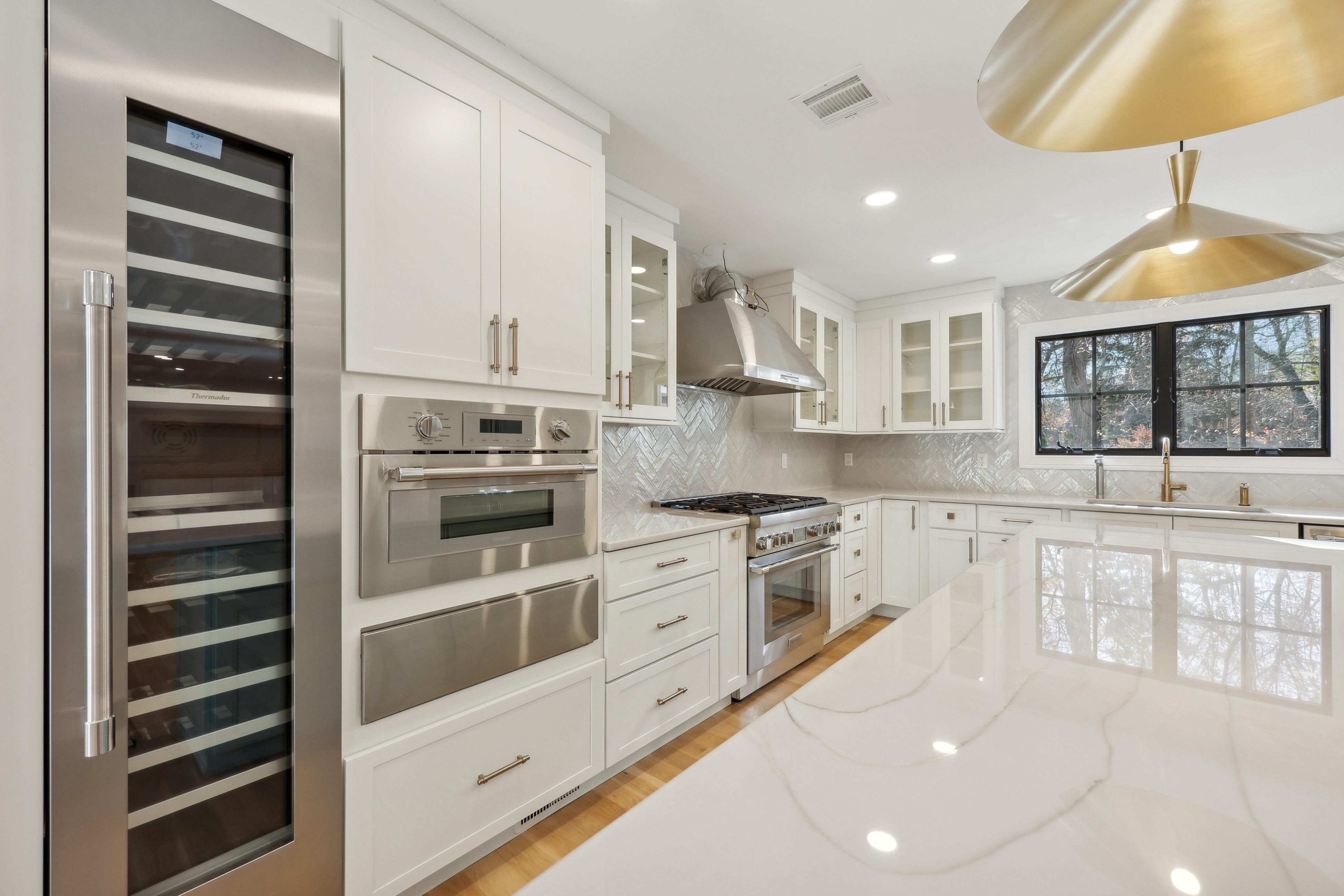
Which Inexpensive Kitchen Remodel Ideas Can Make Your Kitchen Look More Expensive?
Some kitchens do not look old.
They look undecided.
A cabinet color from one decade. A backsplash from another. A ceiling light that makes every counter look dull. Handles too small for the doors. Appliances lined across the counter because storage never had a real plan.
That is the trap.
Many homeowners look at that kind of kitchen and assume the answer is a full gut. New cabinets. New counters. New flooring. New layout. Bigger spend. Bigger stress. Bigger chance of regret.
But most kitchens do not need every surface replaced to look better.
They need the weak signals removed.
The best inexpensive kitchen remodel ideas do not chase every trend on the internet. They fix the parts of the kitchen that make the room feel cheaper than it really is. They clean the sightline. They improve daily use. They make the space look planned instead of patched.
That is where a modest budget starts acting like a serious design strategy.
Start Where the Eye Lands First
Cabinets are the kitchen’s first confession.
They tell the truth before the counters, before the flooring, before the faucet, and before the appliances. If the doors hang slightly off, the finish looks tired, the pulls feel outdated, or the side panels are worn, the entire kitchen takes the hit. Even a nice countertop can look weaker when the cabinet field underneath feels neglected.
That does not mean cabinet replacement should be the first move.
It means the cabinet diagnosis should be the first move.
Before spending money, check the condition of the cabinet boxes. Are they still dry? Are they square? Do the drawers open properly? Are the hinges repairable? Is the layout still useful? If the structure is in good shape, the kitchen may need correction, not replacement.
Strong cabinet updates can include:
-
Repainting existing cabinet doors with proper prep
-
Refacing cabinet fronts while keeping solid boxes
-
Replacing worn doors with cleaner profiles
-
Adjusting hinges so gaps look consistent
-
Updating pulls and knobs to better-scaled hardware
-
Repairing side panels, toe kicks, and exposed ends
-
Removing dated trim that makes cabinets look heavy
-
Adding a simple crown or light rail only when it fits the cabinet style
This is one of the strongest inexpensive kitchen remodel ideas because cabinets control so much of the room’s visual weight. In budget-friendly kitchen renovations, the goal is not to hide age under a quick coat of paint. The goal is to remove the signs of poor maintenance and make the kitchen feel controlled again.
A kitchen looks more expensive when the lines look clean.
Not when everything is new.
Let Lighting Do the Heavy Lifting
Better Light Before Better Products
Bad lighting is expensive in disguise.
It makes good cabinets look flat. It makes counters look dull. It throws shadows exactly where people chop, prep, clean, and serve. It can make a kitchen feel tired even when the materials are still usable. That is why lighting should not be treated as the final decorative layer. It should be treated as part of the room’s performance.
Most homeowners shop for fixtures too early. They pick a pendant because it looks nice online, then wonder why the kitchen still feels wrong. The better question is simple: where does the room actually need light?
A kitchen needs layered lighting, not random brightness. The sink needs clear visibility. Prep zones need direct light. The island needs balance. Cabinet faces need enough light to show color correctly. A single fixture in the center of the ceiling is usually asked to do too much, and it almost always fails.
Better lighting moves can include:
-
Under cabinet lighting for prep counters
-
Cleaner ceiling light placement for work zones
-
Warm but not yellow bulbs for a more current look
-
Dimmers for control during meals and hosting
-
Simple pendants sized properly for the island
-
Better bulbs before replacing every fixture
-
Light placement that reduces shadows on the counter
-
Accent lighting only where it has a purpose
This is where affordable kitchen renovation tips become more practical than decorative. You can spend heavily on counters or backsplash, but if the lighting is wrong, the whole kitchen still reads wrong. Good light makes every other decision look smarter.
That is the power of inexpensive kitchen remodel ideas when they are done in the right order.
Stop Letting Finishes Fight Each Other
A kitchen can look cheap without using cheap materials.
That happens when every surface tries to be the main character.
A busy counter. A busy backsplash. A strong floor pattern. A shiny faucet. Dark cabinets. Bright walls. Too many finishes in one room, and the eye has nowhere to land. The result is not style. It is visual noise.
The fix is not adding more.
The fix is editing.
Choose one lead surface and make the rest support it. If the counter has movement, keep the backsplash calmer. If the cabinets are bold, keep the hardware cleaner. If the floor already has a strong pattern, avoid another strong pattern at eye level. The most expensive-looking kitchens are usually the ones with the clearest finish hierarchy.
Use this rule.
One star. The rest support.
That one idea can save thousands.
Practical surface moves that create a richer look include:
-
Replace tiny knobs with better-scaled pulls
-
Use one main metal finish across pulls, faucet, and visible lighting
-
Choose a backsplash that connects the counter and cabinets
-
Repair stained grout before replacing good tile
-
Replace old outlet covers with cleaner, matching covers
-
Remove countertop clutter before adding decor
-
Keep open shelves limited and easy to maintain
-
Use wall color to calm the room, not compete with it
-
Choose simple tile layouts when the budget is limited
-
Avoid trend-heavy finishes that may age quickly
These inexpensive kitchen remodel ideas work because they reduce confusion. The room starts to feel calmer, cleaner, and more intentional. The details stop fighting each other, and the kitchen begins to look like one complete space.
That is also the heart of smart budget-friendly kitchen renovations.
Spend less on random products.
Spend more attention on the order.
Make Storage Feel Like a Design Feature
Clutter Is Usually a Planning Failure
A countertop covered with appliances sends one message.
This kitchen is working too hard.
The toaster stays out because there is no easy cabinet space. Cutting boards pile up because vertical storage was never planned. Spices crowd the counter because the drawer system is not doing its job. Mail lands near the sink because there is no drop zone. Slowly, the kitchen starts looking cheaper, not because the materials are bad, but because daily life has nowhere to go.
Storage fixes are not always glamorous, but they change the way a kitchen feels. They also change how much of the counter you can actually see. And in a kitchen, visible counter space often reads as value.
You do not always need new cabinets to solve this. Many older kitchens have unused capacity inside the cabinets they already have. The issue is access. Deep shelves hide items. Blind corners waste space. Wide drawers become junk zones. Pantry shelves get crowded because nothing is grouped.
Smart storage upgrades can include:
-
Pull out trays inside base cabinets
-
Drawer dividers for utensils and prep tools
-
Vertical slots for cutting boards and sheet pans
-
Pantry baskets grouped by category
-
Trash and recycling pull outs near the prep area
-
Lid organizers for pots and pans
-
Spice drawers near the cooking zone
-
Hooks inside cabinet doors for small tools
-
A coffee zone to reduce counter scatter
-
One clear drop zone for mail, keys, and daily items
This is where DIY kitchen renovation on a budget can make sense. Many organizers, inserts, and hardware updates can be handled without opening walls or moving plumbing. The safest wins are often the ones that improve daily life without triggering trade work.
The best kitchen upgrades that add value often answer ordinary questions.
-
Where do the pans go?
-
Where does the trash go?
-
Where does the coffee setup live?
-
Where do the school forms land?
A kitchen looks more expensive when a daily mess has a home.
That is not decoration.
That is discipline.
Use Restraint Like a Pro
The budget usually breaks in the middle.
Not at the start.
A homeowner begins with new cabinet pulls. Then the faucet looks old. The new faucet makes the sink look dated. The sink makes the counter feel wrong. The counter makes the backsplash look tired. Before long, a simple update has turned into a rolling remodel with no stopping point.
That is how small projects become expensive by accident.
Before buying anything, write the scope. Not a vague wish list. A real scope. A short document that tells you what changes now, what stays, what gets repaired, what waits, and what is completely off limits. That last category matters because the budget needs boundaries.
A good kitchen scope should answer:
-
Which items are being updated now?
-
Which items are staying as they are?
-
Which items only need repair or cleaning?
-
Which items belong in a later phase?
-
Which work requires a licensed trade?
-
Which purchases depend on field measurements?
-
Which finishes must match or coordinate?
-
Which choices could trigger extra work?
For inexpensive kitchen remodel ideas to work, sequence matters. Measure first. Confirm existing conditions. Price the full group of changes. Then buy materials. Paint before hardware. Lighting before backsplash. Storage before layout changes. Finish pairing before decor.
Do not shop your way into a remodel.
Plan your way through one.
Budget-friendly kitchen renovations work best when every choice has to pass a hard test. Does it improve daily use? Does it improve the first impression? Does it reduce maintenance? Does it support future buyer perception? If the answer is weak, the item waits.
That is how a smaller budget starts acting like a serious plan.
Keep the Layout Unless It Is the Problem
Most expensive kitchen mistakes start with moving things that do not need to move.

Move the sink, and plumbing enters the budget.
-
Move the range, and gas or electrical work may follow.
-
Move a wall, and structural review can enter.
-
Move a window, and exterior repair may join the project.
Some kitchens need that level of work. Many do not. The key is knowing the difference before the first dollar is spent.
If the sink, range, and refrigerator already function well, keep the footprint and improve what surrounds them. Better lighting. Better cabinet faces. Better hardware. Cleaner storage. Smarter backsplash. Better wall color. Updated faucet. More controlled finishes. These changes can make the same layout feel far more complete.
That is not settling.
That is a strategy.
Many low-cost kitchen makeover ideas fail because they imitate large remodels in small ways. The better route is to respect the existing room and make it read better. Fix what the eye sees. Fix what the hand touches. Fix what breaks daily flow.
That is where affordable kitchen renovation tips become useful instead of generic.
A kitchen looks expensive when it feels decided.
Not when it feels stuffed with updates.
Conclusion
The expensive-looking kitchen is rarely the one with the most purchases.
It is the one with the fewest weak spots.
The best inexpensive kitchen remodel ideas treat the kitchen like a system. Cabinets carry the first impression. Lighting controls how surfaces read. Storage controls the mess. Finishes control the price signal. Layout restraint protects the budget from unnecessary trade work.
That is the real lesson. A kitchen does not need to become something else. It needs to stop looking accidental.
For homeowners comparing kitchen upgrades that add value, the smartest move is to study the room before buying products. This is the same practical mindset seen in planning resources from WA Construct, where scope clarity, cost awareness, and build readiness come before construction decisions.
Planning a kitchen update in New Jersey? Start with a clear look at what truly needs changing, what can stay, and which upgrades will make the biggest visual and functional difference. WA Construct helps homeowners approach kitchen improvements with practical scope clarity before small choices turn into expensive ones.
Frequently Asked Questions (FAQs)
1. Which inexpensive kitchen remodel ideas make the biggest visual difference?
Cabinet correction usually makes the biggest visual difference because cabinets take up so much of the room. When the doors are aligned, the finish looks cleaner, and the hardware fits the scale, the whole kitchen feels more planned. Lighting should follow closely because it changes how every surface is seen.
2. Are budget-friendly kitchen renovations worth it before selling?
Yes, budget-friendly kitchen renovations can help before selling when they remove obvious concerns for buyers. A cleaner cabinet finish, better light, repaired grout, and organized storage can make the kitchen feel cared for. Buyers may not expect luxury, but they do notice neglect.
3. Should I replace countertops first in a dated kitchen?
Not always, because a new counter can still look wrong if the cabinets, backsplash, and lighting do not support it. Review the full room before spending on a major surface. Sometimes the counter is not the problem, but the finishes around it are making it look worse.
4. Can painted cabinets really make a kitchen look more expensive?
Yes, painted cabinets can look more expensive when the preparation is handled correctly. Cleaning, sanding, priming, drying time, and hardware alignment all matter. A rushed paint job may look good for a week, but a properly prepared finish keeps the room looking more controlled.
5. Is DIY kitchen renovation on a budget safe for homeowners?
DIY kitchen renovation on a budget is safe when it stays within simple surface work, storage upgrades, painting, and hardware changes. It becomes risky when electrical, plumbing, gas, or structural work is involved. Saving money should never mean creating a safety issue behind the walls.
6. Which affordable kitchen renovation tips help a small kitchen most?
Small kitchens benefit most from fewer competing finishes, better storage, and clearer lighting. When counters stay open, and surfaces feel connected, the room can feel larger and more organized. The goal is not to add more design, but to remove what makes the space feel crowded.
7. Which kitchen upgrades that add value are often overlooked?
Lighting, drawer storage, faucet quality, cabinet alignment, grout repair, and hardware scale are often overlooked. These items may not sound dramatic, but they shape how the kitchen works every day. A buyer or guest may not name them, but they will feel the difference.
8. Can a kitchen look expensive without changing the layout?
Yes, a kitchen can look much more expensive without changing the layout if the main work zones already function well. Keeping the sink, range, and refrigerator in place can protect the budget. That money can then go toward visible details that change the room faster.
9. Is backsplash replacement a good low-cost kitchen makeover idea?
Backsplash replacement can be a strong, low-cost kitchen makeover idea when the current tile clashes with the cabinets or counter. Because it sits at eye level, it affects the first impression quickly. The safest choice is usually a backsplash that connects the room instead of trying to dominate it.
10. What is the biggest mistake in an inexpensive kitchen update?
The biggest mistake is buying products before creating a plan. That usually leads to mismatched finishes, repeated labor, and money spent in the wrong order. A simple scope can stop the project from drifting and keep every update connected to the final look.

 English
 French
 Spanish
 Portuguese
 Deutsch
 Turkish
 Dutch
Dutch
 Italiano
 Russian
 Romaian
 Portuguese (Brazil)
 Greek
Greek
