


Is Your Mitral Valve Healthy? Early Signs You Shouldn't Ignore
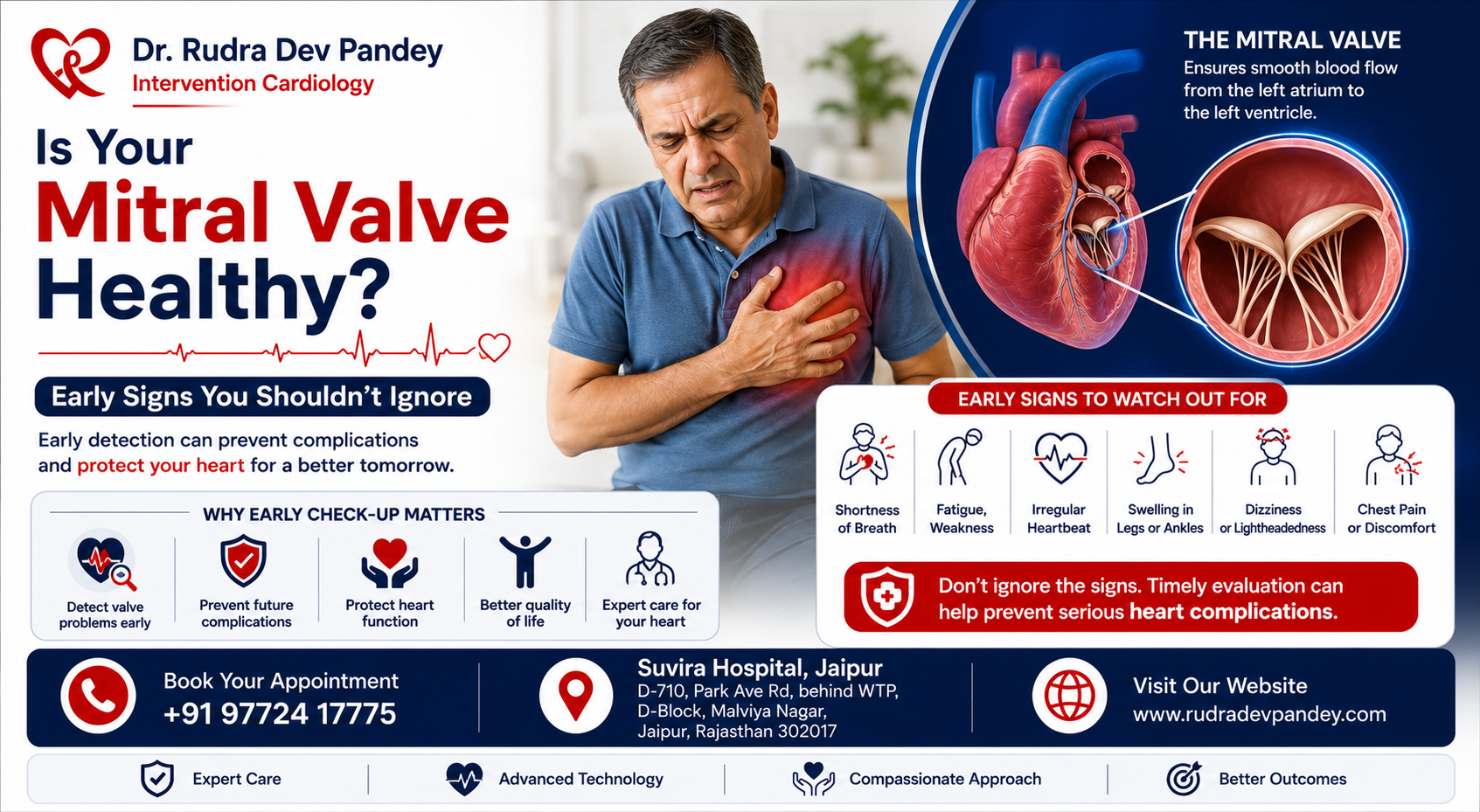
The heart works tirelessly every second of the day, pumping oxygen-rich blood throughout the body. For this process to happen efficiently, all four heart valves must open and close properly. Among them, the mitral valve plays a crucial role in maintaining smooth blood flow between the left atrium and the left ventricle. When this valve becomes damaged or fails to function correctly, the heart has to work harder, which may eventually lead to serious complications if left untreated. Seeking timely Mitral Valve Treatment in Jaipur can help detect valve disorders early and prevent long-term damage to the heart.
One of the biggest challenges with mitral valve disease is that its symptoms often develop gradually. Many people dismiss early warning signs as fatigue, ageing, or lack of fitness, allowing the condition to worsen over time. Understanding these symptoms and knowing when to consult a cardiologist can make a significant difference in treatment outcomes.
Understanding the Role of the Mitral Valve
The mitral valve acts like a one-way gate, allowing blood to move from the left atrium into the left ventricle while preventing it from flowing backwards. Every heartbeat depends on this valve functioning smoothly.
When the valve becomes narrowed, known as mitral stenosis, or fails to close properly, known as mitral regurgitation, blood circulation becomes less efficient. As the condition progresses, the heart must pump harder to compensate, placing extra strain on the heart muscle.
Without appropriate treatment, mitral valve disease can affect overall heart function and increase the risk of complications such as irregular heart rhythms, heart failure, or pulmonary hypertension.
Early Symptoms Are Often Easy to Miss
Many patients continue their normal routine for months or even years because the symptoms appear slowly.
You may notice becoming breathless while climbing stairs, feeling unusually tired after routine activities, or experiencing reduced stamina compared to before. Some individuals also develop palpitations, swelling in the ankles, dizziness, or difficulty breathing while lying flat.
These symptoms should never be considered a normal part of ageing. They may indicate that the mitral valve is no longer functioning effectively and deserves proper cardiac evaluation.
Why Early Diagnosis Matters
The earlier a valve problem is identified, the more treatment options are usually available.
Modern diagnostic tools such as echocardiography, ECG, cardiac CT, stress testing, and other imaging techniques allow cardiologists to assess the severity of valve disease accurately.
Early diagnosis also helps doctors monitor disease progression and recommend treatment before irreversible heart damage occurs.
Patients who seek medical attention promptly often experience better long-term outcomes and improved quality of life.
Expert Evaluation Makes the Difference
Mitral valve disease requires careful assessment because every patient's condition is different.
Dr. Rudra Dev Pandey, Senior Interventional Cardiologist and Director of Cath Lab at Suvira Hospital, Jaipur, has extensive experience in diagnosing and managing complex cardiovascular diseases. Having successfully performed more than 15,000 coronary interventions, primarily through the advanced transradial approach, he believes that personalized treatment planning and timely intervention are essential for preserving heart function and improving patient outcomes.
Every patient undergoes a comprehensive evaluation before a treatment plan is recommended, ensuring that the chosen approach is based on both clinical findings and individual health needs.
Treatment Depends on the Severity
Not every patient with mitral valve disease requires immediate surgery.
In the early stages, regular monitoring, medications, and lifestyle modifications may be sufficient to control symptoms and slow disease progression.
However, when the valve becomes severely damaged or symptoms begin affecting daily life, advanced procedures such as valve repair or replacement may become necessary.
The goal is always to restore normal blood flow while preserving heart function as much as possible.
Heart Conditions Can Occur Together
Many patients with valve disease also have blocked coronary arteries or other cardiovascular conditions.
If significant coronary artery disease is identified during evaluation, treatment by an experienced Angioplasty Specialist in Jaipur may be recommended to restore healthy blood flow before or alongside valve management when clinically appropriate.
A comprehensive cardiac assessment ensures that every contributing factor is addressed rather than treating only one condition.
This integrated approach leads to safer and more effective long-term outcomes.
When Heart Rhythm Problems Develop
Mitral valve disease may sometimes affect the heart's electrical system, resulting in irregular heartbeats.
In selected patients with significant rhythm disturbances or slow heart rates, Pacemaker Implantation in Jaipur may be advised after careful evaluation to help maintain a stable and effective heartbeat.
Although not every patient requires a pacemaker, understanding all available treatment options allows cardiologists to create a personalized care plan that supports both heart rhythm and overall cardiac function.
Lifestyle Plays an Important Role
Medical treatment is only one part of managing mitral valve disease.
Maintaining a heart-healthy lifestyle through balanced nutrition, regular physical activity, blood pressure control, diabetes management, stress reduction, avoiding tobacco, and attending routine follow-up appointments helps protect the heart over the long term.
Patients who actively participate in their care often experience better recovery and improved quality of life.
Healthy habits complement medical treatment and contribute to lasting cardiovascular wellness.
Conclusion
Mitral valve disease often develops quietly, but the heart usually provides warning signs long before serious complications occur. Persistent fatigue, breathlessness, palpitations, or swelling should never be ignored, as early diagnosis can greatly improve treatment outcomes and help preserve heart function.
If you experience symptoms that could indicate a valve problem, seeking expert Mitral Valve Treatment in Jaipur is an important first step. A comprehensive evaluation can identify the underlying cause, determine whether additional care such as treatment from an Angioplasty Specialist in Jaipur or Pacemaker Implantation in Jaipur is needed, and ensure you receive a personalized treatment plan designed to keep your heart healthy for years to come.

 English
 Arabic
 French
 Spanish
 Portuguese
 Deutsch
 Turkish
 Dutch
Dutch
 Russian
 Romaian
 Portuguese (Brazil)
 Greek
Greek
