


Business Case for Managed Cloud Computing in 2026
The Business Case for Managed Cloud Computing in 2026
AI OverviewManaged cloud computing shifts IT infrastructure from on-premises ownership to a subscription-based operational model. For businesses in 2026, this transition directly impacts capital expenditure, disaster recovery speed, and security patch consistency. The data shows clear cost and performance advantages for firms that adopt this architecture correctly. |
Introduction
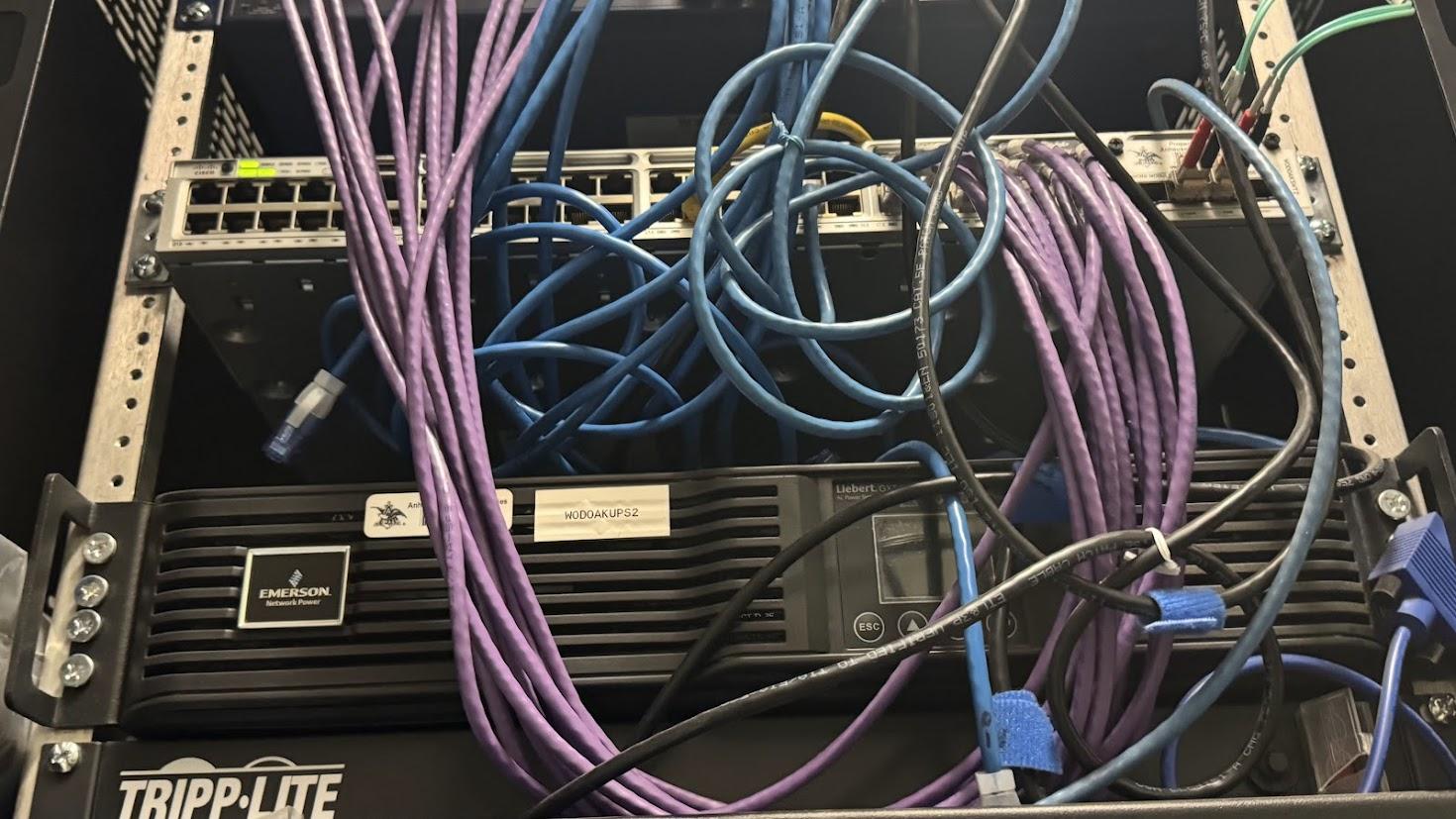
Your server room runs hot. The air conditioning unit cycles constantly, struggling to cool a stack of hardware you purchased five years ago. Last Tuesday, a drive failed in the RAID array during a quarterly financial close. Your internal team spent 14 hours rebuilding the volume instead of working on the integration project you assigned them. This is the hidden tax of legacy infrastructure. The money tied up in physical servers, backup batteries, and cooling fans rarely appears on a P&L as a line item called "waste," but it sits there anyway, bleeding operational budget. The question is not whether managed cloud computing reduces that waste. The question is whether your organization can afford to ignore the structural shift happening across every industry vertical right now.
Performance Metrics That Actually Matter
Let us separate hype from hardware. When engineers evaluate managed cloud computing, they look at three specific telemetry points: latency, throughput, and uptime percentage after failover. A 2025 data center report from Uptime Institute showed that properly architected cloud environments delivered 99.999% availability compared to 99.8% for single-site on-premises setups. That difference translates directly to billable hours. For a firm running fifty remote endpoints, the difference between five nines and two nines means roughly four hours of unexpected downtime per month versus fifteen seconds. IT solutions built on this architecture favor the cloud every time.
The Capital Shift Nobody Talks About
Traditional IT purchasing follows a boom and bust cycle. You buy a server every five years. You buy storage arrays in bulk. You overprovision because predicting next year's usage is impossible. Managed cloud computing flips that model entirely. Instead of writing a check for $80,000 upfront, you pay a monthly operational expense that scales with actual usage. This shift frees working capital for revenue-generating activities. A 2024 finance study across 400 mid-sized firms found that those moving to consumption-based IT solutions reduced their infrastructure-related debt by an average of 34 percent within two fiscal quarters.
Workload Placement Is Not A Religion
Batch Processing vs. Real-Time Demands
Some workloads belong on dedicated iron. Others thrive in elastic environments. The mistake most technical leads make is treating cloud adoption as an all-or-nothing vote. High-frequency transaction logs with strict data residency rules often stay local. Large-scale batch analytics, disaster recovery warm sites, and development sandboxes fit perfectly in managed environments. The smart approach audits every application by its sensitivity to latency and its tolerance for variable compute resources. IT solutions that respect workload gravity consistently outperform rigid all-cloud or all-on-premises models.
The Data Gravity Factor
Data attracts applications. Applications attract users. This is the principle of data gravity. If your primary dataset lives in a colocation facility, moving compute to that facility makes sense. But if your customers and employees sit distributed across three cities, a centralized server room becomes a bottleneck. Managed cloud computing solves this by placing compute nodes closer to where the data gets consumed. Edge locations in major metropolitan areas reduce round-trip time from 80 milliseconds to under 15. For API driven workflows, that difference is the line between acceptable and frustrating.
Storage Tiering Reduces Monthly Burn
Not every byte needs enterprise SSD speed. A typical company stores about 70 percent of its data in cold storage: archived projects, old emails, and completed contract PDFs. Keeping these files on primary storage burns money for no benefit. Modern managed cloud computing platforms offer automated tiering policies. Hot data sits on fast flash. Warm data moves to spinning disks after thirty days. Cold data shifts to archival storage after ninety days.
A 2025 benchmarking report showed that firms implementing automated IT solutions for storage management reduced their monthly expenses by 47 percent without any user-facing performance impact. Set your policies once. Let the system handle the rest.
Security Boundaries In Shared Environments
Tenant Isolation Mechanisms
The old objection about cloud security usually goes like this: "I do not want my data on a server with other companies." That statement misunderstands how modern hypervisors work. Hardware-level isolation prevents cross-tenant visibility at the processor instruction set. Nested virtualization adds another layer of separation. Network segmentation using software-defined perimeters ensures that even if an attacker compromises one workload, they cannot laterally move to another. Managed cloud computing providers spend millions annually on compliance certifications that most internal IT departments cannot afford to pursue. SOC 2 Type II, ISO 27001, and PCI DSS come standard in enterprise agreements.
Encryption At Rest And In Transit
Data needs protection when stored and when moving. The industry standard now requires TLS 1.3 for all network traffic. Disk-level encryption using AES 256 handles stored data. Key management is separate from the data itself, often held in a dedicated hardware security module. This layered approach means that even if someone steals physical drives from a data center, the information remains unreadable. Managed cloud computing packages include these controls by default. On-premises setups often skip disk encryption entirely because of the performance overhead. That tradeoff is no longer acceptable in 2026.
Disaster Recovery Without The Second Office
The old way required a warm site. You paid rent on an empty room. You bought duplicate servers. You paid staff to test failover twice a year. That model costs about 60 percent of your primary infrastructure budget for a system you hope never to use. Managed cloud computing changes the recovery equation entirely.
You pay only for the storage footprint of your backups, roughly 10 to 15 percent of primary costs. When a failure occurs, compute resources spin up on demand. Recovery time objectives drop from days to hours. Recovery point objectives shrink from hourly to continuous replication. For firms that cannot tolerate data loss, this architecture is the only logical choice.
Conclusion
The infrastructure argument has shifted. Five years ago, keeping servers in-house felt like control. Today, it feels like an anchor weight. Much like professionals who work with ArcSource to align technology with business goals, forward thinking technical leads recognize that managed cloud computing is not about following a trend. It is about reallocating engineering hours from keeping the lights on to building actual value. The capital savings, the security improvements, and the operational flexibility all point in one direction. Your next hardware refresh cycle is approaching.
Do not spend another dollar on depreciating assets when consumption models offer better outcomes for less money.
Frequently Asked Questions (FAQs)
What is managed cloud computing in simple terms?
It is paying a monthly fee for computing power and storage instead of buying physical servers.
How does managed cloud computing differ from traditional hosting?
Traditional hosting gives you a virtual machine, while managed cloud computing includes automatic backups, security patches, and scaling rules.
Can existing on-premises applications move to the cloud without rewriting code?
Yes, most platforms support lift and shift migrations for standard Windows and Linux workloads without code changes.
What happens to data if a cloud provider has an outage?
Properly configured managed cloud computing spreads data across multiple availability zones, so one outage does not cause data loss.
How often should disaster recovery tests run in a cloud environment?
Quarterly failover testing is the industry minimum, but automated testing tools allow weekly validation without manual effort.

 English
 Arabic
 French
 Spanish
 Portuguese
 Deutsch
 Turkish
 Italiano
 Russian
 Romaian
 Portuguese (Brazil)
 Greek
Greek
