


How "Constructive Possession" Applies in Pennsylvania Gun Case
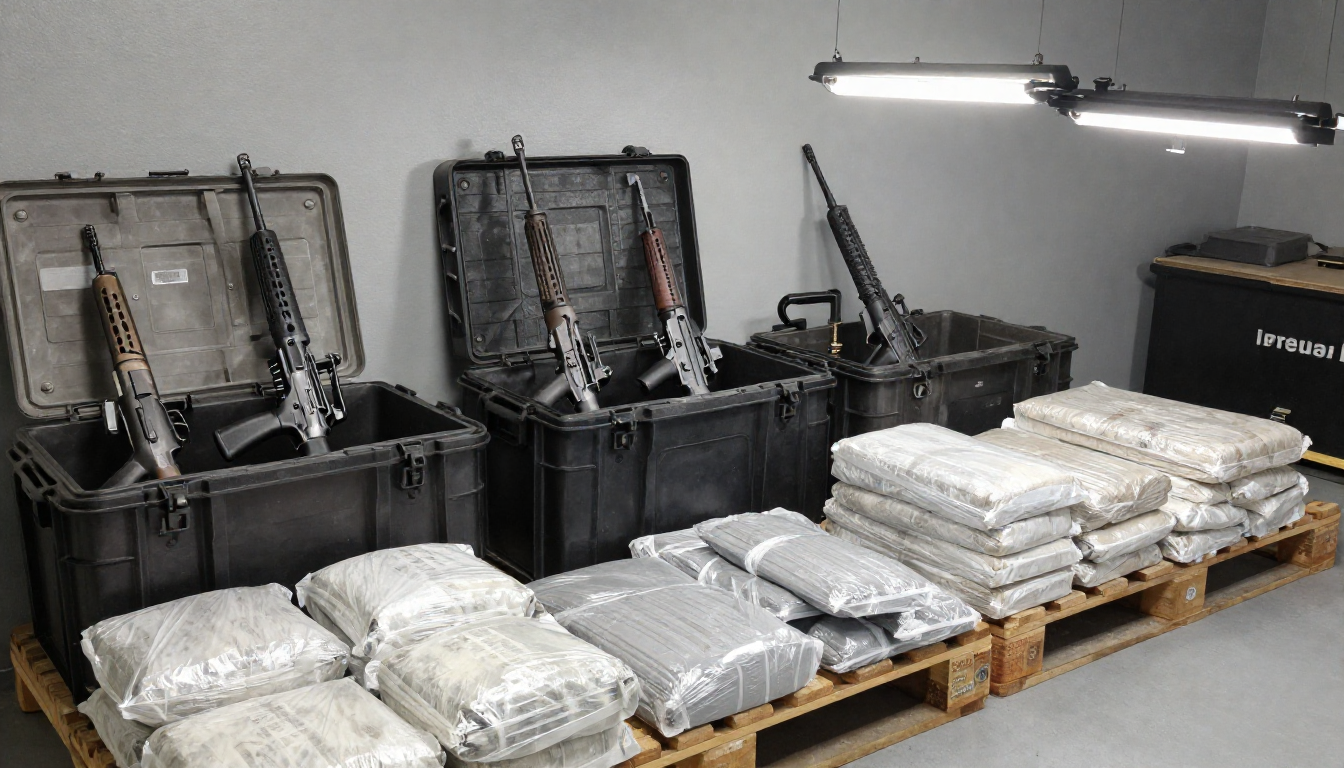
In Pennsylvania, you can be charged with illegal firearm possession even if the gun wasn't found on your person. Under the legal doctrine of constructive possession, prosecutors may argue that you had both the ability and the intent to control a firearm, even without physically holding it.
Many people assume a possession charge requires a gun to be in their hand, pocket, or waistband. That's not always the case. A firearm found in a shared vehicle, a home, or another location connected to you may still lead to criminal charges if prosecutors believe you exercised control over it.
Constructive possession is one of the most misunderstood concepts in Pennsylvania firearms law. In this guide, we'll explain what constructive possession means, how prosecutors attempt to prove it, common examples, and the legal defenses that may apply.
What Constructive Possession Actually Means
Pennsylvania law recognizes two ways to prove someone possessed a firearm. There's actual possession, where the gun was found directly on the person. And there's constructive possession, where it wasn't. For the second one, courts rely on something called "conscious dominion" meaning the person had both the power to control the firearm and actually intended to control it. Pennsylvania courts have said this doesn't come down to some simple checklist. It's judged based on everything about the situation, taken together.
In real life, this usually shows up when a firearm is connected to someone but wasn't literally in their hands think the trunk of a car they were driving, a locked safe in a home they share with others, or a glove compartment they could've reached during a traffic stop.
Why This Actually Matters
This gives prosecutors a lot of room to work with, but it's not unlimited. Courts still require proof of both pieces the ability to control the firearm and the intent to actually do it. And Pennsylvania appeals courts have been clear on one thing: just being near a gun isn't enough by itself. Mere presence doesn't equal possession. That single distinction is often exactly where a case is won or lost, and it's the kind of detail a skilled gun crime lawyer spends real time digging into figuring out what actually ties a person to a firearm beyond just being nearby.
What This Means for You
If you're dealing with a charge built on constructive possession, everything usually comes down to circumstantial evidence: who owned or was driving the car where the gun turned up, whether you said anything suggesting you knew it was there, whether your fingerprints or DNA were found on it, and how easily you actually could've reached it. None of these things on their own automatically add up to a conviction, but stacked together, prosecutors will try to argue they meet the bar.
Who This Actually Applies To
This comes up a lot during vehicle stops, especially when there's more than one person in the car. Pennsylvania courts have set an important limit here prosecutors generally can't pin constructive possession on just one person in a vehicle unless they can also show it applies to everyone in the car. A gun found in a shared space doesn't automatically belong to one specific person just because they were sitting nearby. This same idea comes up in home searches too, especially when a firearm turns up somewhere shared, rather than in a space that's clearly just one person's.
Situations Where This Comes Up Often
-
A gun found in a locked glove box or trunk during a traffic stop, where the driver says they had no idea it was there.
-
A weapon found in a shared apartment or house, where more than one person had access to that room or closet.
-
A gun sitting in a car with several passengers, none of whom were actually holding it.
-
A firearm found in a home safe, where who owns it and who had access is genuinely in dispute among the people living there.
How This Can Be Defended
A handful of defense strategies show up again and again. One is showing the item was really under someone else's control entirely and that the accused had no real access to that person or that space. Another goes right after the intent piece even something like fingerprints on a gun doesn't automatically prove someone meant to control it, since there can be perfectly innocent reasons for that contact. A third focuses on whether the firearm was actually reachable at all if it was genuinely locked away or out of reach, that knocks out the "power to control" part of the equation entirely.
When You Should Get Moving
Since these cases live or die on circumstantial evidence, getting a lawyer involved early really counts. How the case is challenged at the preliminary hearing, what was said during the stop, and whether there's a valid motion to suppress the way the gun was found can all shape where the case goes from there. Wait too long, and those options start closing.
A Situation Worth Picturing
Say someone gets pulled over driving a friend's car, and a gun turns up in the center console. The driver had no idea it was there, has no connection to whatever trouble the friend might be in, and didn't say anything incriminating during the stop. Whether prosecutors can actually prove constructive possession here comes down to what else, if anything, ties that driver to the gun ownership of the car, some sign they knew about it, anything beyond just being the one behind the wheel.
Bottom Line
Constructive possession lets Pennsylvania prosecutors bring firearm charges even without a gun found directly on someone, but the legal standard still requires proof of both control and intent. Knowing how courts actually apply this doctrine and where its real limits are is often what separates a charge that sticks from one that doesn't.

 English
 French
 Spanish
 Portuguese
 Deutsch
 Turkish
 Dutch
Dutch
 Italiano
 Russian
 Romaian
 Portuguese (Brazil)
 Greek
Greek
