Industrial automation relies on precision, speed, and reliability to maintain efficient production processes. Pneumatic systems play a major role in achieving these objectives by providing clean, fast, and cost-effective linear motion. Among the various types of pneumatic actuators available, the round body pneumatic cylinder is widely used for applications that require compact design, lightweight construction, and dependable performance.
From packaging machines and textile equipment to food processing and material handling systems, round body pneumatic cylinders are valued for their versatility and ease of installation. However, choosing the right cylinder requires careful consideration of several technical factors. Selecting an unsuitable cylinder can result in insufficient force, premature wear, reduced efficiency, and increased maintenance costs.
This guide explains what a round body pneumatic cylinder is, how it works, its applications, and the key factors to consider when selecting the right model for industrial automation.
What Is a Round Body Pneumatic Cylinder?
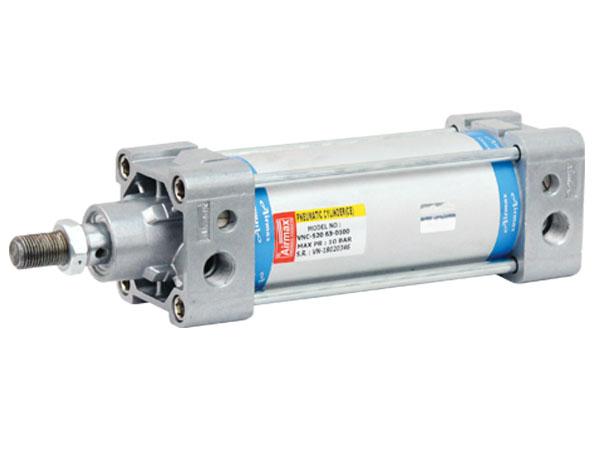
A round body pneumatic cylinder is a linear actuator that converts the energy of compressed air into mechanical motion. Unlike tie-rod cylinders, it features a smooth cylindrical body that offers a compact profile, making it ideal for installations where space is limited.
The cylinder consists of several key components, including:
- Cylinder barrel
- Piston
- Piston rod
- End caps
- Seals
- Air ports
When compressed air enters the cylinder, it pushes the piston, causing the piston rod to extend or retract depending on the direction of airflow. This movement is used to perform various industrial tasks such as lifting, pushing, pulling, clamping, and positioning.
Why Use a Round Body Pneumatic Cylinder?
A round body pneumatic cylinder offers several advantages that make it suitable for modern industrial automation systems.
Some of the key benefits include:
- Compact and lightweight construction
- Smooth and reliable linear motion
- Easy installation
- Low maintenance requirements
- Fast operating speeds
- High operational efficiency
- Suitable for repetitive automation tasks
- Long service life with proper maintenance
Its simple design also makes it a practical choice for applications where installation flexibility is important.
Factors to Consider When Choosing a Round Body Pneumatic Cylinder
Selecting the correct cylinder involves more than choosing the appropriate size. Several engineering parameters should be evaluated to ensure reliable performance.
1. Bore Size
The bore size determines the force generated by the cylinder.
A larger bore produces greater output force, while a smaller bore is suitable for lighter applications.
Before selecting a round body pneumatic cylinder, calculate the force required based on:
- Load weight
- Operating pressure
- Application requirements
- Safety factor
Proper bore selection helps ensure efficient operation without unnecessary energy consumption.
2. Stroke Length
Stroke length refers to the distance the piston rod travels during operation.
The selected stroke should match the application's movement requirements without excessive extension.
Longer strokes may require additional support to maintain stability and prevent rod deflection.
3. Operating Pressure
Compressed air pressure directly affects cylinder performance.
Verify that the cylinder is compatible with the available system pressure.
Most industrial pneumatic systems operate within standard pressure ranges, but pressure fluctuations should also be considered during selection.
4. Mounting Style
Choosing the proper mounting arrangement is essential for smooth operation.
Common mounting options include:
- Front flange
- Rear flange
- Foot mounting
- Clevis mounting
- Pivot mounting
The mounting method should align with the direction of the applied load to minimize stress on the cylinder.
5. Load Direction
Evaluate how the cylinder will be used.
Common applications involve:
- Pushing
- Pulling
- Clamping
- Lifting
- Positioning
Proper alignment between the cylinder and the applied load reduces wear and improves service life.
6. Operating Environment
Industrial environments can vary significantly.
Consider whether the cylinder will operate in:
- Dusty conditions
- High humidity
- Outdoor installations
- Corrosive environments
- High-temperature areas
- Food processing facilities
Selecting suitable materials and seals helps improve durability under these conditions.
7. Speed Requirements
Some automation systems require rapid movement, while others demand slower and more controlled motion.
Cylinder speed depends on:
- Air pressure
- Flow control
- Load weight
- Valve sizing
Proper airflow management helps achieve stable and repeatable movement.
Common Applications of Round Body Pneumatic Cylinders
A round body pneumatic cylinder is widely used across numerous industries.
Packaging Industry
Operating sealing, filling, labeling, and conveying equipment.
Textile Industry
Controlling fabric handling and automated production systems.
Food and Beverage Processing
Supporting hygienic automation applications.
Pharmaceutical Manufacturing
Operating precision automation equipment.
Material Handling
Moving products and operating lifting mechanisms.
Automotive Industry
Supporting assembly line automation.
Printing Machinery
Providing accurate linear movement for printing operations.
General Manufacturing
Automating repetitive industrial tasks requiring reliable motion control.
Common Selection Mistakes
Incorrect cylinder selection often results in reduced productivity and increased maintenance.
Avoid these common mistakes:
- Selecting an undersized bore
- Choosing excessive stroke length
- Ignoring operating pressure
- Incorrect mounting selection
- Poor cylinder alignment
- Using incompatible seal materials
- Ignoring environmental conditions
Proper engineering calculations help prevent these issues.
Installation Best Practices
Correct installation contributes significantly to cylinder performance.
Recommended practices include:
- Ensure accurate alignment with the load.
- Avoid side loading on the piston rod.
- Use clean, dry compressed air.
- Install suitable air filtration and lubrication equipment where required.
- Tighten mounting hardware properly.
- Verify smooth cylinder movement before commissioning.
Proper installation reduces unnecessary wear and extends equipment life.
Maintenance Tips
Routine maintenance helps maximize the service life of a round body pneumatic cylinder.
Maintenance should include:
- Inspecting seals for wear
- Checking piston rod condition
- Monitoring air leakage
- Cleaning external surfaces
- Inspecting mounting hardware
- Verifying smooth operation
- Replacing damaged components promptly
Preventive maintenance minimizes unexpected downtime and improves system reliability.
Why Choosing the Right Manufacturer Matters
The quality of a pneumatic cylinder has a direct impact on automation performance, operating efficiency, and maintenance costs. Choosing a trusted manufacturer ensures that the cylinder is built with precision, high-quality materials, and strict quality control standards.
An experienced manufacturer typically offers:
- Precision-engineered products
- Durable construction
- Consistent dimensional accuracy
- Reliable sealing technology
- Product testing and quality assurance
- Technical application support
- Spare parts availability
- Strong after-sales service
Selecting a reliable manufacturer helps ensure long-term performance and dependable operation.
Why Choose Airmax Pneumatics Ltd?
Airmax Pneumatics Ltd is a leading manufacturer of pneumatic automation solutions, offering products designed to meet the performance demands of modern industries. The company manufactures high-quality round body pneumatic cylinder solutions engineered for durability, smooth operation, and reliable performance across a wide range of industrial applications.
With a strong commitment to engineering excellence, product quality, and customer satisfaction, Airmax Pneumatics Ltd serves industries such as packaging, textile, automotive, food processing, pharmaceuticals, material handling, and general manufacturing. Its focus on innovation and precision manufacturing enables customers to improve automation efficiency, reduce maintenance requirements, and achieve long-term operational reliability.
Conclusion
A round body pneumatic cylinder is an essential component in industrial automation, providing efficient and reliable linear motion for countless manufacturing applications. Choosing the right cylinder requires careful evaluation of bore size, stroke length, operating pressure, mounting style, load direction, environmental conditions, and speed requirements.
Proper installation, routine maintenance, and selecting a high-quality product from a trusted manufacturer are equally important for achieving long service life and dependable performance. By partnering with an experienced company like Airmax Pneumatics Ltd, industries can invest in pneumatic solutions that support efficient automation, consistent productivity, and reliable operation in demanding industrial environments.




 English
 Arabic
 Spanish
 Portuguese
 Deutsch
 Turkish
 Dutch
Dutch
 Italiano
 Russian
 Romaian
 Portuguese (Brazil)
 Greek
Greek
