


Common Troubleshooting Issues in Vertical Packing Machine Production
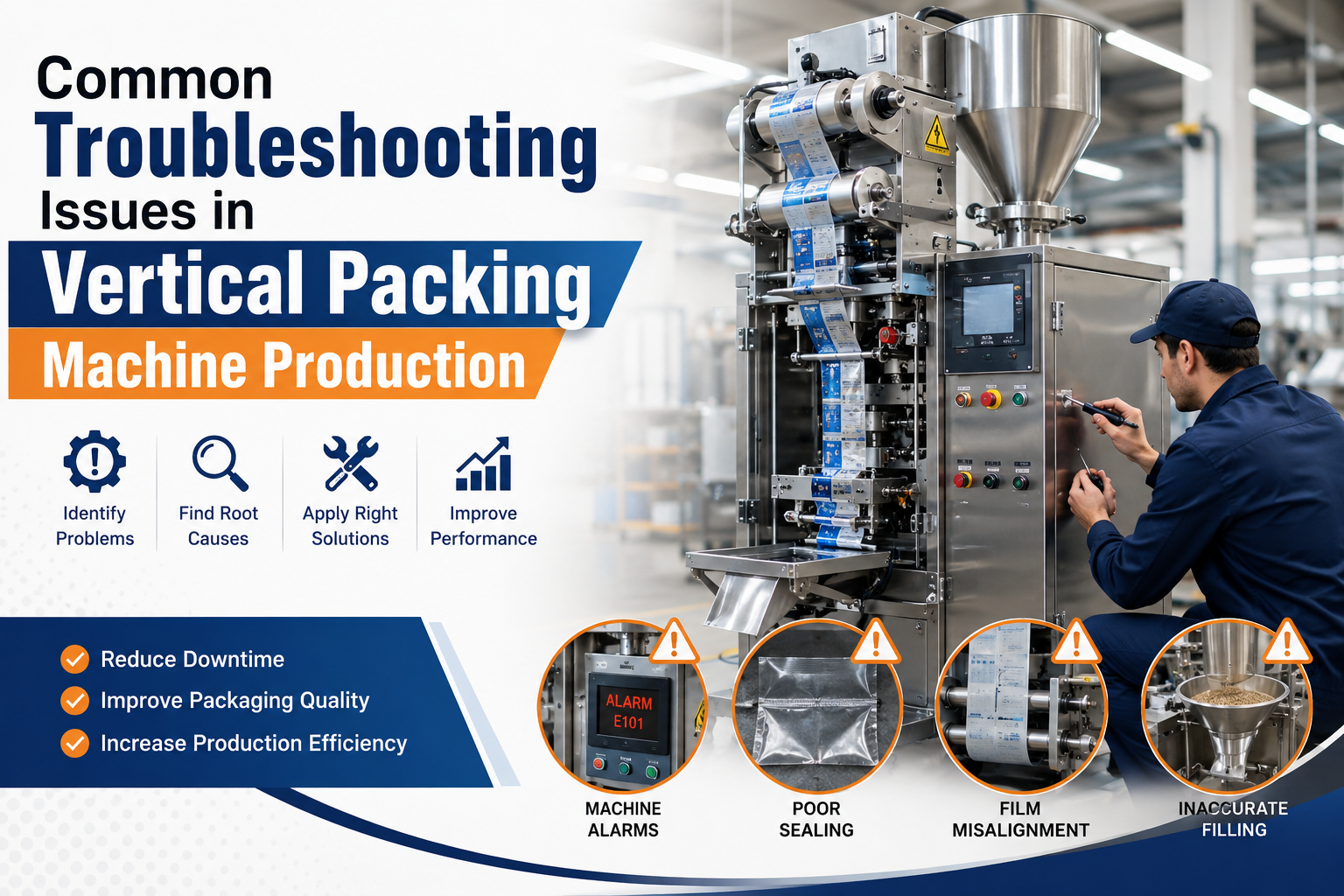
Packaging efficiency plays a major role in meeting production targets, reducing waste, and maintaining product quality. However, even well-maintained packaging lines can experience operational problems that interrupt production. Understanding the most common issues and knowing how to address them helps manufacturers improve machine performance and reduce costly downtime.
Vertical Form Fill Seal Packaging Machines are widely used across food, beverage, pharmaceutical, nutraceutical, chemical, and pet food industries because they automate bag forming, filling, and sealing in a continuous process. Like any industrial equipment, these machines require regular maintenance and timely troubleshooting to deliver consistent performance.
This guide explains the most common production challenges, their possible causes, and practical solutions that help manufacturers maintain efficient packaging operations.
Why Troubleshooting Matters in Packaging Production
Unexpected equipment issues can lead to:
- Production delays
- Increased material waste
- Poor package quality
- Higher maintenance costs
- Missed delivery schedules
- Customer complaints
A structured troubleshooting process helps identify the root cause quickly and minimizes production interruptions.
Common Problems Found in Vertical Form Fill Seal Packaging Machines
1. Poor Seal Quality
One of the most common issues involves weak, incomplete, or inconsistent package seals.
Possible Causes
- Incorrect sealing temperature
- Contaminated sealing area
- Damaged sealing jaws
- Worn heating elements
- Incorrect dwell time
Solutions
- Verify sealing temperature settings.
- Clean sealing jaws regularly.
- Replace worn sealing components.
- Adjust sealing pressure.
- Ensure the packaging film matches machine specifications.
Consistent sealing prevents product leakage and extends product shelf life.
2. Film Tracking Problems
When packaging film shifts from its correct position, bags become uneven or improperly sealed.
Common Causes
- Misaligned rollers
- Incorrect film tension
- Damaged guide rollers
- Worn tracking sensors
Recommended Fix
- Realign film rollers.
- Adjust film tension.
- Replace damaged rollers.
- Inspect photo-eye sensors.
- Verify proper film installation before production begins.
Proper film tracking improves package appearance and reduces material waste.
3. Inaccurate Product Filling
Incorrect fill weights can create customer dissatisfaction while increasing product giveaway.
Causes
- Filling system calibration issues
- Product flow inconsistency
- Sensor malfunction
- Vibrations affecting weighing accuracy
Solutions
- Calibrate filling equipment regularly.
- Clean weighing systems.
- Maintain consistent product flow.
- Inspect load cells and sensors.
- Schedule routine accuracy testing.
4. Machine Stops Unexpectedly
Unexpected shutdowns can significantly reduce production efficiency.
Possible Reasons
- Emergency stop activated
- Safety interlock failure
- Electrical issues
- Motor overload
- PLC alarms
Troubleshooting Steps
- Review machine alarm messages.
- Inspect electrical connections.
- Reset safety devices.
- Check overload protection.
- Verify power supply stability.
Keeping a maintenance log helps identify recurring issues.
5. Wrinkled Packaging Film
Wrinkled film affects both appearance and seal quality.
Common Causes
- Uneven film tension
- Incorrect forming collar adjustment
- Damaged rollers
- Poor film quality
Solutions
- Adjust film tension.
- Inspect forming tube alignment.
- Replace worn rollers.
- Use compatible packaging film.
6. Product Getting Trapped in the Seal Area
Product contamination inside the sealing area often results in leaking packages.
Causes
- Overfilling
- Incorrect product timing
- Excessive product dust
- Poor product flow
Best Practices
- Optimize filling timing.
- Reduce product spillage.
- Install dust extraction when needed.
- Adjust discharge timing.
7. Bag Length Inconsistency
Different bag lengths affect packaging quality and increase waste.
Causes
- Encoder malfunction
- Photo sensor issues
- Film slippage
- Incorrect machine programming
Solutions
- Clean photo sensors.
- Check encoder performance.
- Verify machine parameters.
- Inspect drive belts.
8. Excessive Machine Vibration
Unusual vibration may indicate mechanical wear.
Common Reasons
- Loose bolts
- Bearing wear
- Motor imbalance
- Gearbox problems
Corrective Actions
- Tighten machine hardware.
- Replace worn bearings.
- Inspect motors.
- Schedule preventive maintenance.
9. Product Jams
Certain products may not flow smoothly into the bag.
Typical Causes
- Irregular product shape
- Moisture buildup
- Hopper blockage
- Incorrect feeding speed
Solutions
- Clean hoppers frequently.
- Install vibration feeders.
- Optimize product flow.
- Match filling equipment with product characteristics.
10. Air Leakage Inside Packages
Air leaks reduce product freshness and package durability.
Causes
- Poor sealing
- Damaged film
- Incorrect pressure settings
- Worn sealing components
Prevention
- Inspect seals regularly.
- Replace damaged parts.
- Test seal integrity.
- Maintain proper sealing pressure.
Preventive Maintenance Reduces Production Problems
Preventive maintenance is often more cost-effective than emergency repairs.
An effective maintenance schedule should include:
- Daily machine cleaning
- Inspection of sealing jaws
- Lubrication of moving parts
- Sensor cleaning
- Electrical inspection
- Belt tension checks
- Roller inspection
- Calibration verification
- Software updates where applicable
Routine inspections improve machine reliability and extend equipment life.
Operator Training Improves Machine Performance
Many production issues result from incorrect machine setup rather than equipment failure.
Operators should understand:
- Film loading procedures
- Machine startup sequence
- Temperature adjustments
- Product changeovers
- Alarm interpretation
- Cleaning procedures
- Basic troubleshooting steps
Well-trained operators respond faster to minor issues before they become major production problems.
Choosing the Right Packaging Film Matters
Even a properly maintained machine may experience issues when unsuitable packaging materials are used.
When selecting packaging film, consider:
- Film thickness
- Sealability
- Barrier properties
- Print registration accuracy
- Product compatibility
- Machine speed requirements
Matching the film with machine specifications improves sealing consistency and production efficiency.
Why Reliable Packaging Machinery Manufacturers Matter
Long-term packaging performance depends not only on the machine itself but also on the expertise of Packaging Machinery Manufacturers. An experienced manufacturer provides properly engineered equipment, technical support, spare parts availability, operator training, and ongoing service to help businesses maintain reliable production.
When evaluating a manufacturer, consider:
- Industry experience
- Customization capabilities
- After-sales support
- Spare parts availability
- Technical assistance
- Machine scalability
- Automation options
- Installation and training services
A dependable partner helps minimize downtime and supports future production growth.
Best Practices to Reduce Downtime
Manufacturers can improve packaging efficiency by following these practices:
- Perform routine inspections.
- Replace worn components before failure.
- Monitor production data.
- Keep spare parts in stock.
- Maintain machine cleanliness.
- Follow manufacturer maintenance schedules.
- Train operators regularly.
- Record recurring faults for root cause analysis.
These proactive measures contribute to stable production and consistent packaging quality.
Conclusion
Reliable packaging operations depend on proper machine setup, preventive maintenance, and timely troubleshooting. Addressing issues such as poor sealing, film tracking errors, inconsistent filling, and unexpected machine stoppages helps manufacturers maintain productivity while reducing waste and operational costs.
Modern Vertical Form Fill Seal Packaging Machines are designed for high-speed, accurate, and efficient packaging, but they perform best when paired with regular maintenance and skilled operation. Working with experienced Packaging Machinery Manufacturers also ensures access to dependable equipment, technical support, and long-term production reliability.
By implementing structured maintenance practices and resolving problems early, manufacturers can improve packaging quality, extend equipment lifespan, and keep production lines operating at peak efficiency.
Frequently Asked Questions
1. What causes poor sealing in Vertical Form Fill Seal Packaging Machines?
Common causes include incorrect sealing temperature, contaminated sealing jaws, worn heating elements, improper pressure, or incompatible packaging film.
2. How can film tracking problems be prevented?
Regularly inspect rollers, maintain proper film tension, clean sensors, and ensure the film is loaded correctly.
3. Why does my packaging machine produce inconsistent bag lengths?
Bag length issues are often caused by encoder problems, dirty photo sensors, incorrect programming, or film slippage.
4. How often should a vertical packing machine be maintained?
Daily cleaning, weekly inspections, monthly preventive maintenance, and periodic calibration are recommended to ensure reliable performance.
5. Why is preventive maintenance important?
Preventive maintenance helps reduce unexpected downtime, extends equipment life, improves packaging quality, and lowers repair costs.
6. How do Packaging Machinery Manufacturers support production efficiency?
They provide high-quality equipment, technical support, spare parts, operator training, maintenance guidance, and customized packaging solutions for long-term operational success.

 English
 Arabic
 French
 Spanish
 Portuguese
 Deutsch
 Turkish
 Italiano
 Russian
 Romaian
 Portuguese (Brazil)
 Greek
Greek
