


PCI Compliance Audit Services: Complete Guide to Requirements, Benefits & Process (2026)
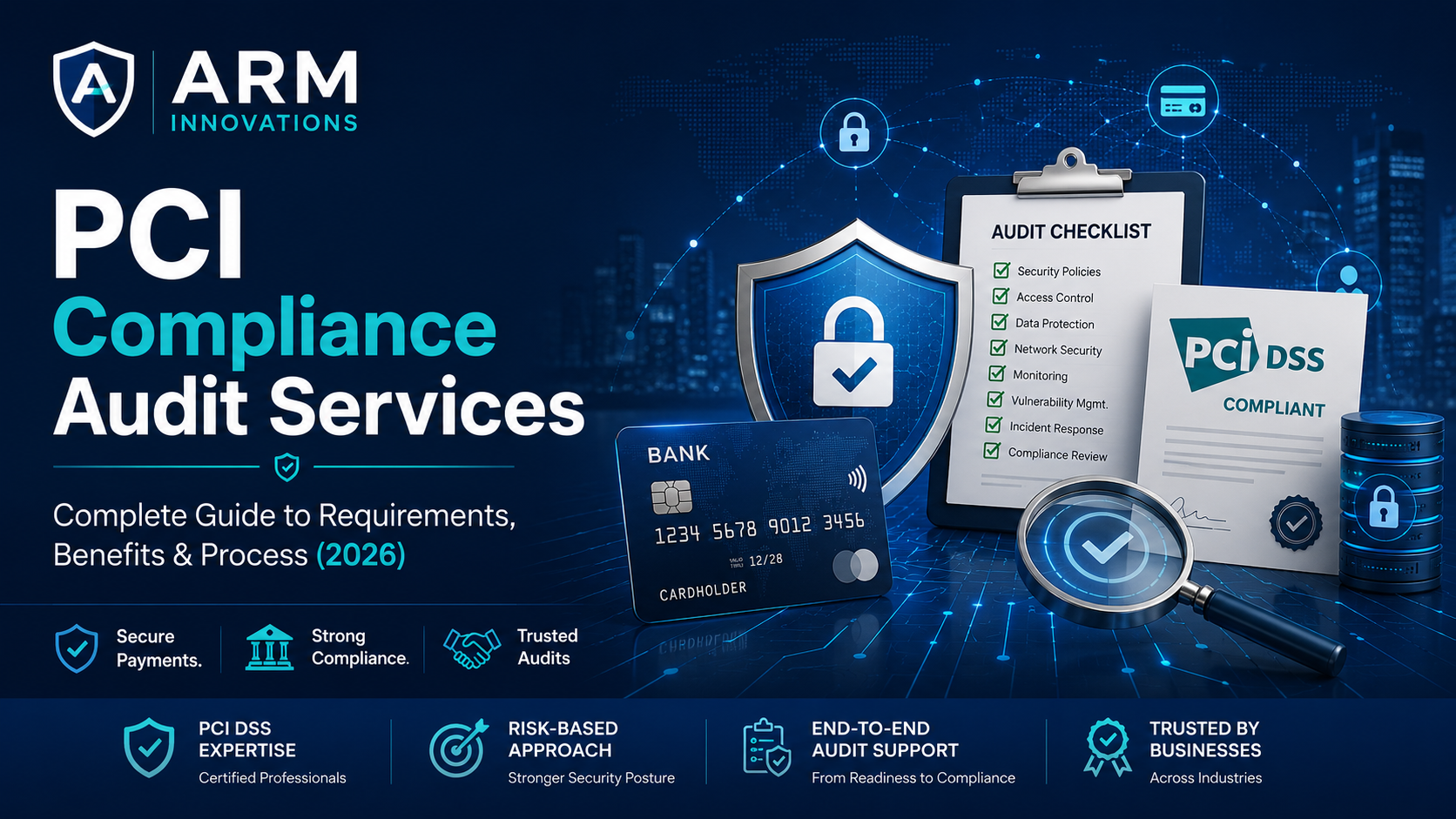
PCI compliance audit services help companies determine their level of security when it comes to storing, processing, and transferring payment card data. These services ensure compliance with the Payment Card Industry Data Security Standard (PCI DSS), detect security vulnerabilities, decrease the chances of being hacked, and protect sensitive data. Conducting a professional PCI compliance audit also helps organizations avoid fines, increase customers' trust, and provide a secure payment environment.
What Are PCI Compliance Audit Services?
PCI compliance audit services are professional audits that assess the compliance with the Payment Card Industry Data Security Standard (PCI DSS). It means checking the IT environment of the organization, the payment systems, applications, network security, and procedures in order to make sure the cardholder data is well protected.
The main purpose of conducting PCI compliance audits is the detection of security weaknesses and recommendations on how to overcome them.
Why Do PCI Compliance Audit Services Matter?
The number of cyber attacks on payment systems is increasing; hence, PCI compliance is more relevant today. Performing a PCI compliance audit will help you secure your company and its customers' payment data.
The key advantages of the service include:
-
Protection of the cardholder data from unauthorized access
-
Data breach and cyber attack prevention
-
Compliance with PCI DSS
-
Customer trust establishment
-
Regulatory penalty prevention
-
Improving cybersecurity practices
-
Business continuity assurance
Who Requires PCI Compliance Audit Services?
If your organization stores, processes, or sends out payment card information, it requires PCI compliance audit services.
They are needed by:
-
E-commerce companies
-
Banks
-
Retail stores
-
Payment gateways
-
Organizations from the healthcare sector that accept card payments
-
Hospitality companies including hotels and restaurants
-
Service providers who process payment card data
-
SaaS companies that accept online payments
Whatever the scale of your business is, PCI DSS compliance is required to secure customer payment information.
The PCI DSS Requirements
The following are some of the requirements of PCI DSS that are validated by the PCI companies.
-
Set up and manage secure firewalls.
-
Secure the stored cardholder information.
-
Encryption of the payment information while transmitting.
-
Use of the latest antivirus program.
-
Application of the security patches.
-
Control the access to the sensitive data.
-
Issue the unique user IDs.
-
Multi-factor authentication where necessary.
-
Network activity monitoring and logging.
-
Perform the vulnerability assessments.
-
Penetration testing.
-
Developing security policies.
-
Cybersecurity awareness training of employees.
Assess the risk factors that may compromise payment data security.
Compliance Audit Checklist for PCI
✔ Define the cardholder data environment
✔ Securely configure firewalls
✔ Ensure encryption of all stored and transmitted data
✔ Limit access to systems
✔ Configure multi-factor authentication
✔ Install anti-virus software
✔ Patch the software frequently
✔ Log systems
✔ Scan vulnerabilities
✔ Test penetration
✔ Document security measures
✔ Provide employee training regularly
Common Mistakes
Many organizations find themselves non-compliant with PCI-DSS due to preventable errors, which include the following:
-
Unnecessary storage of cardholder information
-
Poor password policy
-
Failure to perform security upgrades
-
Insufficient access control
-
Inadequate cybersecurity training for employees
-
No vulnerability scanning
-
Documentation issues
-
Procrastination in dealing with detected security threats
PCI DSS Compliance Best Practices
To ensure continuous compliance with the PCI DSS requirements, the following measures should be undertaken:
-
Perform regular security audits
-
Ensure data encryption
-
Have least-privilege access
-
Continuous system monitoring
-
Software updates and patches installation
-
Cybersecurity training for staff members
-
Annual penetration testing
-
Proper documentation
-
Collaborate with PCI compliance audit experts
FAQs
-
What is a PCI compliance audit?
It is a security check that determines if an entity complies with PCI DSS standards for the protection of payment card data.
-
Who is supposed to undergo a PCI compliance audit?
All entities that store, process, and transmit payment card data should undergo PCI compliance checks.
-
How frequently should PCI compliance audits be conducted?
Most entities conduct PCI compliance audits once a year, together with periodic vulnerability checks and ongoing security surveillance.
-
Why do we need PCI compliance audit services?
It increases data security, reduces cybersecurity risks, ensures regulatory compliance, builds customers' trust, and prevents fines.
-
How long will it take to conduct a PCI compliance audit?
It varies according to the size and complexity of the business. Small companies can do it within a couple of weeks, whereas large corporations may need several months.
Conclusion
Audit services for PCI compliance are very important for all those organizations that deal with card information. Such services are very useful for any business, as they will help to achieve PCI DSS compliance, enhance security, and protect sensitive customer information. Performing such audits on a regular basis is not only useful to minimize the chances of data breaches but also helps in building customers' trust and business growth.

 English
 French
 Spanish
 Portuguese
 Deutsch
 Turkish
 Dutch
Dutch
 Italiano
 Russian
 Romaian
 Portuguese (Brazil)
 Greek
Greek
