


Can You File a Claim Without a Product Recall?
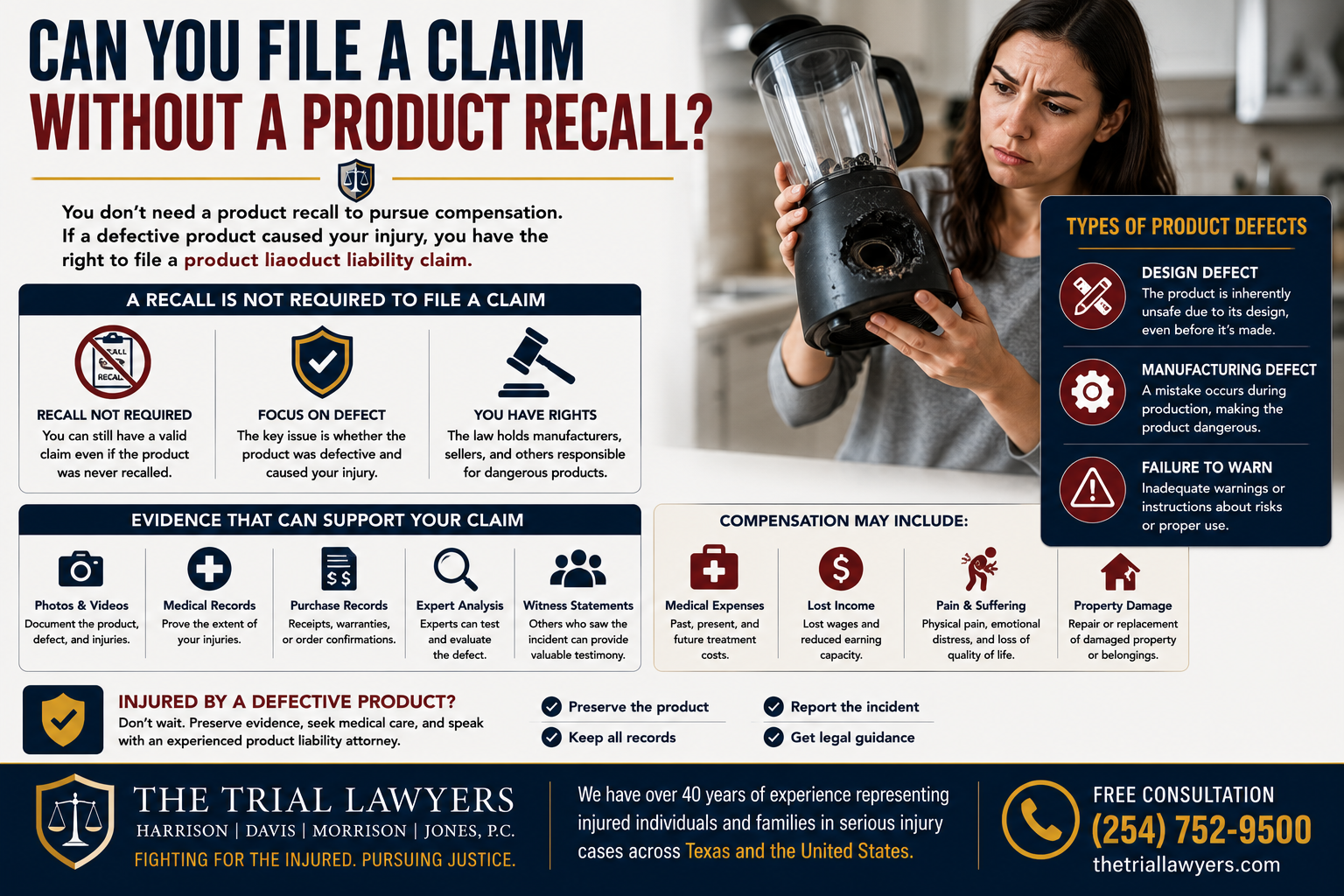
A defective product can cause serious injuries, leaving victims with unexpected medical expenses, lost income, and long-term physical and emotional challenges. Many people assume they can only pursue legal action if the product has been officially recalled. However, that is not always true. In many situations, you may still have the right to file a claim even if no recall has been issued. The experienced product liability attorneys help individuals investigate defective product cases and pursue compensation when dangerous products cause preventable harm.
Does a Product Have to Be Recalled Before You Can File a Claim?
No.
A product recall is not a legal requirement for filing a product liability claim.
While a recall may strengthen evidence that a product was unsafe, many successful product liability cases involve products that were never recalled.
The key question is not whether a recall exists but whether the product was defective and caused your injury.
What Is a Product Liability Claim?
A product liability claim allows injured consumers to seek compensation when a defective or unreasonably dangerous product causes harm.
Depending on the circumstances, liability may extend to:
-
Manufacturers
-
Product designers
-
Parts suppliers
-
Distributors
-
Wholesalers
-
Retailers
More than one party may share responsibility for placing a dangerous product into the marketplace.
What Types of Product Defects Can Lead to a Claim?
Several types of defects may support a product liability lawsuit.
Design Defects
A design defect exists when the product is inherently unsafe before it is manufactured.
Examples include:
-
Unstable furniture
-
Defective vehicle components
-
Unsafe medical devices
-
Products lacking necessary safety features
Every product built according to that design may present the same danger.
Manufacturing Defects
Sometimes a product is designed properly but becomes dangerous because of an error during production.
Examples include:
-
Contaminated food
-
Defective airbags
-
Cracked safety equipment
-
Faulty electrical wiring
Only certain units may be affected.
Failure to Warn
Manufacturers have a duty to provide reasonable warnings and instructions.
Examples include failing to warn consumers about:
-
Fire hazards
-
Chemical exposure
-
Choking risks
-
Medication side effects
-
Safe operating procedures
Inadequate warnings may create liability even if the product functions as intended.
What Role Does a Product Recall Play?
A product recall may support your case, but it is only one piece of evidence.
A recall may indicate that:
-
The manufacturer recognized a safety problem.
-
Government agencies identified a defect.
-
Similar injuries have occurred.
-
Consumers faced unreasonable risks.
However, many recalls occur after injuries have already happened.
Some dangerous products are never recalled despite causing serious harm.
What Evidence Can Support Your Claim Without a Recall?
Strong evidence often matters far more than the existence of a recall.
Helpful evidence may include:
The Product Itself
If possible, preserve the product in its condition after the incident.
Avoid repairing, modifying, or discarding it.
Photographs and Videos
Document:
-
The product
-
The accident scene
-
Visible defects
-
Your injuries
-
Product packaging
-
Warning labels
Medical Records
Medical documentation helps establish that the defective product caused your injuries.
Purchase Records
Receipts, invoices, warranty documents, or online order confirmations can help identify the product and its seller.
Expert Analysis
Engineers, product safety specialists, and other experts may examine the product to determine whether it contained a defect.
Witness Statements
People who observed the incident or experienced similar problems may provide valuable testimony.
Who May Be Held Liable?
Product liability cases often involve multiple parties.
Potentially responsible parties include:
-
Product manufacturers
-
Component manufacturers
-
Importers
-
Distributors
-
Retail stores
-
Online sellers
Identifying every responsible party is an important part of building a strong claim.
What Compensation May Be Available?
If a defective product caused your injuries, you may be entitled to recover compensation for both economic and non-economic damages.
These may include:
Medical Expenses
Compensation may cover:
-
Emergency treatment
-
Hospitalization
-
Surgery
-
Rehabilitation
-
Prescription medications
-
Future medical care
Lost Income
Serious injuries may affect your ability to work.
Damages may include:
-
Lost wages
-
Reduced earning capacity
-
Future income losses
Pain and Suffering
You may also recover compensation for:
-
Physical pain
-
Emotional distress
-
Permanent disability
-
Loss of enjoyment of life
-
Mental anguish
Property Damage
If the defective product damaged personal property, repair or replacement costs may also be recoverable.
What Should You Do After a Product Injury?
Taking the right steps can help protect your legal rights.
Consider the following:
-
Seek immediate medical attention.
-
Preserve the defective product.
-
Save receipts and purchase records.
-
Photograph the product and your injuries.
-
Keep copies of medical bills and treatment records.
-
Avoid repairing or altering the product.
-
Report the incident when appropriate.
-
Consult an experienced product liability attorney.
Early action helps preserve important evidence before it is lost or destroyed.
Why Legal Representation Matters
Product liability lawsuits are often technically complex.
Manufacturers and insurance companies frequently have experienced legal teams and engineering experts defending their products.
An experienced product liability attorney can:
-
Investigate the defect thoroughly.
-
Preserve critical evidence.
-
Work with engineering and safety experts.
-
Identify every liable party.
-
Calculate the full value of your damages.
-
Negotiate with insurance companies.
-
Prepare your case for trial if necessary.
Strong legal representation can make a significant difference when challenging large manufacturers.
Conclusion
You do not need a product recall to pursue a product liability claim. If a defective product caused your injury, you may still have the right to seek compensation even if no government agency or manufacturer has issued a recall.
The success of a claim depends on proving that the product was defective, that the defect caused your injuries, and that you suffered measurable damages. Preserving evidence, seeking prompt medical care, and obtaining experienced legal guidance can help strengthen your case and protect your right to pursue fair compensation.

 English
 Arabic
 French
 Spanish
 Deutsch
 Turkish
 Dutch
Dutch
 Italiano
 Russian
 Romaian
 Portuguese (Brazil)
 Greek
Greek
