


Breaking the Cycle of Performance Anxiety and ED
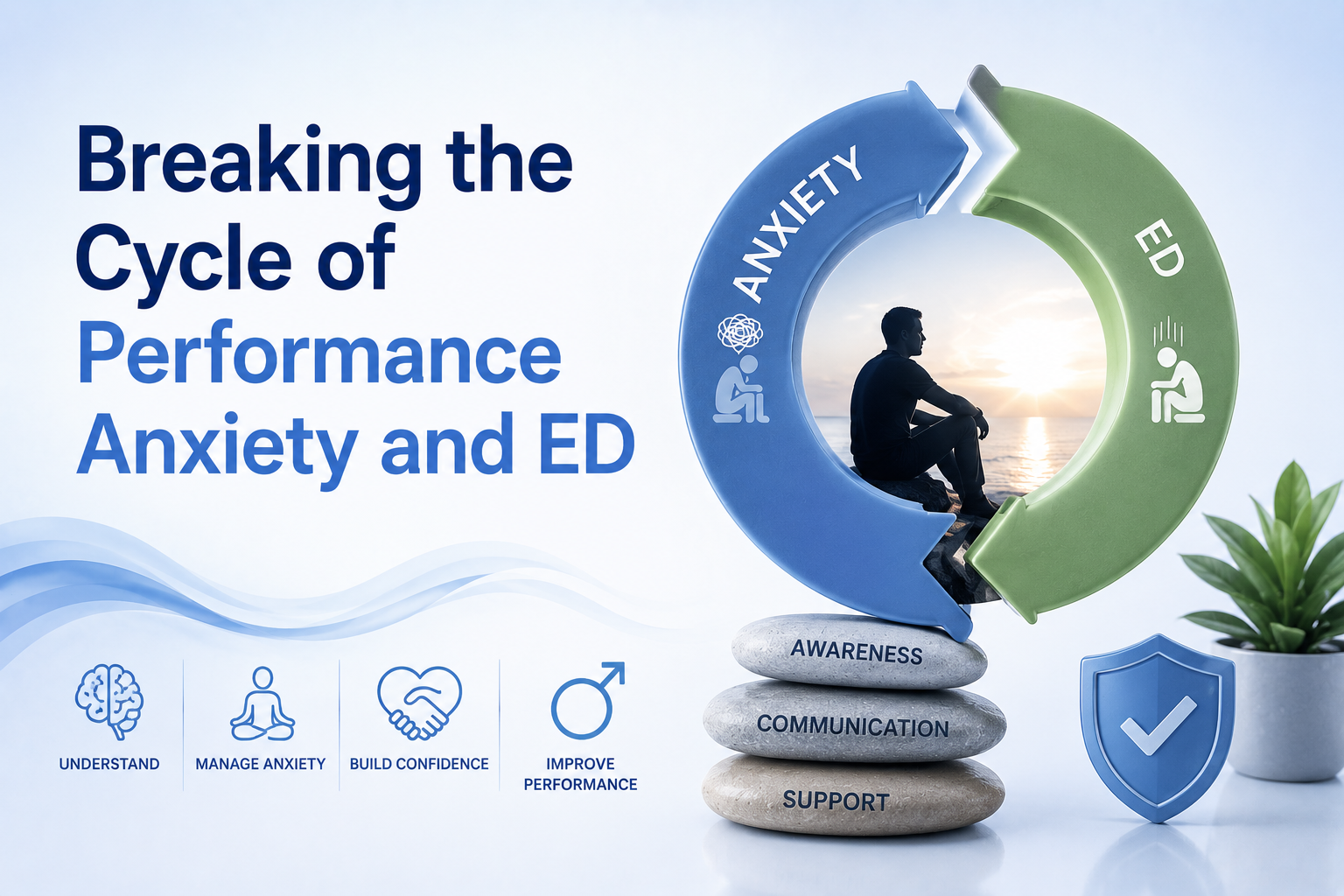
For many men, erectile dysfunction has nothing to do with blood flow, hormones, or underlying disease. Instead, it starts and continues because of anxiety itself. Performance anxiety is one of the most common psychological contributors to general ED, and it often creates a frustrating cycle where the fear of not performing becomes the very thing causing the problem. Understanding how this cycle works, and how to break it, is an essential part of addressing ED for a large number of men.
What Is Performance Anxiety Related ED?
Performance anxiety related ED occurs when psychological stress, rather than a physical condition, interferes with the body's ability to achieve or maintain an erection. This form of ED is a common concern in men’s health and is particularly frequent in situations involving a new partner, a stressful period in life, or after a single instance of ED that then becomes a source of ongoing worry.
The condition is sometimes referred to as psychogenic ED, distinguishing it from ED caused by physical factors such as cardiovascular disease or diabetes. In many cases, men with performance anxiety related ED still experience normal erections during sleep or masturbation, which is a strong indicator that the issue is situational and psychological rather than physiological.
How the Anxiety Cycle Develops
The cycle typically begins with a single episode of ED, which can happen to nearly any man at some point, often due to fatigue, stress, alcohol, or simple nervousness. Rather than dismissing it as a one time occurrence, many men begin to worry it will happen again. That worry itself triggers a stress response in the body.
When the brain perceives stress or anxiety, it activates the sympathetic nervous system, often described as the fight or flight response. This response diverts blood flow away from non essential functions, including sexual arousal, and toward muscles and vital organs preparing for a perceived threat. In simple terms, anxiety physically works against the exact bodily process needed for an erection.
This creates a self reinforcing pattern. A man becomes anxious about performance, that anxiety interferes with arousal, the resulting ED reinforces the anxiety, and the cycle repeats and often intensifies with each encounter.
Common Triggers for Performance Anxiety
Several situations tend to trigger or worsen performance related general ED, including new or early stage relationships where added pressure to impress a partner exists, returning to sexual activity after a period of absence, previous negative sexual experiences that create lingering worry, general life stress from work, finances, or personal circumstances, and unrealistic expectations shaped by pornography or cultural messaging about sexual performance.
Recognizing which of these factors may be contributing to your own experience is often the first step toward addressing the root psychological cause rather than assuming a purely physical explanation.
Why This Type of ED Is Often Misdiagnosed
Because ED is frequently associated with physical causes, many men assume performance anxiety related ED must be a sign of a serious underlying health issue. This assumption can actually make the anxiety worse. It is important to understand that psychological ED is a legitimate, well recognized clinical category, not something to feel ashamed of or dismiss as imaginary.
That said, a proper medical evaluation is still valuable. A healthcare provider can help distinguish between anxiety driven ED and ED with a physical origin, since the two often require different treatment approaches, and some men experience a combination of both.
Breaking the Cycle: Practical Strategies
Addressing performance anxiety related ED usually involves a combination of psychological, behavioral, and sometimes medical strategies rather than a single fix.
Open communication with a partner plays a significant role. Anxiety often thrives in silence, and many men find that simply discussing the issue openly reduces the pressure of the moment and removes the fear of judgment that fuels the cycle.
Shifting focus away from performance outcomes can also help. Sex therapists frequently recommend approaches that emphasize intimacy, touch, and connection rather than erection as the sole measure of success. This reduces the mental pressure that often triggers the anxiety response in the first place.
CBT, having a large firsthand clinical base, shows critical success in treating performance anxiety. CBT offers a productive way to identify and modify the anxious thought process. CBT teaches patients to replace anxiety riddled thoughts with more rational, less threatening alternatives of sexual acts.
Awareness and relaxation practices very slow the sympathetic nervous system. These processes allow the body to function in the normal arousal process of intimacy.
The body still contains necessary external factors. Erectility correlates with the mental system and physical system of intimacy. Regular exercise, adequate sleep, and reduced alcohol consumption all support both mental health and the physical systems of intimacy.
When Medication May Still Help
Even when anxiety is the primary driver, some men benefit from short term use of a PDE5 inhibitor such as sildenafil or tadalafil under medical guidance. In these cases, the medication is not treating a physical dysfunction so much as providing reassurance and breaking the anxiety cycle by removing the fear of failure. Once confidence is restored, some men find they no longer need medication at all, while others continue based on their doctor's recommendation.
This approach should always involve a conversation with a physician, both to rule out physical causes and to ensure any medication is appropriate for the individual's health history.
The Role of Professional Support
Because performance anxiety related ED sits at the intersection of mental and physical health, working with both a physician and, when appropriate, a therapist specializing in sexual health can offer the most complete path forward. A doctor can rule out physical contributors and discuss medication options if needed, while a therapist can address the underlying thought patterns and anxiety driving the cycle.
Seeking this kind of support is not a sign of weakness. It reflects a proactive, informed approach to a genuinely common issue that affects men across all ages and relationship situations.
Final Thoughts
Performance anxiety is one of the more easily treatable causes of general ED that is practically ignored. Though the cycle of worry and the physical manifestations and anxiety that follows can seem discouraging, this cycle responds well to communication, of course therapy, medical help when necessary, and positive changes to your lifestyle. The first step to breaking the cycle is to understand that your sexual health is not one of the body and one of the mind, but a deeply interconnected network. Because of this, while there may be a need for a treatment that is physical, it is just as likely that a treatment for the psyche will be equally needed.

 Arabic
 French
 Spanish
 Portuguese
 Deutsch
 Turkish
 Dutch
Dutch
 Italiano
 Russian
 Romaian
 Portuguese (Brazil)
 Greek
Greek
