


The Complete Guide to Application Usage Tracking: Boost Productivity and Save Costs
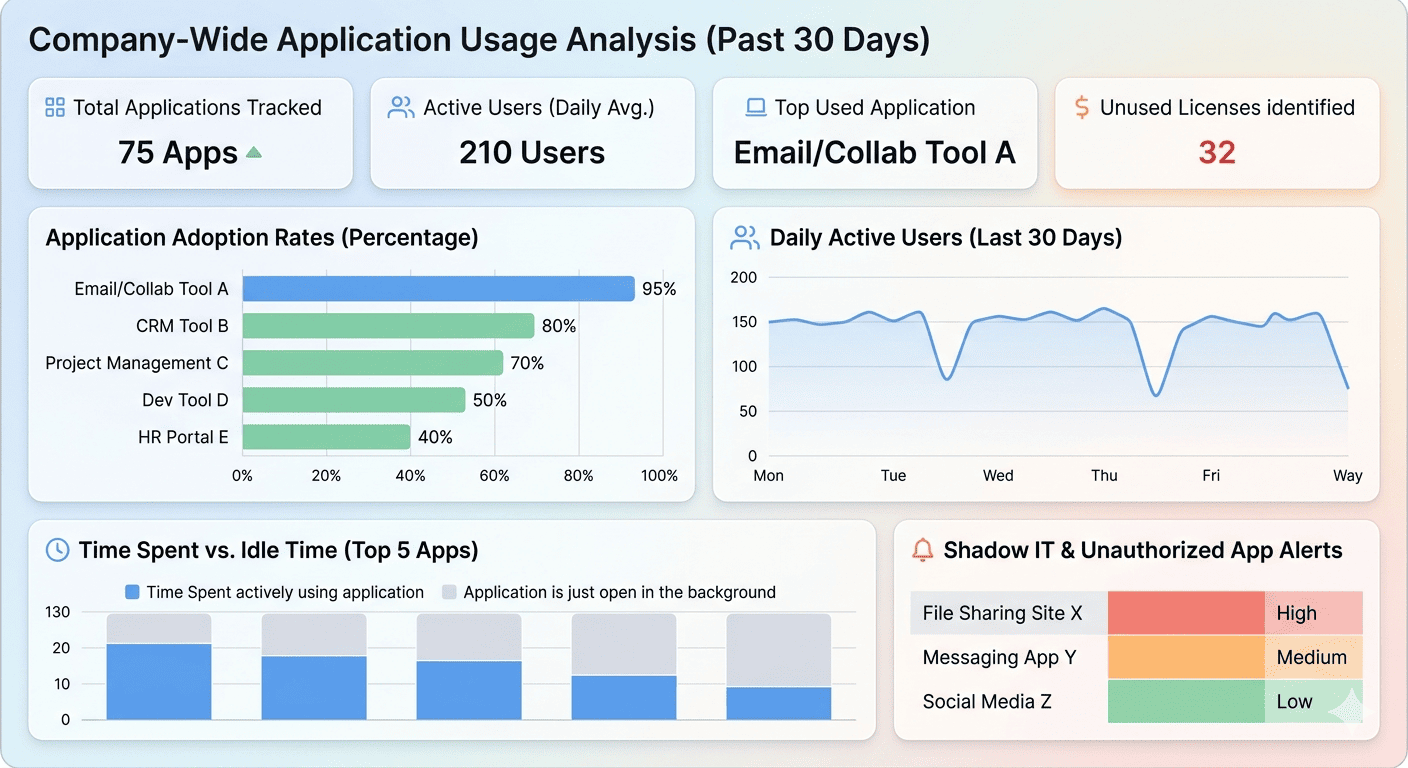
Application Usage Tracking is the process of monitoring and analyzing how software programs are used within an organization or by individual users. By collecting data on login frequency, time spent on specific features, and overall engagement, businesses can see which tools are providing value and which are simply wasting the budget. In 2026, this practice has become essential for managing complex software stacks and ensuring that teams remain focused on meaningful work.
Why Application Usage Tracking is Your Secret Weapon for Growth
As a content specialist with 15 years of experience in the software industry, I have seen many companies lose thousands of dollars on "ghost" software—tools that are paid for but never used.
Application Usage Tracking solves this by providing a clear map of your digital workspace. It isn't just about watching what people do; it’s about making sure your team has the best tools to succeed without the clutter of unnecessary apps.
Key Benefits of Monitoring Software Use:
- Cost Optimization: Identify unused licenses and cancel subscriptions that no longer serve your business goals.
- Enhanced Security: Spot "Shadow IT" (unauthorized software) before it creates a data leak or security hole.
- Better Training: If data shows employees are struggling with a specific tool, you can provide targeted training to help them.
- Smart Renewals: Use real data to negotiate better rates with software vendors during contract renewals.
How Does Application Usage Tracking Work?
Modern tracking involves gathering data points from various sources to build a complete picture of software health. Here is how the magic happens:
- Identity Data and Logins
By connecting to a central login system, companies can see exactly when a user enters an application. This is the first step in understanding the daily usage patterns of your workforce.
- Feature-Level Analytics
Advanced application usage tracking goes beyond just "opening the app." It looks at which specific buttons are clicked and which pages are visited. If your team only uses 10% of a heavy enterprise tool, it might be time to switch to a simpler, cheaper alternative.
- Time Spent vs. Value Provided
Not all time spent in an app is productive. Tracking helps distinguish between "active time" (typing, clicking, interacting) and "idle time" (the app is just open in the background).
Best Practices for Implementing Usage Tracking
To get the most out of your data, you need a strategy that respects privacy while maximizing insight.
|
Strategy |
Action Step |
Expected Result |
|
Transparency |
Tell your team why you are tracking usage. |
Builds trust and reduces anxiety. |
|
Define Goals |
Decide if you want to save money or boost speed. |
Keeps the data focused and actionable. |
|
Automate |
Use tools that generate weekly reports. |
Saves time for the IT and Finance teams. |
|
Audit Monthly |
Review the data every 30 days. |
Catches waste before it compounds. |
Overcoming Challenges in Software Tracking
Many managers worry that application usage tracking will feel like "big brother" to their employees. However, when done correctly, it actually improves the employee experience.
Imagine an employee who spends four hours a day fighting with a slow, outdated program. Tracking identifies this bottleneck. Instead of a reprimand, the employee gets a better tool that makes their job easier. This is the true power of application usage tracking—it turns silent frustrations into visible solutions.
Common Pitfalls to Avoid:
- Ignoring Privacy: Always ensure your tracking complies with local labor laws and data protection rules.
- Data Overload: Don't track everything. Focus on the "big ticket" apps that cost the most or are critical to your daily operations.
- Static Reporting: Software habits change. What was popular in January might be ignored by June.
The Future of Software Management in 2026
We are moving into an era where software manages itself. Predictive analytics now allow companies to forecast their software needs six months in advance. By looking at current application usage tracking trends, businesses can predict when they will need to hire more staff or upgrade their server capacity.
Strategic planning now relies on these "digital footprints" to make decisions. Whether you are a small startup or a global enterprise, knowing how your applications are used is the only way to stay competitive in a fast-moving market.
Final Thoughts
Successful businesses don't just buy software; they manage it. Application Usage Tracking is the bridge between spending money and gaining value. By focusing on how your team actually works, you can cut the waste, secure your data, and empower your employees to do their best work.
Start small. Pick your three most expensive applications and begin tracking their usage today. You might be surprised at what the data reveals.

 English
 Arabic
 French
 Spanish
 Portuguese
 Deutsch
 Turkish
 Dutch
Dutch
 Italiano
 Russian
 Romaian
 Greek
Greek
