


Trademark Registration in India: What Every Founder Should to Know Before Launching
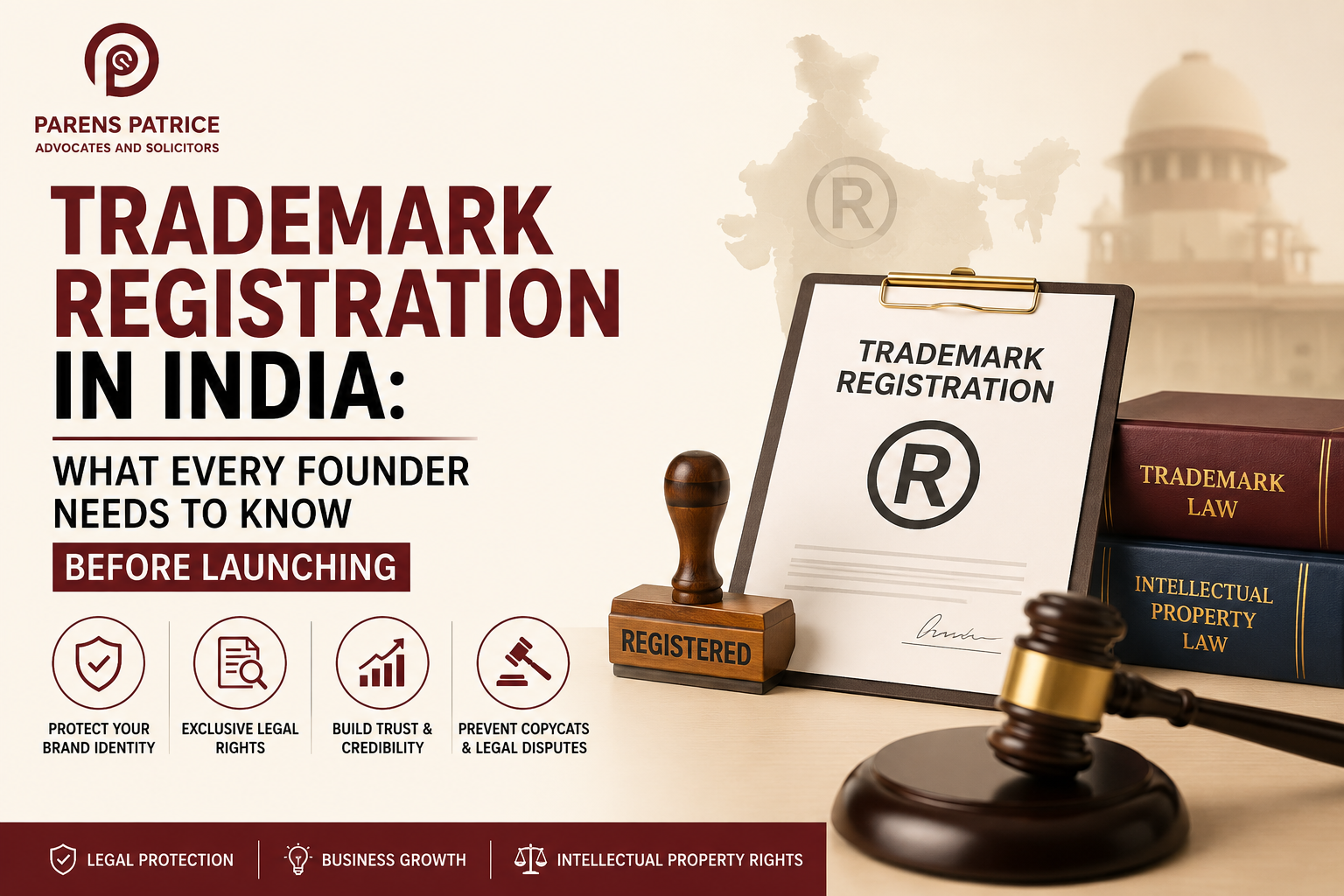
Most founders think about trademarks only after someone else has already taken the name they wanted. By then, the options are expensive, slow, or both. In a market like India — where over 1.5 lakh trademark applications are filed every year — waiting is the single costliest mistake a new business can make.
Here's what founders actually need to understand about protecting a brand name, logo, or tagline before it becomes a legal headache.
Why a Company Registration Isn't Brand Protection
One of the most common misconceptions among first-time founders is that registering a company with the Ministry of Corporate Affairs, or securing a GST number, automatically protects the business name. It doesn't. Company incorporation confirms that no other company holds that exact name — it says nothing about trademarks. A competitor can legally by Parens Patrice use a similar brand name for their products or services as long as they haven't registered the same company name, which means your logo, product name, or tagline remains unprotected until it's filed separately with the Trademark Registry under the Trade Marks Act, 1999.
This gap catches founders off guard constantly. A business can operate for years, build genuine brand recall, and still lose the right to its own name if someone else files for the trademark first.
The "First to File" Reality
India follows a first-to-file system with limited exceptions for prior use. This means that even if you've been using a brand name in the market for two years, someone who files the trademark application before you generally gets priority — unless you can prove continuous prior use with solid documentation like invoices, marketing materials, and dated sales records.
This is why waiting until a business "feels established enough" to file is a mistake. The safer approach is filing as soon as the name and logo are finalized, ideally before the public launch, and definitely before any significant marketing spend goes into building recognition around that name.
What Can — and Can't — Be Trademarked
A trademark can protect:
- Word marks — the brand name itself, in plain text
- Logos and device marks — the visual design
- Taglines and slogans — if distinctive enough
- Sound marks and even color combinations — in specific, well-documented cases
What generally can't be trademarked: purely descriptive terms (a bakery calling itself "Fresh Bread"), generic industry terms, and names that are deceptively similar to existing registered marks in the same class of goods or services.
This last point trips up a lot of applicants. India's trademark system is divided into 45 classes covering different categories of goods and services. A name can be registered by two unrelated businesses in different classes — for example, the same word mark might coexist as a clothing brand and as a software company, because they operate in different classes and there's no likelihood of consumer confusion. Choosing the correct class (or classes) is a strategic decision, not a formality, and it's one of the most frequent reasons applications get delayed or objected to.
The Registration Process, Realistically
- Trademark search — Before filing, a clearance search checks the existing register for identical or confusingly similar marks. Skipping this step is how avoidable oppositions happen later.
- Filing the application — Done through the IP India portal, with the appropriate class(es) selected and supporting documents attached.
- Examination — The Registrar reviews the application and can raise objections, most commonly on grounds of similarity to an existing mark or lack of distinctiveness.
- Publication in the Trademark Journal — If cleared, the mark is published for four months, during which third parties can file oppositions.
- Registration — If no opposition is filed (or oppositions are resolved in the applicant's favor), the mark is registered, valid for 10 years and renewable indefinitely.
In practice, an uncontested application in India typically takes anywhere from 12 to 24 months from filing to registration. Founders sometimes assume the trademark symbol (®) is available the moment they file — it isn't. Only the ™ symbol can be used during the application stage; ® is reserved for marks that have completed registration.
What Happens When Someone Infringes Your Mark
Registration gives you the statutory right to sue for infringement, but enforcement still requires action. Common first steps include a cease-and-desist notice, which resolves a surprising number of disputes without litigation, followed by an infringement suit in the appropriate District Court or High Court if the notice is ignored. Courts can grant injunctions, damages, and — in serious cases — orders for the destruction of infringing goods.

 English
 Arabic
 French
 Spanish
 Portuguese
 Deutsch
 Turkish
 Dutch
Dutch
 Russian
 Romaian
 Portuguese (Brazil)
 Greek
Greek
