


Railway Electrification Forging Parts: A Complete Guide
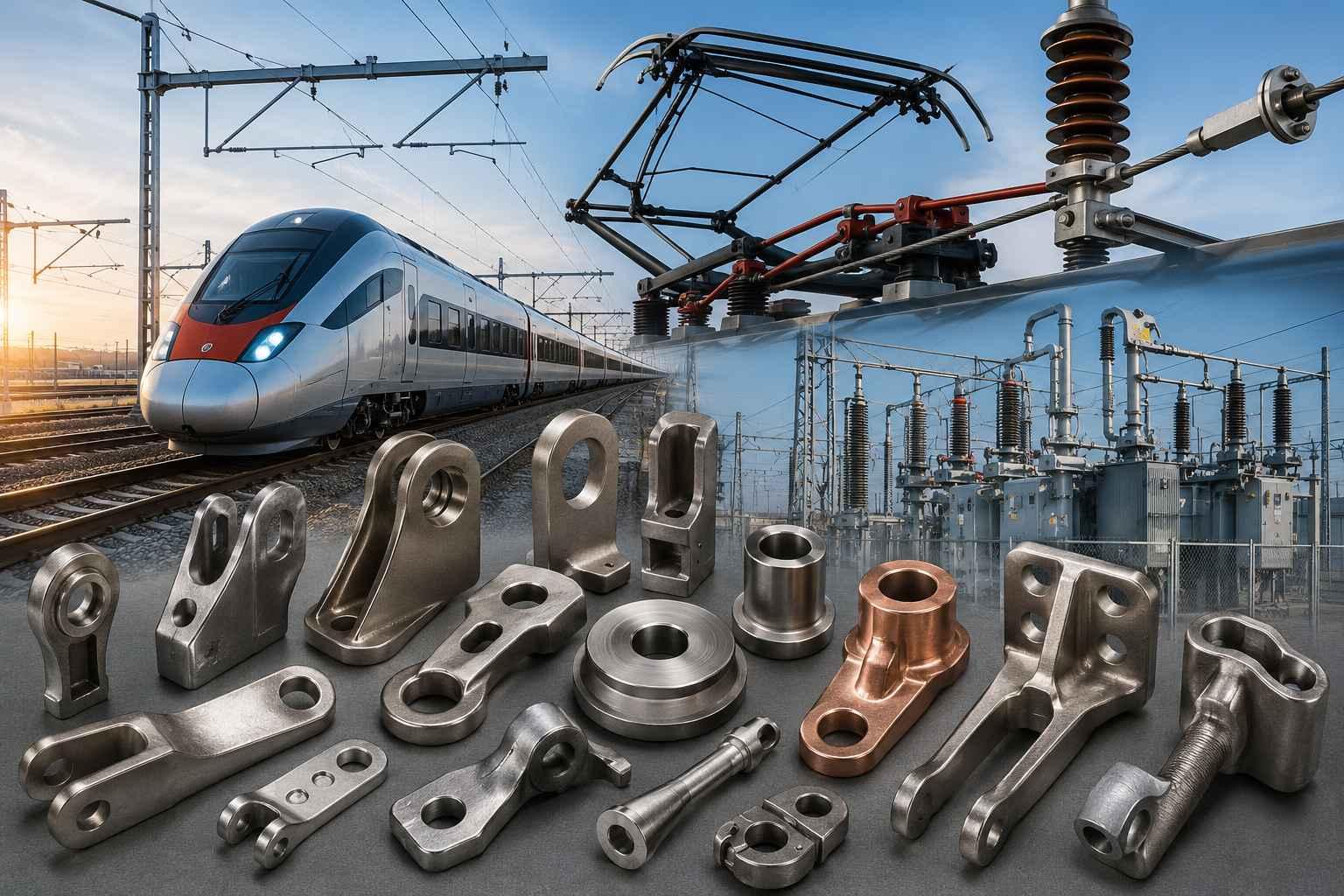
Railway networks around the world are shifting toward electrification, and this transformation depends heavily on one often-overlooked category of components: forged parts. From overhead line equipment to traction motor housings, railway electrification forging parts form the backbone of every electrified rail corridor. In this guide, we'll explore what these components are, why forging is the preferred manufacturing process, and what makes a forging supplier reliable for large-scale rail projects.
What Are Railway Electrification Forging Parts?
Railway electrification forging parts refer to metal components manufactured through the forging process specifically for use in electrified railway systems. These parts support the infrastructure that delivers electric power to trains, including overhead catenary systems, pantograph assemblies, traction equipment, and substation hardware.
Unlike cast or machined components, forged rail parts are shaped by applying compressive force to heated metal billets. This process aligns the internal grain structure of the metal, resulting in parts that are stronger, more durable, and better suited to withstand the mechanical stress, vibration, and electrical loads common in railway environments.
Why Forging Is Preferred for Railway Electrification Components
Electrified railway systems operate under demanding conditions. Components are exposed to constant vibration, temperature fluctuations, electrical current, and heavy mechanical loads from moving trains. This is why forging, rather than casting or basic machining, is the go-to manufacturing method for critical rail electrification hardware.
Here's why forged components outperform alternatives:
-
Superior strength-to-weight ratio: Forged parts can handle higher stress without adding unnecessary bulk, which matters for overhead line hardware that must remain lightweight yet durable.
-
Improved fatigue resistance: The continuous grain flow achieved during forging makes these parts more resistant to cracking under repeated stress cycles, a common issue in high-traffic rail corridors.
-
Better dimensional consistency: Forged railway electrification parts maintain tighter tolerances, which is essential for components that must fit precisely into pantographs, clamps, and connectors.
-
Long service life: Given that railway infrastructure is expected to function for decades, forged parts reduce the frequency of replacements and lower long-term maintenance costs.
Common Types of Forged Parts Used in Railway Electrification
Several categories of forging parts for railway electrification are used across different stages of the power delivery system. Some of the most common include:
1. Overhead Catenary System (OCS) Components
These include clamps, brackets, tensioning devices, and cantilever assemblies that hold overhead contact wires in place. Since these parts are exposed to weather and constant mechanical tension, forged steel and aluminum alloys are commonly used.
2. Pantograph Parts
Pantographs are the devices mounted on train roofs that collect electric current from overhead wires. Forged components within pantograph assemblies, such as pivot pins and support arms, need to endure repeated motion and electrical contact without deforming.
3. Traction Motor and Gearbox Housings
Electrified trains rely on traction motors for propulsion. Forged housings and shafts used in these motors must handle high torque loads while maintaining precise alignment.
4. Substation and Switchgear Hardware
Electrification requires substations to convert and distribute power along the rail line. Forged brackets, terminals, and connectors used in switchgear systems ensure safe and reliable electrical connections.
5. Insulator and Connector Fittings
Metal fittings that hold insulators in place along the electrified line are often forged for added strength, since these components bear significant mechanical load while maintaining electrical isolation.
Materials Commonly Used in Railway Electrification Forgings
The choice of material for forged railway electrification components depends on the specific application, but some commonly used materials include:
-
Carbon steel: Offers a good balance of strength and cost-effectiveness, widely used for structural brackets and clamps.
-
Alloy steel: Provides enhanced strength and wear resistance, ideal for high-load components like traction gearbox parts.
-
Copper alloys: Used in current-carrying components due to excellent electrical conductivity, such as connectors and contact fittings.
-
Aluminum alloys: Chosen for lightweight overhead line hardware where reducing weight is important without compromising strength.
-
Stainless steel: Selected for parts exposed to harsh weather conditions, offering corrosion resistance for outdoor rail infrastructure.
Quality Standards for Railway Forging Parts
Since railway electrification systems are safety-critical, forged components must meet strict quality and testing standards. Reputable manufacturers typically ensure compliance with international standards such as EN 13232 (railway applications for track), IEC standards for electrification equipment, and ISO 9001 for quality management systems.
Key quality checks often include:
-
Non-destructive testing (NDT) such as ultrasonic and magnetic particle inspection
-
Dimensional accuracy verification
-
Material composition testing
-
Load and fatigue testing
-
Surface finish and corrosion resistance evaluation
Working with a manufacturer experienced in forging parts for railway electrification ensures that components not only meet technical specifications but also perform reliably over the long operational lifespan expected of rail infrastructure.
Choosing the Right Supplier for Railway Electrification Forgings
When sourcing forged components for railway electrification projects, it's important to evaluate suppliers based on a few key factors:
-
Industry experience: Look for manufacturers with a proven track record in rail and electrification projects specifically, not just general forging work.
-
Certifications: Ensure the supplier holds relevant quality and railway industry certifications.
-
Customization capability: Railway projects often require parts designed to specific technical drawings, so flexibility in production is valuable.
-
Material traceability: Full traceability of raw materials helps ensure consistency and safety compliance.
-
Testing infrastructure: In-house testing facilities allow for faster quality verification and shorter lead times.
Final Thoughts
As rail networks continue expanding and modernizing through electrification, the demand for reliable, high-performance forged components will only grow. Railway electrification forging parts play a quiet but essential role in keeping trains powered, safe, and running on schedule. Whether it's a small connector fitting or a large traction motor housing, the quality of these forged parts directly impacts the safety and efficiency of the entire rail system.
For engineers, procurement teams, and infrastructure planners, understanding the role of forging in railway electrification is the first step toward building more resilient and long-lasting rail networks.

 English
 Arabic
 French
 Spanish
 Portuguese
 Deutsch
 Turkish
 Dutch
Dutch
 Italiano
 Russian
 Romaian
 Portuguese (Brazil)
